I didn’t plan on ever coming back to Indiana after graduating from college.
When I moved to Indianapolis as an 8-year-old from Los Angeles, I felt ostracized and alone in a sea full of white faces. It was a huge culture shock. Even though I excelled in school academically, I still didn’t feel like the Indiana education system cared for me as a Black child. My brother, 10 years younger, fared much worse.
And that’s the main reason why I’m here now as a reporter for Chalkbeat: to write about issues that particularly harm Black, Latino, Southeast Asian, and Middle Eastern students, to give voice to the voiceless, and to prod Indiana school systems to improve — not only for those left behind, but for all students and the community at large.
Living in culturally diverse Los Angeles, teaching in Houston, and reporting in New York City and Austin have broadened my perspective on how schools can educate all students, including those too often marginalized.
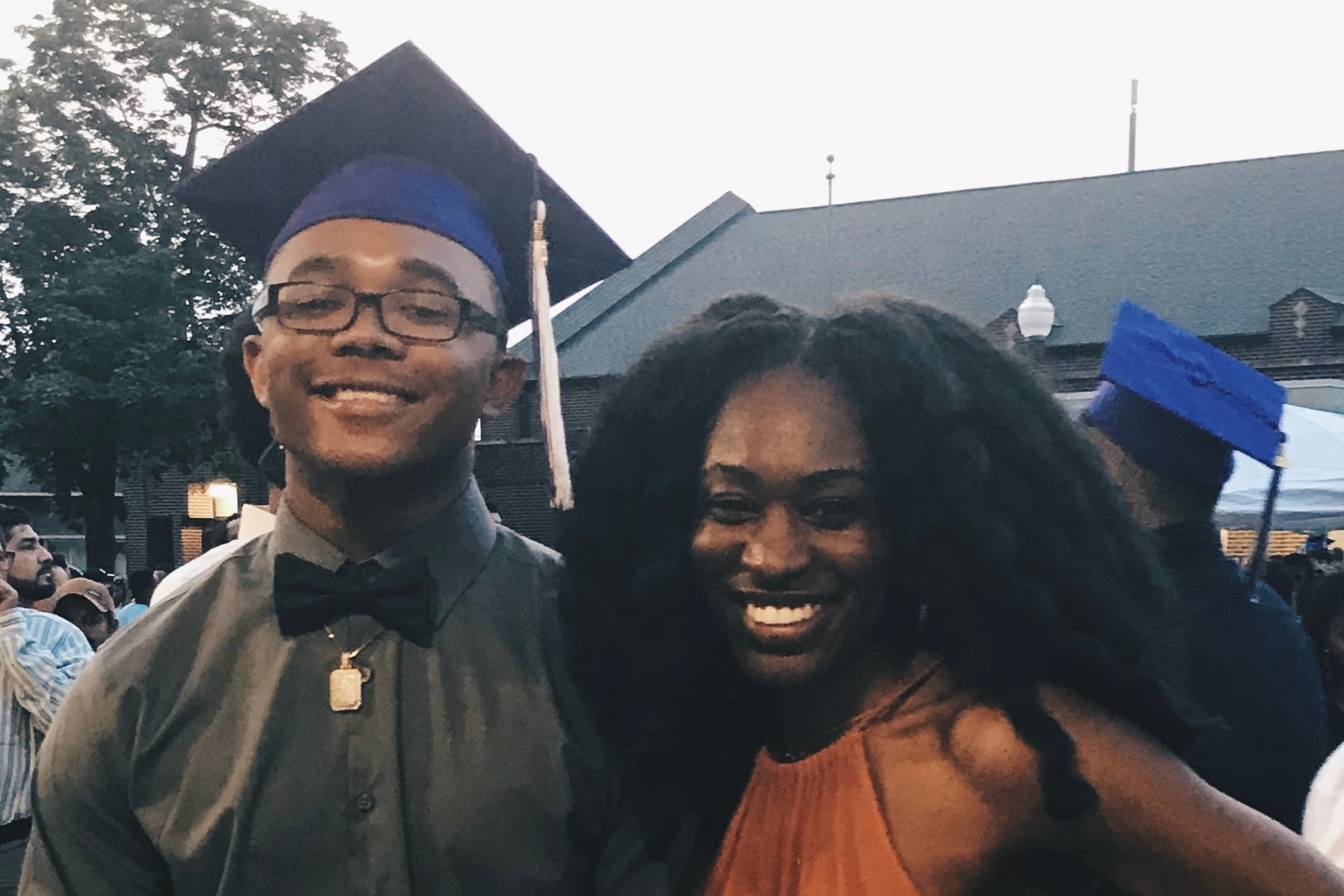
My little brother LJ had been set up for failure. When he was 8, he was diagnosed with attention deficit hyperactivity disorder, or ADHD, right after his dad died from lung cancer. He was attending Flanner House Elementary at the time, a school that my mom thought might be a good fit for him based on a recommendation from her niece.
But the charter school never provided the special services my brother needed. He would drift off in class because he didn’t understand the deeper concepts behind what he was learning. He got report cards with Ds.
The school provided a mediocre education and eventually got caught cheating on standardized tests. The city closed it. I felt angry that they let so many Black students down.
I moved away to start my teaching career, and LJ continued to struggle in middle school. When I talked to my mom on the phone, she would cry and tell me how frustrated she was that LJ was having such a hard time — with his ADHD, he couldn’t handle organizing his backpack, lost assignments, or simply didn’t do the work.
I listened but felt helpless. All I could do was send my mom lists of resources via email. At the same time, in my classrooms in Houston, I saw children who needed special education but weren’t getting it because, as it turned out, Texas had imposed an illegal cap that turned away tens of thousands of students.
I lacked resources to do my job, support from the administration, and basic supplies like classroom books and teaching guides to instruct students who had seen very adult situations and who displayed their trauma for all to see. They did not have counseling services available to them and had issues that I had a hard time solving.
That experience, teaching in some of the most destitute, resource-poor schools, flipped my world upside down. I resolved to become a reporter who could write about this neglectful education system.
In 2017, I left teaching and spent a gap year before graduate school trying to help my brother who by then was struggling in high school.
LJ had entered his junior year, taking algebra for the fourth time. He had also taken multiple science and English classes over again.
But he still wasn’t receiving federally mandated special education services.
I also saw the inequity not only between but within schools. LJ was attending the same Indianapolis school where I had thrived, but I found its low expectations for him infuriating.
“I feel like I failed him,” my mom said. Hearing her shoulder the blame for a failing system just crushed me.
I thought about all the ways our school could have steered LJ back on course had he had an individualized education program starting in elementary school instead of in his second-to-last year of high school.
My calling is to ensure that Black and brown children obtain not just an equal education, but an excellent one that fully allows them to thrive, to love, and to have joy in school. It’s my job as an education reporter to challenge the status quo and hold systems accountable for the harm that they inflict on vulnerable children.
I want to write how school systems can improve special education, discipline, curriculum, and truly be antiracist toward those who are marginalized.
I believe good journalism can shift history. My brother knew he deserved better. At the very least, we could help ensure that no other students feel that way after 13 years of education — abandoned and let down, their full potential untapped.
I would love to hear from you. I tweet the latest education news from @aarickawash. Send me a note with your story ideas at awashington@chalkbeat.org.