Indiana will leave school mask mandate in place when statewide requirement ends

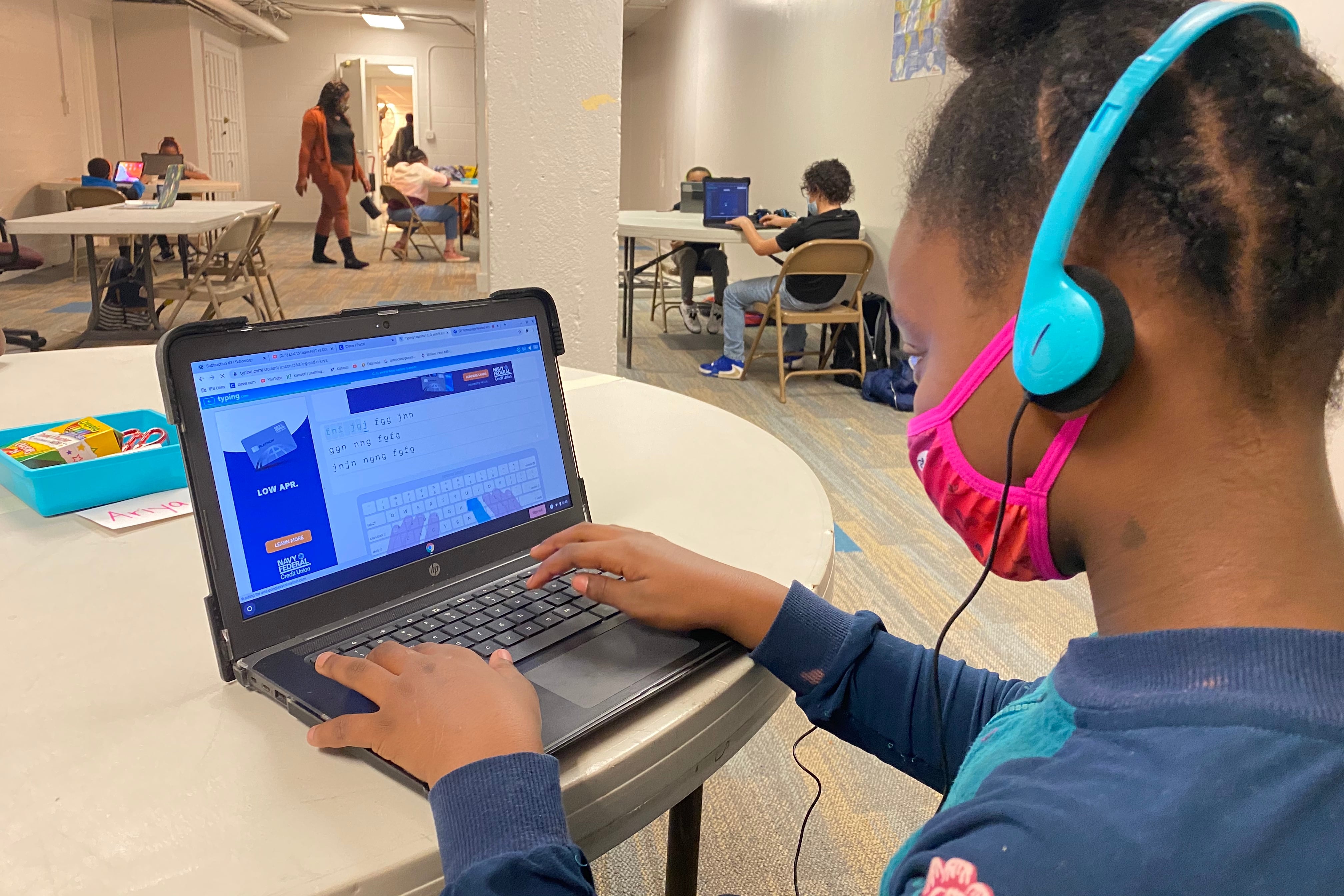
Students are on laptops and tablets in virtual class at the Christamore House in Indianapolis, Ind.
Indiana’s school mask mandate will stay in place for the rest of the academic year even after the statewide requirement ends April 6. (Aaricka Washington / Chalkbeat)

Indiana will continue to require that most teachers, students, and staff wear face coverings in school through the end of the academic year, even after the statewide mask mandate lifts April 6.

Outside of schools, face coverings and social distancing will remain recommended statewide, though not required, Republican Gov. Eric Holcomb announced Tuesday evening. As the state relaxes its coronavirus restrictions, local governments can still set stricter rules on mask requirements or capacity limits on social gatherings such as high school graduations or proms.

Holcomb also said he expects all Indiana schools to offer full-time in-person instruction at the start of the 2021-22 school year.

“Thankfully, all our teachers have the opportunity to be vaccinated now, and our schools are receiving hundreds of millions of dollars for COVID expenses,” Holcomb said.

About 90% of Indiana schools are already operating in person full time, with many others on hybrid schedules, he added. 

State education and health officials are working to update health guidance for the next school year.

Indiana will open vaccinations March 31 to everyone 16 and older. Teachers in Indiana have been eligible for the vaccine since early March through a federal directive.

The Latest

The Denver school board approved a two-year, $3.5 million contract with TeachStart to provide year-long substitute teachers for certain schools.

A Chalkbeat analysis suggests that the district’s joint initiative with its teachers union hasn’t yet given its 20 pilot schools an edge over other high-poverty campuses when it comes to academics and school climate.

A Chalkbeat analysis found that staff turnover, unspent dollars, and community partner tensions have been key challenges for the 7-year-old program.

Superintendent Nikolai Vitti says the law punishes districts for system inequities that contribute to chronic absenteeism.

State lawmakers will consider creating a new agency to oversee IPS schools and charters. Here’s a look at the history and powerful advocates behind that push for unified control over city schools.

The majority of low-income Tennessee students did not receive help paying for summer meals in 2025 for the first time in years. Now, local officials want the state to bring back federal aid for 2026.