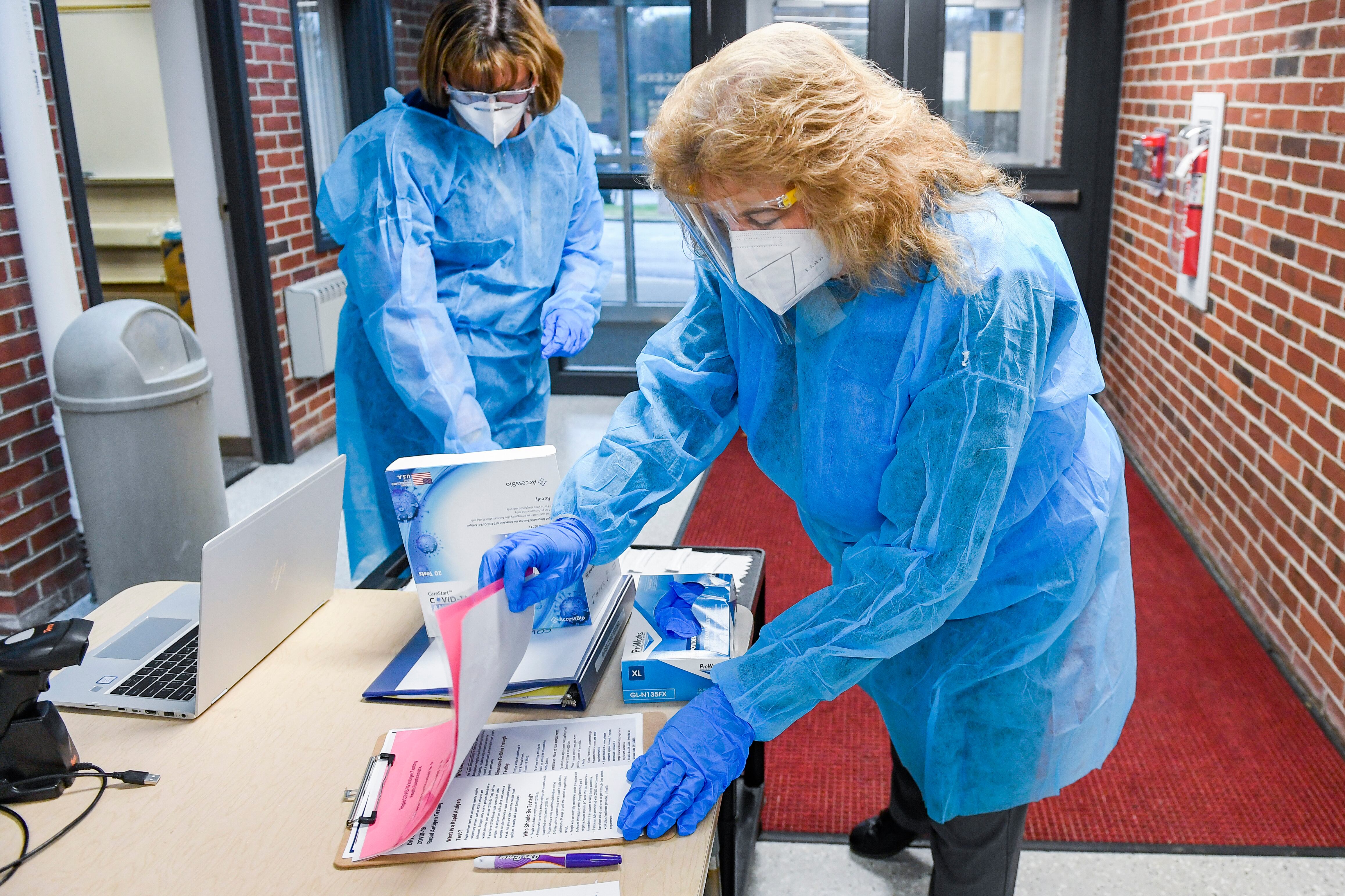
After hitting record COVID numbers in January, Indianapolis Public Schools has new resources for free voluntary testing for students and staff.
All district-run schools will offer rapid tests, and IPS plans to open two PCR testing locations.
“We recognize the challenges our staff and families have faced accessing COVID testing,” IPS Health Services Director Megan Carlson said in a statement. “To improve access, IPS has committed to providing testing at all our school locations. We know adding this service in addition to our current mitigation measures will only improve the health and safety of our schools and community.”
While some districts across the nation have implemented regular testing or “test-to-stay” strategies for close contacts, IPS will focus on symptomatic students and staff. The district requires consent forms for testing.
IPS is one of five districts in the state selected to receive free rapid tests through a federal program, which provided an initial 7,200 tests for 40 IPS schools. The on-site testing supply is expected to last two weeks.
The district also used federal relief dollars to buy 40,000 additional rapid tests for a dozen other schools. IPS can send those tests home for students, families, and staff.
IPS did not outline a plan for providing tests to innovation schools that are independently run by outside operators but noted it plans to add more testing sites. IPS students or staff can seek testing at any school.
IPS will also open two PCR testing locations at Arsenal Tech High School and the former Broad Ripple High School. The district has not yet announced when those test sites will open.
PCR testing will be free for IPS students and staff through reimbursements from insurance companies and a federal program that covers uninsured people. IPS is also considering opening some testing slots to the public.
The district has also been aiming to increase vaccination rates among its students by offering free clinics. IPS continues to mandate mask-wearing for all students and staff.
“Our goal and anchor has been to keep our schools open for in-person learning as safely as we can for as many students as we can,” IPS Superintendent Aleesia Johnson said late last month.
In January, IPS briefly moved to remote learning for middle and high schools and suspended field trips and K-8 sports during a surge of coronavirus cases. After hitting a peak of 398 cases and 629 quarantines the first week of January, IPS’ COVID stats have come down considerably. The district reported 27 cases and 51 quarantines in the first week of February, the most recent data available on its dashboard.
Stephanie Wang covers Indiana education, including pre-K, K-12 schools, and higher education. Contact her at swang@chalkbeat.org.