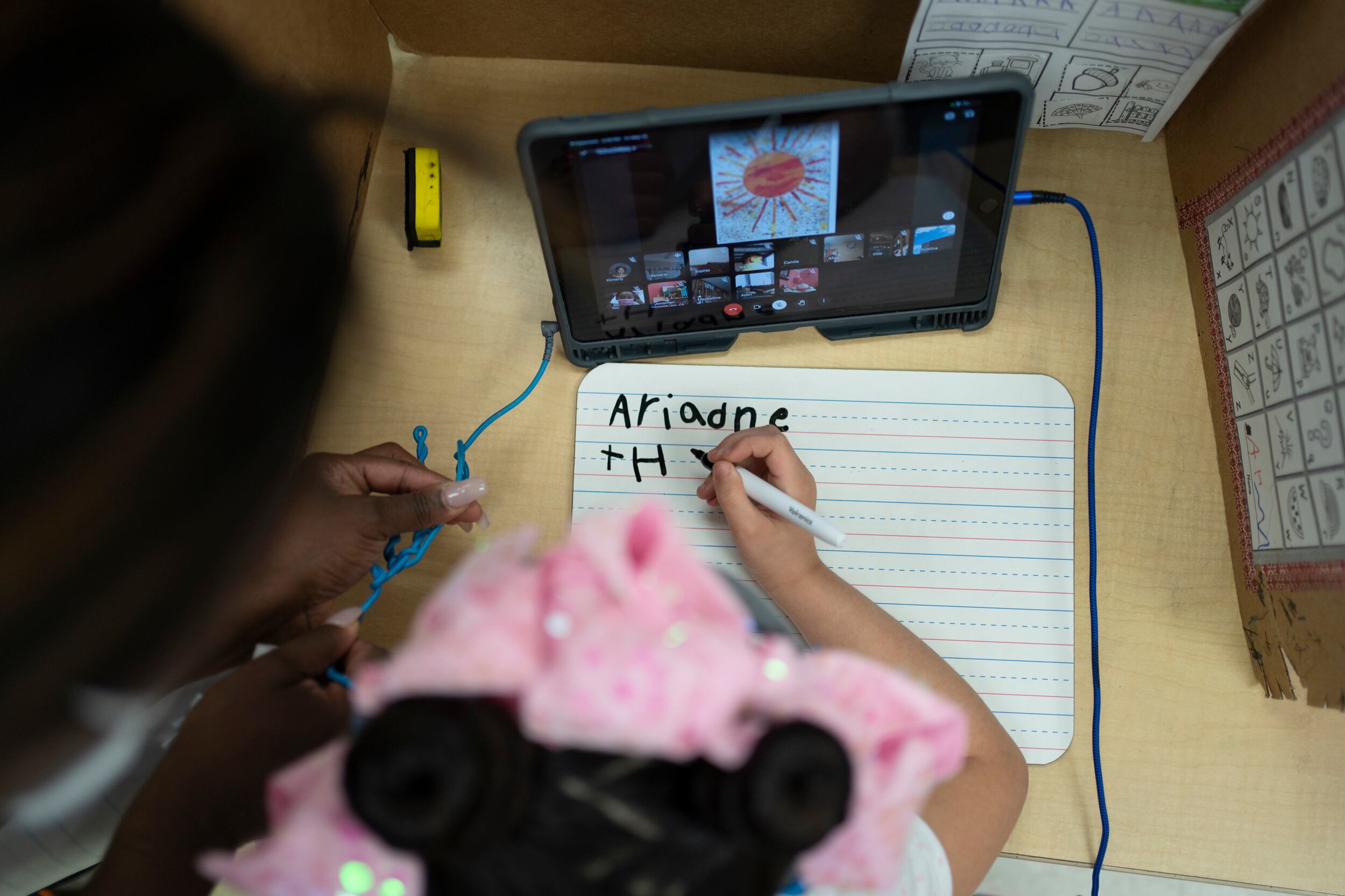
Indiana plans to channel up to $15 million in federal emergency funds directly to parents to pay for tutoring for students who are struggling with reading and math.
Dubbed enrichment scholarships, the voucher-like program will provide each student who qualifies through their score on state tests a $500 grant toward tutoring.
The Indiana Department of Education is still developing the details of who qualifies and how parents will access the money, with no date yet set for the rollout.
The scholarships intend to help address pandemic-related learning loss, particularly in literacy, said the author of the law, Rep. Bob Behning (R-Indianapolis).
“We weren’t where we needed to be to begin with, but it’s been much more difficult as a result,” Behning said.
Statewide, only about 28% of students scored proficient in English and math in 2021, a percentage that dropped by one-quarter from 2019.
Schools and states are increasingly under pressure nationally to target their federal relief dollars to address these pandemic-related learning losses, and many are turning to tutoring. But implementing tutoring programs on a large scale has proved to be challenging.
Indiana is unique in putting federal pandemic relief monies from the Elementary and Secondary School Emergency Relief Fund directly in parents’ hands to steer more students toward tutoring. The scholarship program will sunset with the expiration of ESSER dollars in 2024.
Behning said he expects the state to allocate $10 million to $15 million in ESSER funds toward the new scholarship program.
The state is considering using an app-based system to load money into a family’s account and allow them to choose among pre-approved tutors, Behning said.
Tutoring organizations can apply to be a part of the program. The application process is still in development.
Districts may provide an additional $250 per student of their own federal funds that the state will then match, for a total per-student allocation of $1,000. If they provide the funds, districts can recommend their own tutoring services, but can’t require students to use them, according to Behning.
Behning said the state will provide grants directly to parents to not impose a burden on school districts to create new tutoring programs.
The state’s approach creates a challenge of making families aware of the program, which advocates say is instrumental in its success.
Behning said he expects that schools will help get the word out. The state could also include information about the grants with this year’s ILEARN results, he said. Community organizations like RISE Indy have expressed interest in working as parent liaisons.
The state will have to figure out how to vet tutors and ensure that they get paid, said education consultant Bill Reed.
“It’s a good idea if they can get it to the students who need it most,” said Reed, a former teacher and tutor who also worked as a state math specialist. “The effectiveness will boil down to how well it’s managed.”
Some of the most effective tutoring comes from classroom teachers who are paid to stay after school hours to help students finish their homework and prepare for the following day, Reed said. This way, students stay in an academic headspace, rather than going home where there may be distractions.
Other quality tutors may charge from $30 to $50 a session, Reed said, and they often book study space in a library.
The grants could help parents access specialized help, such as tutoring to address dyslexia, said Cheryl Clemens, an education advocate with Decoding Dyslexia Indiana who testified in favor of the bill.
The services can be pricey, from $50 to $70 per session, she said, and the Children’s Dyslexia Center of Indianapolis typically has a waiting list for financial assistance.
“The key is how do we get (tutoring) to those kids, because it changes the trajectory in their lives,” Clemens said. “But there are so many families that could never afford it.”
Aleksandra Appleton covers Indiana education policy and writes about K-12 schools across the state. Contact her at aappleton@chalkbeat.org.