Facing a budget crisis resulting from the coronavirus, the city’s education department is rethinking spending for future capital projects, officials said Thursday night.
The proposed capital plan, developed before the pandemic upended life in New York City, maps out nearly $19 billion in spending through fiscal year 2024. It would include spending on a litany of projects, including building capacity for 57,000 more students to address overcrowding and making school buildings more accessible for students with disabilities.
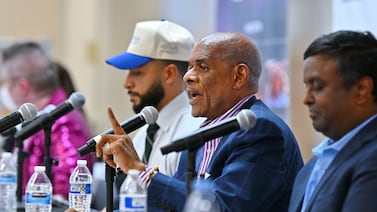
Now officials have gone back to the drawing board. The Panel for Educational Policy, an appointed board that approves major spending and policy changes, was set to vote on the plan last week, but technical issues with the virtual meeting platform forced officials to reschedule to Thursday. But Thursday’s vote on the plan was canceled ahead of the meeting, as officials rethink budget priorities, Deputy Chancellor Karin Goldmark said during the meeting.
“We have not honestly figured out what is the path forward,” Goldmark said. “We are in a much more constrained budget environment than we were in when this plan was formulated.”
The fallout from the coronavirus pandemic, which has left more than 19,000 New York City residents dead, could also mean more than $7 billion in lost revenue for the city as businesses remain closed. As a result, Mayor Bill de Blasio has proposed nearly $830 million in education department cuts through next fiscal year that would directly hit school budgets, institute a hiring freeze, and slow down some of his signature programs, such as the expansion of pre-K for 3-year-olds.
Many teachers, students, and elected officials have urged city officials to find ways to limit cuts, such as by increasing taxes on billionaire New Yorkers or cutting spending elsewhere in the budget. Some aired those same concerns during Thursday’s meeting, which was still going at 11:30 p.m.
Some education department projects are already on the chopping block. The city had planned to install air conditioners in every school by next fiscal year, but now is proposing putting that on hold. Money from the capital plan would have expanded electrical capacity at older buildings to support new air conditioners.
Goldmark’s comments came after about a dozen people — mostly student advocates from youth organization Ya-Ya Network — criticized the plan’s proposed allocation of $200 million for school security. They argued that the expansion of a digital surveillance system and upgrading metal detectors would make students feel like criminals. That money should instead go toward more social workers or training for restorative justice practices, the students said.
“In what world does it make sense to cut funding for things students must have to get an education, while paying for security cameras and metal detectors,” said Tenzin Chophel, a student who is part of Ya-Ya Network.
Some advocacy organizations have long argued against metal detectors in schools and have pushed to remove police officers from school buildings, asking instead for restorative justice practices. Mayor Bill de Blasio has not addressed all of those concerns, but last summer introduced a slew of discipline reform policies, which included more restorative justice training.
It’s unclear when the plan will come back for a vote, but Goldmark said she heard students’ concerns “loud and clear.”
Separately, some school bus employees urged the panel to pass emergency bus contracts, which have been delayed as education officials rethink those agreements.
About $180 million in emergency contracts for March, plus millions more as an automatic extension for April, were set for a vote last week but were withdrawn from the agenda before the meeting started because officials are in discussions with bus companies, given the city’s financial situation, said Danielle Filson, a spokesperson for the education department. The delay, however, has forced bus companies to furlough thousands of workers, the Daily News reported last week.
Some parents and educators have argued against reinstating the contracts during the city’s budget crisis, since the buses are currently out of use. One bus worker suggested the city use buses for other initiatives, such as delivering personal protective equipment.
Correction: A previous version of this article misstated the total amount in emergency bus contracts for March and April.