
We’re nearly three months into New York City’s school year, and there are hopeful signs of a return to normalcy.
The vast majority of public school students are now eligible for the vaccine, and in the month since they’ve been eligible, 20% of children ages 5 to 11 have gotten one dose.
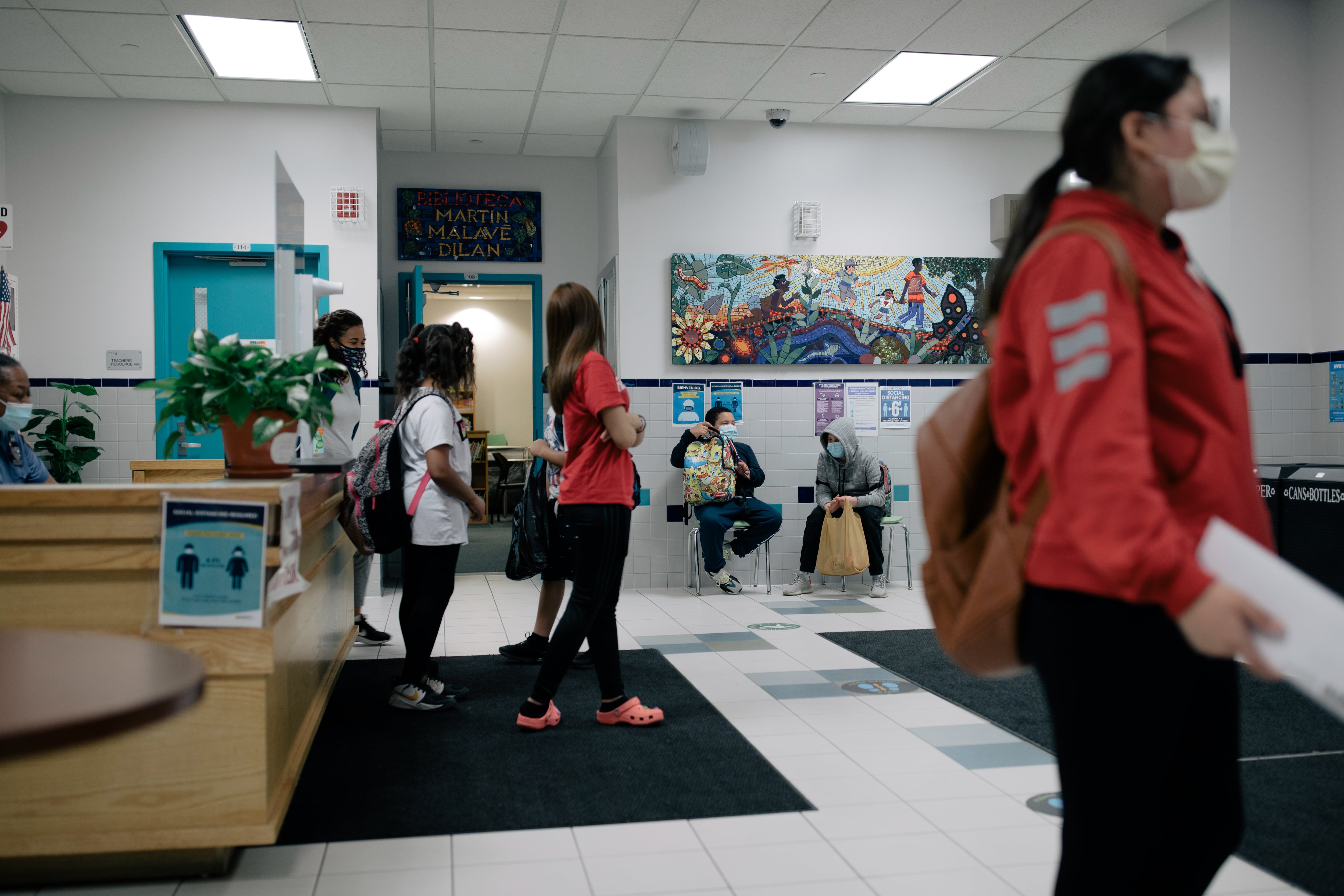
And yet so much of this school year remains far from normal. COVID cases are inching up again after falling since September, according to city data, and the uncertainty of the omicron variant looms. Students remain masked. More than 3,000 classrooms have closed at some point this year while twice as many have seen partial closures. And teachers — all of whom are required to be vaccinated — can now request school-based COVID testing.
We at Chalkbeat want to check in with our readers at this moment, when the joy of reopening might be turning to weariness over another irregular school year, when the relief of vaccines hasn’t completely erased fears of COVID. We hope to explore the evolving landscape of learning loss, physical safety, and mental health issues.
Across the city, students and teachers are getting back into routines, but some are having challenges with the readjustment. Some teachers have said they’ve seen more conflicts among students, more school avoidance, and an increasing caseload for school social workers and counselors. Even with the city’s promise to ensure that all schools have a full-time social worker, many educators say that students need more mental health support — as do some teachers who are suffering from burnout.
Classes may have an even wider range of abilities, after more than half of the city’s students learned remotely last year, and many children faced a host of barriers to learning, from tech access to economic hardship or illness, and even death of loved ones.
To help children catch up — both socially and emotionally — the city has tapped some of its federal relief money for assessments. Schools are assessing children three times this year to gauge their academic progress, and they’re also having teachers fill out a social emotional questionnaire, with the aim of flagging children who need more support. But many educators have said they aren’t clear on how to determine the kinds of extra resources that are needed, and their schools don’t get additional funding to provide those supports.
How is the school year shaping up so far for you? Please let us know.
If you’re having trouble viewing this form on mobile, go here.