Sign up for Chalkbeat New York’s free daily newsletter to get essential news about NYC’s public schools delivered to your inbox.
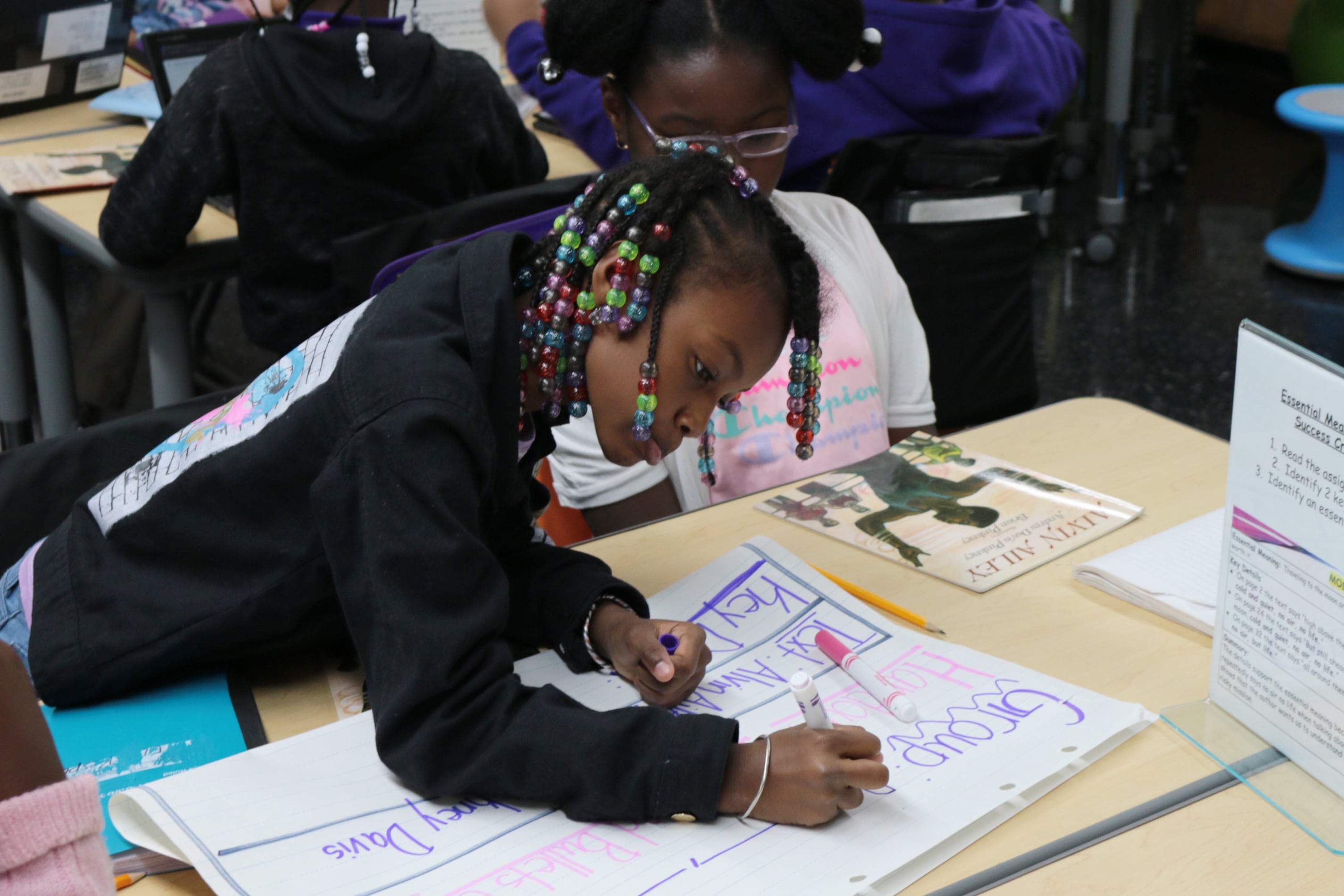
Forty schools across New York City will receive 5,000 new after-school seats this fall under a plan from Mayor Eric Adams to significantly expand such programs in the coming years.
The slots are expected to be available for students in grades K-5 across all five boroughs, free to families, and operate from the end of the school day to 6 p.m.
“This fall, those 5,000 children in neighborhoods in most need will have a safe place and nurturing place to go when the school day ends,” Adams said at a press conference at P.S. 152 in the Bronx, one of the campuses that will get new seats. “It’s critical, not only for the children, but also parents.”
By fall 2027, officials hope to add another 15,000 after-school seats, bringing the total number of elementary and middle public school students in city after-school programs to about 184,000. The city plans to assess how many more seats would then be needed to make the program universal. The expansion is projected to cost about $331 million a year by 2027.
Students in after-school programs should have access to a range of activities, including sports, art, and robotics, Adams said.
The after-school expansion, initially announced in April, comes after multiple candidates in the Democratic primary proposed efforts to dramatically grow the city’s after-school offerings. The eventual Democratic nominee, Zohran Mamdani, campaigned on a universal child care program. Given Adams’ unpopularity, it maybe up to his successor to implement the proposed after-school expansion.
The move also comes as the Trump administration froze billions in education funding earlier this month, including for after-school programs. The administration has since released some of that money, though the broader freeze is the subject of a lawsuit from two dozen states including New York. A slew of advocates and elected officials rallied in Manhattan Tuesday calling for the release of the money that had already been allocated by Congress.
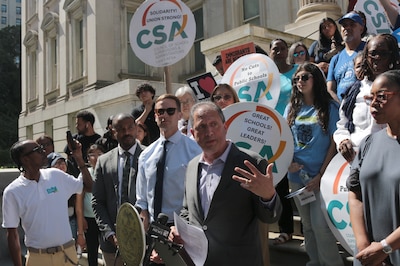
New York City Education Department officials said that up to $130 million is at risk if the funds remain frozen, though officials did not immediately say if that includes funds that have since been released. Teacher training, community schools, and class size reduction efforts could be affected, though a spokesperson emphasized that “we will always provide every school with the resources they need to give our students a world-class education.” (City Comptroller Brad Lander indicated the amount of frozen federal funding for the city’s schools could be closer to $170 million.)
For his part, Adams said the after-school expansion would be safe regardless of uncertainty at the federal level.
“Whatever plays out on the landscape of the federal government, we’re going to be fiscally smart and look at these important programs,” he said. “They will move forward.”
City officials considered a range of factors in determining which campuses received new seats, including poverty levels, crime rates, gaps in after-school support, and proportions of students with disabilities and those who are learning English.
A full list of the 40 campuses, including three charter schools, that will get new after-school programs this fall is here.
Alex Zimmerman is a reporter for Chalkbeat New York, covering NYC public schools. Contact Alex atazimmerman@chalkbeat.org.