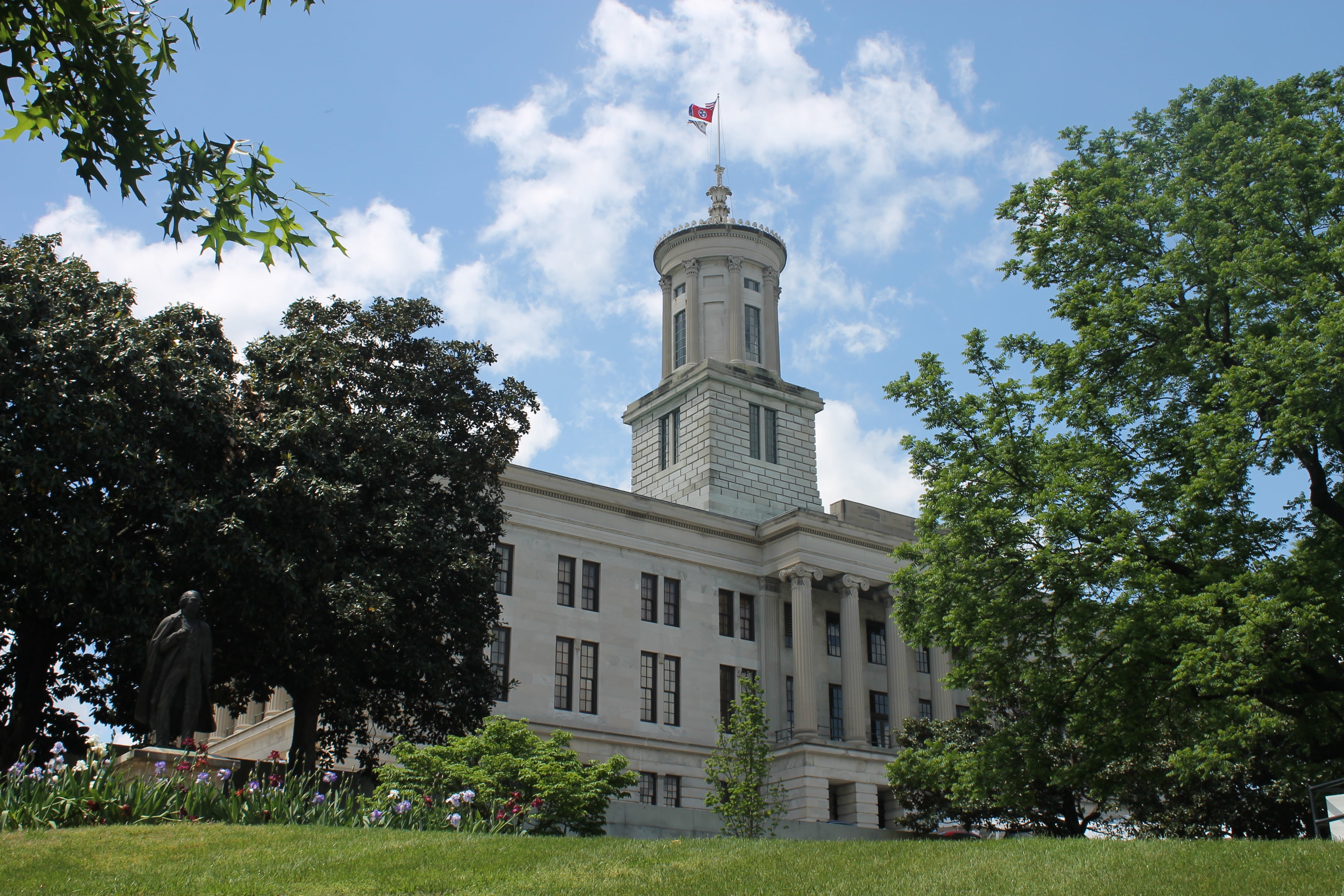
Tennessee teachers will receive neither a pay increase nor a bonus under a revised state budget approved early Friday by the legislature.
The Senate refused to go along with a House proposal to give teachers a $1,000 bonus in lieu of a raise that state officials have said Tennessee can no longer afford. The bonus idea, approved by representatives on Wednesday, received pushback because it offered no additional compensation to state employees, even though both groups had been in line for a pay hike this year.
“It just doesn’t look like we can squeeze out the type of money we would need for a teacher bonus, especially considering we couldn’t do it for state employees,” said House Majority Leader William Lamberth of the $70 million proposal.
The retreat marked a disappointing end to a budget process that started out so promising in February when Gov. Bill Lee asked the legislature for nearly $650 million in new dollars for K-12 education, including increasing teacher pay by 4%, boosting early literacy work, and addressing the mental health needs of students.
Because of the recession caused by the coronavirus, most of that is gone in the state’s revised $39.6 billion budget taking effect on July 1.
Instead, Tennessee’s 147 school districts will be expected to do more with basically the same level of state funding as last year as they seek to restart classes in August. The plan includes no emergency relief money sought by Democrats to help pay for new COVID-19 needs like hiring more cleaning staff and school nurses, purchasing personal protective equipment, and creating programs to help students catch up academically. Districts will receive some federal relief for that purpose, however, under the Coronavirus Aid, Relief, and Economic Security Act.
“Our local school systems’ budgets are facing tremendous challenges,” said JC Bowman, who heads the Professional Educators of Tennessee and was disappointed with the final budget. “In our opinion, the state could have done more to address funding in the [Basic Education Program] for schools in this budget, even as they failed to address salary issues.”
Negotiators from the Senate and House worked for hours on Thursday to pound out a compromise spending plan that further scales back the emergency budget passed in March as the coronavirus began to cripple the economy. At one point, a stalemate over multiple issues had some legislators considering sticking with the emergency budget, which set aside $59 million more for teacher compensation.
The final document excludes the pay raise but includes hundreds of millions of dollars for the state’s “rainy day” fund. It also includes $50 million requested by the governor to offer buyouts to state employees to shrink the size of state government. Educators will not be eligible for those, since they are employed by their local governments.
Earlier Thursday, Lee warned about a bumpy road ahead as the state faces a projected shortfall of $1 billion because of plunging tax revenues. “We have a very difficult job ahead of us, regardless of the budget that is passed,” he told reporters.
The budget, which Lee is expected to sign, retains $250,000 for a new school voucher program that was sidelined in May when a judge overturned the state’s 2019 education savings account law. That’s to pay for administrative costs in case a state appeals court vacates that ruling following a hearing set for Aug. 5.
Another $25 million in recurring voucher program funds was moved to elsewhere in the budget, since the Tennessee Supreme Court recently declined to hear the state’s appeal and effectively killed plans for an August launch. But Senate Majority Leader Jack Johnson said Lee’s administration wants the option to resurrect that voucher funding for future years.
“I think it’s appropriate that that recurring appropriation remains in the base budget because the governor does intend to implement the program next year, assuming that the lawsuit outcome is favorable to the administration and that’s to be determined,” said Johnson, a Republican from Franklin.
The compromise also includes a House provision to extend and expand Tennessee’s annual back-to-school sales tax holiday in an effort to stimulate the economy at a $25 million cost to the state.
The tax breaks will take place two weekends instead of the usual one — in late July and early August. The holidays will double to up to $200 the tax-exempt amount that can be spent on clothing and school supplies, and up to $3,000 for computers. The holidays also will include food purchased at restaurants.