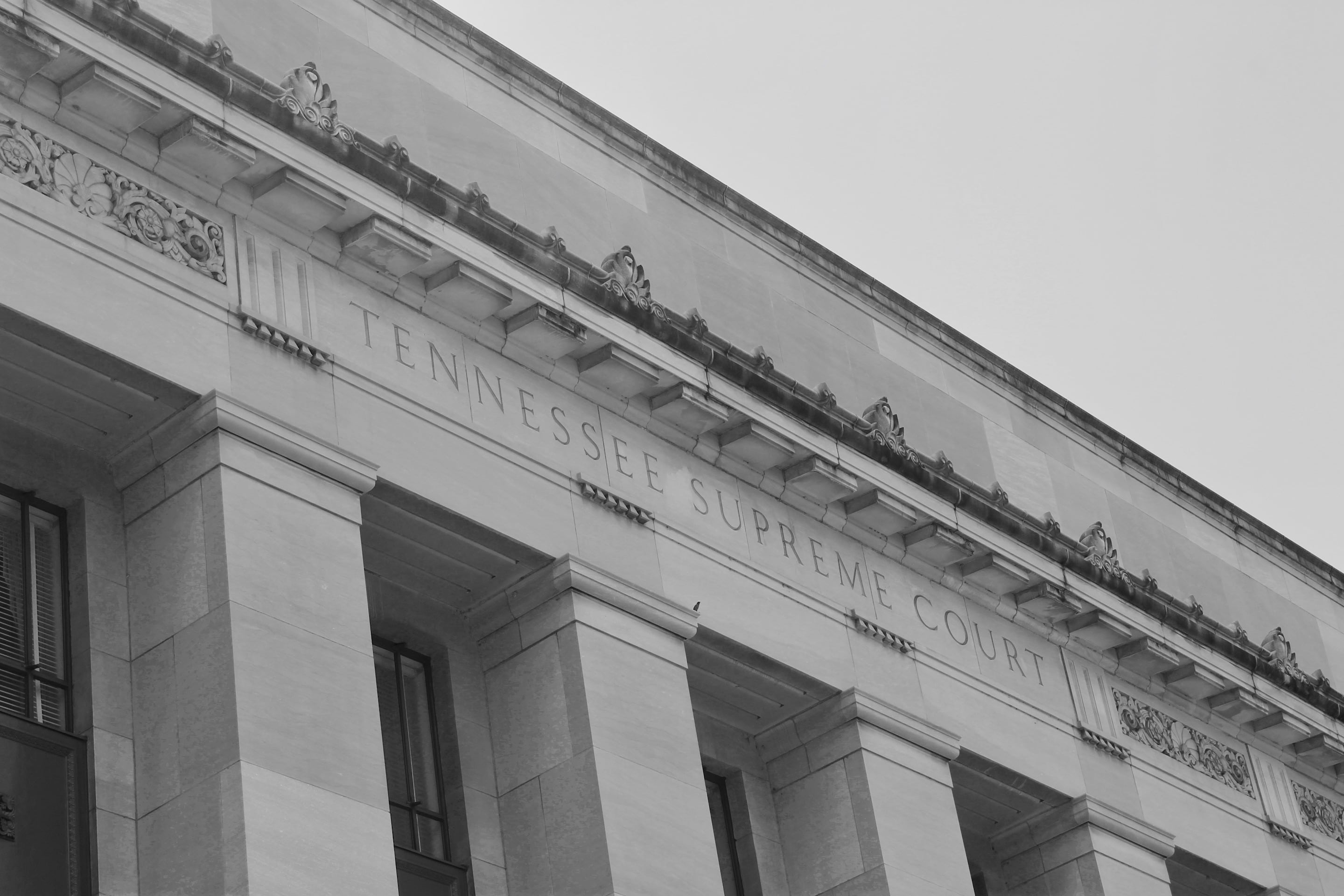
Tennessee will not kick off a school voucher program this year after the state’s highest court declined Thursday to wade into the legal battle over whether taxpayer funding should be used to pay for students to attend private schools.
Gov. Bill Lee’s finance chief, Butch Eley, told a legislative committee the administration does not intend to launch the program this fall as planned.
Hours earlier, the Tennessee Supreme Court declined to hear the case.
The rapid-fire developments halt the rush to roll out vouchers following a year and a half of one of Tennessee’s most contentious legislative and legal battles in recent history over education.
The five-member court issued a two-page order saying it had “carefully considered” motions asking the justices to step in, but that the situation “does not warrant [such] extraordinary action.”
That decision leaves the program’s fate with the three-member state Court of Appeals, where arguments are set for Aug. 5 — too late for the Department of Education to start in August as directed by Lee.
If the appeals court sides with the state, the launch would come in August of 2021. Eley said “the governor is still committed to funding this program.”
The high court’s refusal is a blow to the governor, who ordered the program to launch a year earlier than required under the state’s 2019 voucher law. Lee championed the law to give parents more education choices for their children.
“While we respect the court’s decision, we are disappointed for the more than 2,000 students who applied for this program in the hope of receiving a better educational fit,” said Gillum Ferguson, the governor’s press secretary. “We’ll continue to fight to give our families greater options and are committed to seeing this through in Tennessee.”
A spokeswoman for Attorney General Herbert Slatery III, who sought the appeal on behalf of the state, declined to comment.
Davidson County Chancellor Ann Martin overturned the law last month because it applies only to Memphis and Nashville without giving their local governments or voters a say.
But the state attorney general quickly appealed that decision, even as two courts blocked it from proceeding with the program pending the appeal’s outcome. The state argued that education policy is the state’s responsibility — and that the local constitutional protections known as “home rule” don’t apply in this case.
With each judicial setback, Lee had refused to back off from kicking off the program this August and set aside millions of dollars in the state budget to pay for it amid an economic crisis. But the high court’s decision put that timeline out of reach because significant administrative work must happen before a launch, even if the appeals court sided with the state later this summer.
When the program was halted by Martin’s order on May 5, the department was in the process of accepting and reviewing applications from eligible families wanting to participate.
According to court documents from department leaders overseeing the program, June 1 was the deadline for most private schools to assign seats for the 2020-21 school year. Other important deadlines were June 15 for families to confirm acceptance of education savings accounts; July 1 for the department to hire up to 20 employees to administer the program; July 20 to set up a payment system through vendor Class Wallet; and Aug. 15 to make tuition payments to participating private schools.
The case started in February when local governments in Nashville and Shelby County sued to try to stop the voucher program from taking students and funding from Metro Nashville Public Schools and Shelby County Schools in Memphis. They argued that shifting taxpayer money to private schools for a small number of voucher recipients will end up hurting those who remain in public schools.
The Supreme Court’s decision drew quick reaction.
“We are disappointed that the Supreme Court will not be taking up the ESA case to immediately resolve the questions presented so that children could benefit from the ESA program beginning this fall,” said Justin Owen, head of the Tennessee-based Beacon Center, a pro-voucher group that joined the case.
A spokeswoman for Shelby County Schools called the development a “significant victory” for Tennessee’s two largest school districts, as well as for “all Tennessee children and families.”