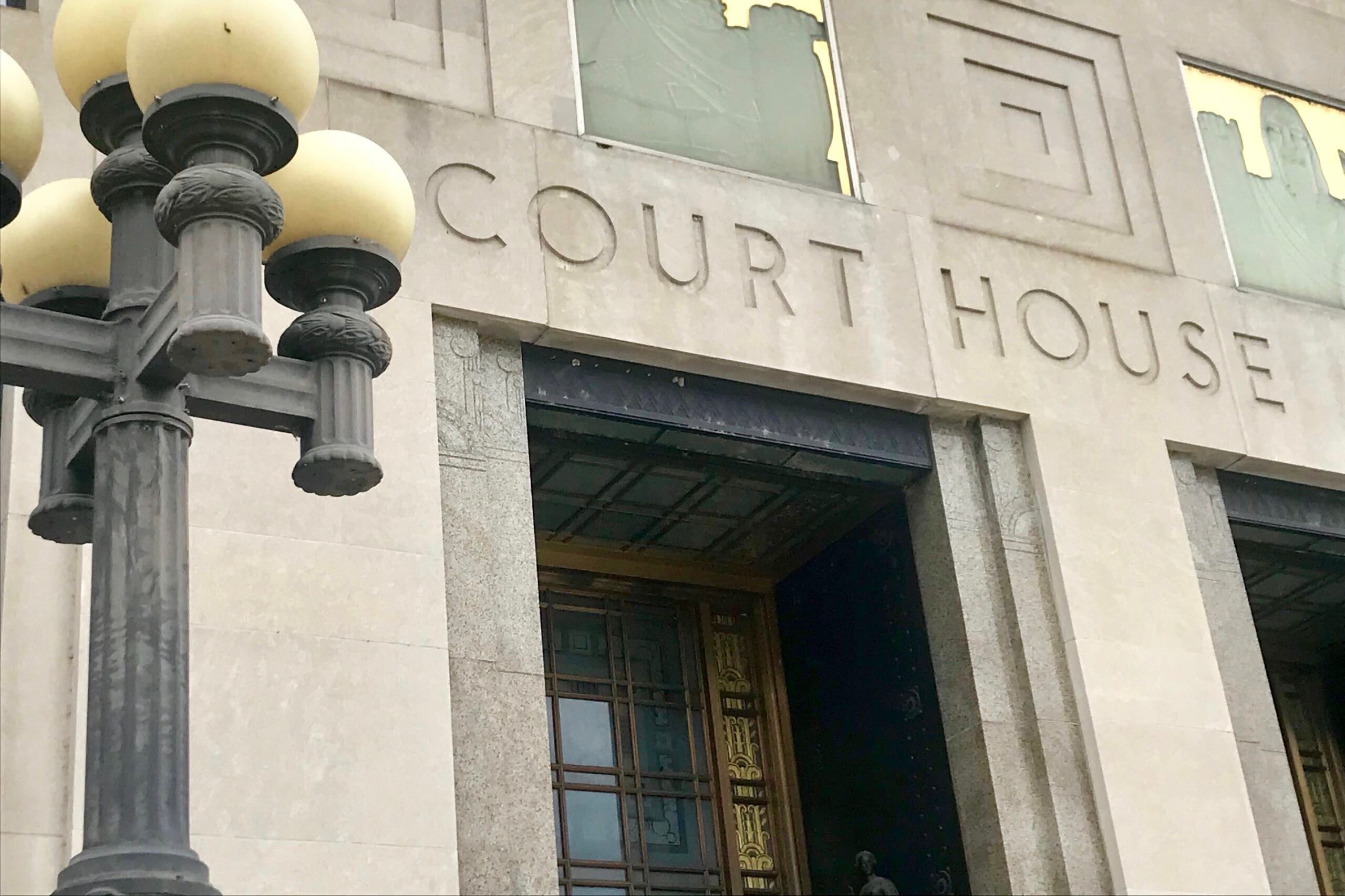
Nashville and Shelby County governments have pulled out of their more than 3-year-old legal dispute with the state over a 2019 private school voucher law.
The paperwork to withdraw their latest appeal was filed quietly on Aug. 25 with the Tennessee Court of Appeals, according to court documents.
The pullout by Tennessee’s two largest counties is the latest setback for efforts to overturn the controversial education savings account law, the signature legislation of Gov. Bill Lee’s first year in office.
The law, which allows the state to give taxpayer money to eligible families to pay toward the cost of private school tuition, was declared unconstitutional by a Nashville judge in 2020 because, at the time, it affected students only in Nashville and Memphis, where local officials have consistently opposed vouchers. But after several appeals, the Tennessee Supreme Court ruled in favor of the state in 2022 and resurrected the law, allowing the program to launch last year in the two counties. This fall, the state rolled out the program in Hamilton County after lawmakers voted earlier this year for expansion.
On Friday, Nashville Law Director Wally Dietz declined to comment about the decision to pull out of the suit, as did E. Lee Whitwell, chief litigation attorney for Shelby County government.
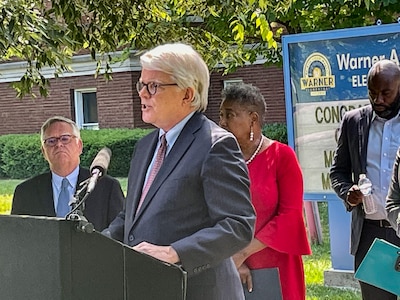
But Dietz, whose office has been leading the charge on the Nashville-Shelby lawsuit, noted that the legal challenge remains alive through a second lawsuit filed in 2020 by the Education Law Center and the Southern Poverty Law Center on behalf of 11 public school parents and community members in Memphis and Nashville. Their appeal is pending before the state’s appellate court.
The state Supreme Court’s ruling in May 2022 rejected Metro Nashville and Shelby County’s argument that the voucher law violated a “home rule” provision in the Tennessee Constitution. The latest court battle has been over whether plaintiffs in both lawsuits have legal standing to pursue the case based on other legal claims, such as a constitutional clause that requires the state to maintain a system of “free public schools,” with no mention of private schools.
In a split vote in late 2022, a three-judge panel of Davidson County Chancery Court dismissed those claims. Soon after, attorneys behind both lawsuits appealed that ruling to the Tennessee Court of Appeals.
Chris Wood, a Nashville lawyer helping to litigate the remaining lawsuit, said the pullout by Metro Nashville and Shelby County has no bearing on his case filed jointly with the Education Law Center, the Southern Poverty Law Center, and the ACLU.
“We’re still here,” Wood said Friday. “Our case has always been our case. And while it’s good to have other folks working with you, this really doesn’t have an impact on what we’re doing.”
A spokesperson for the Tennessee attorney general’s office did not immediately respond when asked Friday about the development.
Currently, Tennessee’s education savings account program has fewer than 2,000 students enrolled in 75 state-approved private schools in the three counties where it operates, significantly below this year’s 5,000-seat cap.
Rep. Mark White, a Memphis Republican who chairs a House Education Committee, has said he expects to file legislation next year to take the program statewide.
Marta Aldrich is a senior correspondent and covers the statehouse for Chalkbeat Tennessee. Contact her at maldrich@chalkbeat.org.