Sign up for Chalkbeat Tennessee’s free newsletter to keep up with statewide education policy and Memphis-Shelby County Schools.
Memphis school leaders say expanding student bus services to help boost attendance will raise transportation costs by a minimum of almost $10 million next school year.
Board members advanced the idea in late October to increase busing after multiple teachers testified that students weren’t showing up for class in fear of increased law and immigration enforcement. Interim Superintendent Roderick Richmond was tasked with delivering a plan within 30 days.
School districts nationwide are struggling to provide student transportation due to rising vehicle and staff costs and a widespread bus driver shortage. Richmond said Tuesday that the district spent around $32 million on transportation this year and is seeking a new contract for next year.
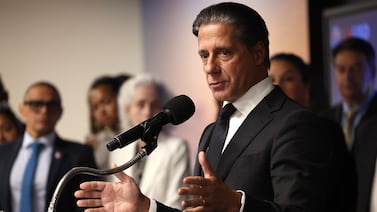
“What’s being requested is a challenge,” Richmond said. “It may seem easy, but it’s extremely challenging.”
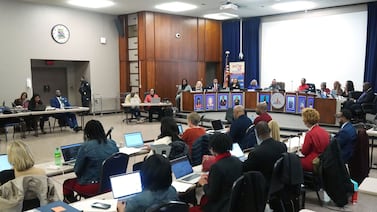
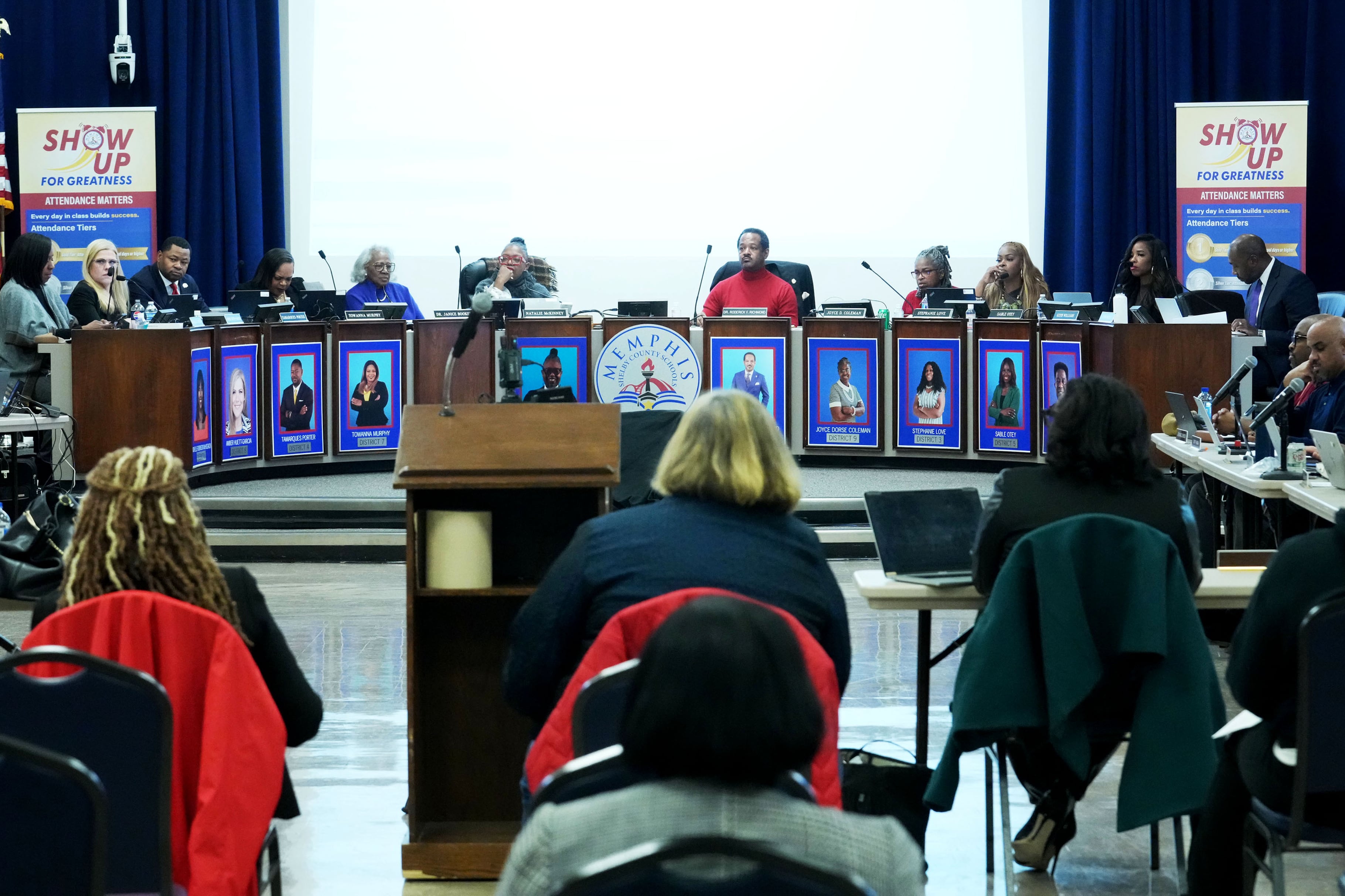
During Tuesday’s board meeting, Memphis-Shelby County Schools leaders outlined the three options for increasing bus service under review. Board members did not set a deadline for an actionable plan from the district.
But several members said the need to make a change by next semester is urgent. And they asked for plans that specifically target students that aren’t showing up, including immigrant students and those in specific neighborhoods.
“If you have an elementary school that already has a 99% attendance rate, adding a bus route is not going to change their experience,” board member Amber Huett-Garcia said. “We have concentrated areas of our district where kids are not getting to school. That is what I care most about.”
MSCS bus eligibility is determined by parent responsibility zones, or PRZs, which dictate when parents need to bring their children to school. That includes students living within 1.5 miles of their elementary school or 2 miles of their middle and high school.
Decreasing those zones by half a mile — the shortest distance suggested Tuesday — would require almost 100 more buses. That would increase transportation costs by $5.7 million for the remainder of this school year and $9.8 million next school year.
Board members pushed MSCS leaders to ask Memphis City Council and the city mayor for help, or explore a partnership with city public transportation.
“Over 90% of our schools are located inside the city of Memphis,” Stephanie Love said. “And they say they want to do a lot of things for the students. Get them to school.”
More than 26,000 MSCS students currently ride the bus to school, and the buses make over 6,000 daily stops.
Here are the options MSCS is considering, which assume all newly eligible students will ride the bus:
Option 1: PRZ becomes 0.5 miles for elementary and 0.75 for middle/high school.
- Over 6,600 more daily stops and 24,000 students added.
- 206 more buses needed.
- $12 million budget increase for 2025-26 school year and $20.6 million for 2026-27.
Option 2: PRZ becomes 0.75 miles for elementary and 1 mile for middle/high school.
- Over 5,000 more daily stops and 17,000 students added.
- 149 more buses needed.
- $8.7 million budget increase for 2025-26 school year and $14.9 million for 2026-27.
Option 3: PRZ becomes 1 mile for elementary and 1.5 miles for middle/high school.
- Over 3,000 more daily stops and 9,000 students added.
- 98 more buses needed.
- $5.7 million budget increase for 2025-26 school year and $9.8 million for 2026-27.
Bri Hatch covers Memphis-Shelby County Schools for Chalkbeat Tennessee. Reach Bri at bhatch@chalkbeat.org.