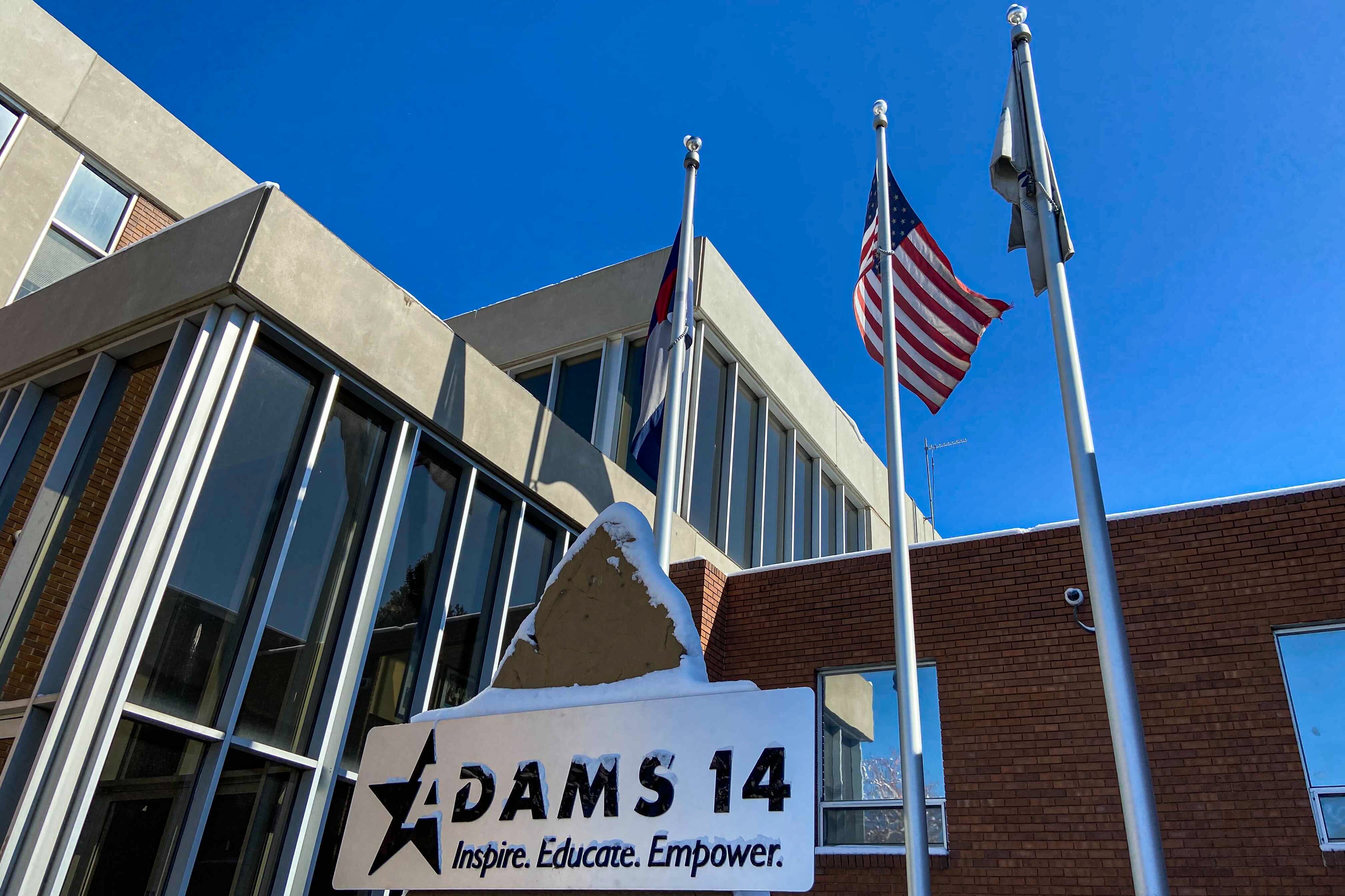
A Denver district judge on Wednesday dismissed an Adams 14 lawsuit against Colorado’s State Board of Education that attempted to stop the state’s orders to reorganize the district.
The ruling states that school districts don’t have the right to request a judicial review of State Board of Education action under the state’s accountability act and acknowledges that school districts don’t have absolute authority under the state constitution.
“Adams 14 maintains that it cannot ever be considered a subordinate agency because Article IX, Section 15 of the Colorado Constitution accords local school boards with local control over instruction in public schools. The Court disagrees,” Denver District Judge Shelley I. Gilman wrote in her ruling.
While many laws allow government bodies to appeal to the courts, the judge wrote that the state accountability law only allows school districts to have a hearing before the State Board of Education, which Adams 14 has already received. The state accountability law requires intervention in school districts that have many years of low test performance.
On Thursday, district officials said in a press release that the decision hurts students, detracts from the district’s turnaround efforts, and allows the State Board to operate without checks and balances. The district plans to appeal.
A spokesperson for the Colorado Department of Education said that the ruling means the state can move forward with reorganization. That would start with Education Commissioner Katy Anthes sending a letter to the district and starting the clock on putting together a committee to plan for how it might redraw the boundaries of Adams 14 and its neighbors. The process could lead to the closure of some schools and the district losing authority over portions of its territory.
During a two-day hearing last month on this case, Anthes said that the reason she hadn’t initiated that work was because she was waiting on a decision regarding the lawsuit.
“Today the court confirmed that these difficult decisions cannot be challenged or slowed down by litigation in the courts,” said Dana Smith, spokesperson for the department. “This outcome recognizes that time is of the essence in school improvement and turnaround efforts.”
“We believe that all students are capable of achieving high levels of academic success with the right resources and support. Our goal all along has been to support Adams 14’s work to ensure that educators have consistent leadership and professional development opportunities they need to provide high quality instruction for students. This ruling settles the questions around this work and allows us to continue supporting the district.”
Even so, the lawsuit may lead to at least one change for the district. A State Board agenda for next week says that Anthes plans to ask the board to consider restoring the district’s accreditation. Removing accreditation was largely symbolic but had larger consequences for the district, including making it harder for the district to hire international bilingual teachers to work with the district’s large population of Spanish-speaking students.
In a letter to the State Board, Anthes wrote the request does not mean Adams 14 has improved but that she doesn’t want the state to stand in the way of changes that would help students.
“We have a long and challenging road ahead to see sustained improvement in Adams 14,” Anthes wrote. “During that time, I do not want any unintended consequences from the loss of accreditation to make that road any bumpier than it needs to be.”
Yesenia Robles is a reporter for Chalkbeat Colorado covering K-12 school districts and multilingual education. Contact Yesenia at yrobles@chalkbeat.org.