Did you know search engines like Google are changing the way you see news? Keep Chalkbeat’s valuable education coverage at the top of your feeds by clicking here and checking the box next to our name.
After the first year of the Detroit district’s $94.4 million literacy lawsuit settlement, which paid for hundreds of academic interventionists and after-school tutoring, there were big improvements in reading scores for early learners.
But growth stalled last school year for students in kindergarten to second grade in the Detroit Public Schools Community District.
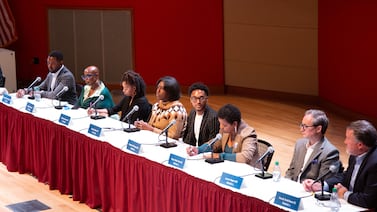
In retrospect, the school system should have provided more individualized interventions for students who were closer to reaching grade level in reading in the 2025-26 school year, Superintendent Nikolai Vitti said at a board committee meeting last week.
“We have way more students that are just below being at grade level,” Vitti said during the meeting, adding they need different intervention than their peers who are behind two or more grade levels.
Though much of the settlement efforts have been aimed at early learners, the interventionists, tutoring, and other resources are available to students in all grades.
The analysis presented at the meeting included results from assessments administered by DPSCD. State standardized tests are not given to K-2 students.
The results showed that 27.3% of K-2 students were proficient last school year – up less than 1 percentage point from 2024-25, the first year the district used the settlement funds.
The percentage of proficient students in 2024-25 grew by 4.5 percentage points compared to 2023-24, according to district data.
There was also a noticeable drop – 6 percentage points – in students who showed the typical growth expected in one school year, with nearly 50.5% meeting that goal in 2025-26.
Detroit’s reading growth outpaces similar districts
MarGrady Research, the third-party firm that completed the analysis, compared the district’s results with 12 similar school systems across the county that use the same assessments. The analysis did not name the other districts.
The analysis showed about 31.4% of K-2 students in the comparison districts were on grade level in reading on the assessment in 2025-26. In DPSCD, 27.2% reached grade level.
But DPSCD students showed more growth than those in the comparison districts between 2022-23 and 2025-26. The share of Detroit students reading on grade level increased by 7.7 percentage points compared to an increase of 2.6 percentage points in the other districts.
This year is the last the district has to spend the settlement money from the 2016 federal “right to read” civil rights lawsuit, which was meant to help make up for years of state funding inequities. As the money is set to run out, board members are pushing for faster improvements in early literacy.
“Our kids cannot afford to continue to go backwards: 80% of our kids are not proficient,” said LaTrice McClendon, chair of the board, during the meeting.
The lawsuit settlement exposed years of underfunding in Detroit schools, which had led to deplorable conditions, including vermin infestation, overcrowded classrooms, and leaking sewage. The complaint said the unsafe and bleak condition of the schools denied children access to education.
The state settled the lawsuit in 2020 and allocated the money to DPSCD three years later. The district created a three-year plan to use the funding based on recommendations made by a task force and input from community meetings.
With the money, the district hired 267 additional literacy academic interventionists to work in small groups with K-2 students. It reduced K-3 class sizes, hired more teachers, and offered educator merit pay for schools and classrooms that met ambitious literacy goals.
Some of the funding also established newcomer centers for English language learners, created Parent Academy sessions to help families encourage their kids to read, and expanded after-school tutoring.
In recent years, there have been significant improvements in the district’s state standardized test scores compared to before the settlement. But DPSCD students remain far behind statewide averages, with only 14.1% of third graders at or above proficiency last spring.
The analysis of the results presented by district administrators last week showed the share of K-2 students reading at grade level increased by 8 percentage points over the last three school years.
The gains made by K-2 students are equivalent to 35 extra days of learning, according to the district.
The district focused on K-2 literacy to build solid foundations for students who start school far behind their peers in wealthier communities due to issues tied to systemic poverty and racism. The focus helped create a “culture of literacy,” Vitti said. Now, principals are visiting those classrooms, observing, and providing feedback to teachers more often, he added.
The additional interventionists have helped students who were far behind grade level catch up, according to the district.
But several obstacles are preventing faster progress, Vitti said.
In addition to the need for more individualized student support, Vitti said a large number of new K-2 students in DPSCD last year had undiagnosed disabilities with “extreme behaviors” and should have been in self-contained classrooms with more support. Some of those students, who remained in general education classrooms while waiting to be evaluated for special education services, disrupted instruction, Vitti added.
The district has made progress reducing the wait time for evaluations in recent years by increasing staff, but Vitti previously said many evaluations were still not done in the amount of time allowed by state and federal law. Some delays were caused by issues out of the district’s control, such as parents’ inflexible work schedules and difficulty reaching families, according to administrators.
Higher rates of chronic absenteeism – defined as a student missing 18 days or more during a typical 180-day school year – in early grades continues to be a challenge, said Vitti.
DPSCD students overall also showed more summer learning loss than students in other districts across the country taking the same assessments, according to the analysis.
In some of the districts included in the analysis, Vitti said students showed growth over the summer between kindergarten and first grade, while students in DPSCD had a 10 percentage point decline during the same period.
“They’re not being engaged at the same level, and the learning that happens regresses,” said Vitti of DPSCD students overall.
Vitti, board members consider summer school changes
The idea of mandatory summer school for students who are significantly behind grade level has been brought up more frequently by principals, said Vitti.
During the last board meeting, member Monique Bryant asked why students who are significantly behind grade level are not retained.
“I’m not quite ready to say universal retention,” Vitti said during last week’s committee meeting, adding that potential decisions on mandatory summer school should be made on a case-by-case basis for each student.
Board members also suggested paying students to attend summer school, expanding programs, and refocusing offerings to center academics instead of enrichment.
The district’s Summer Discovery program is a “fun, camp-like experience” with academic and enrichment activities for K-8 students, according to its website. In previous years, academics happened for a couple of hours in the morning, followed by enrichment activities in the afternoon, such as art, drama, and athletics.
Board members said they would like to see summer school be targeted to remediating struggling students.
Previous boards made similar suggestions, but those efforts failed or ended due to funding constraints.
“We need to find the money because we are in a crisis,” said McClendon.
Hannah Dellinger covers Detroit schools for Chalkbeat Detroit. You can reach her at hdellinger@chalkbeat.org.