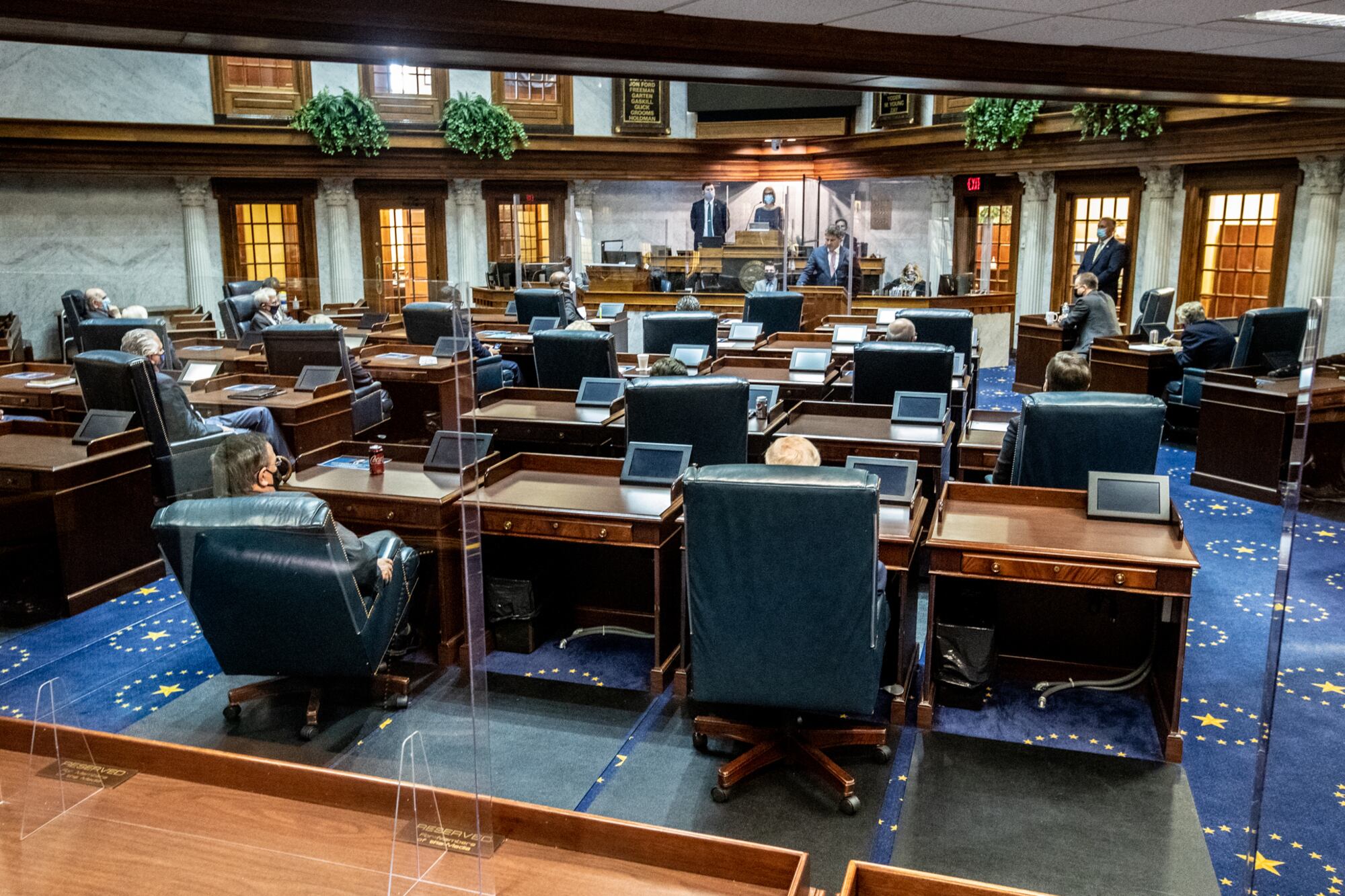
Indiana lawmakers on Tuesday debated giving school districts the authority to license their own educators as a solution to ongoing teacher shortages.
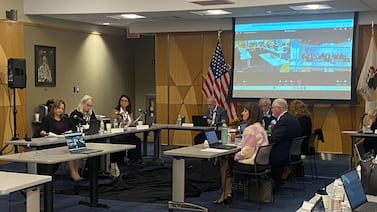
The Interim Study Committee on Education discussed the topic as part of its charge to recommend ways to deregulate state education policies.
Final recommendations approved on Tuesday ask the Indiana Department of Education to provide input on “streamlining workforce programs and licensing and other regulatory requirements for teachers,” among ten other recommendations.
While most teachers earn their licenses after completing education degrees, alternative routes exist to expand the teaching pool.
Expanding the authority to license beyond the Department of Education would allow local school districts more hiring leeway amid shortages, supporters said.
“There’s no silver bullet to the shortage,” said Rep. Chuck Goodrich, R-Noblesville. “We, as this group, talking about deregulation ... there’s no way [one department] is the most efficient way to license a teacher.”
But John O’Neal, a policy researcher and lobbyist for the Indiana State Teachers Association, warned during public comment that having Indiana’s nearly 300 school districts act as their own licensing bodies could lead to confusion, a lack of uniform standards, and problems with reciprocity across districts.
A teacher looking to move to another district in the state may find their locally issued license invalid, O’Neal said, adding that medical professionals and attorneys are also licensed through a central body.
“We would agree on local control on most issues,” O’Neal said. “When it comes to licensing, there should be one entity.”
Asked by Goodrich if having just one department available to process licenses was slowing down hiring and contributing to shortages, O’Neal said it was likely a minor factor in comparison to others.
“There are other reasons causing a shortage, like pay and benefits, and other things like working conditions … and professional respect that are probably more of a factor influencing those teachers’ job decisions than how fast the process is,” O’Neal said.
Other legislators pointed to the value of hiring individuals with professional experience in fields like business or the arts to teach in the classroom. Indiana has several alternative paths to licensure, including a career specialists permit available to people with a certain amount of occupational experience plus a bachelor’s degree or licensure exam.
The newest pathway to a teaching career outlined in SB 205 allows anyone over age 26 with a bachelor’s degree to earn a license by completing an alternative training program and completing a state licensing exam.
But each pathway is still under the umbrella of the Indiana Department of Education.
“I’m all for quality of licensing, but ... there are people we need to take advantage of in our local communities at times,” said Rep. Anthony Cook, R-Cicero.
The concept of district-issued teaching licenses has come up before in Indiana, with a coalition of districts asking for the option to create its own license in 2018.
Elsewhere, Texas has allowed school districts to issue local teaching permits since 1995, but the educators are not certified by the State Board for Educator Certification and can only teach in their home districts.
While lawmakers discussed other recommendations at Tuesday’s meeting, teacher licensure drew particularly lively conversation because of staff shortages due to COVID-19.
Some legislators shared anecdotes from schools struggling to hire teachers, particularly in math, music, and art. O’Neal estimated the state has issued around 2,000 emergency teaching permits.
Rep. Vernon Smith, D-Gary, a former principal, recounted instances of assigning practically anyone available to a classroom for the sake of safety.
“We’re just filling a void,” Smith said. “But our goal ought to be to get quality teachers in the classroom, not to water down the profession by changing licensing regulations.”