Indiana’s 2023 legislative session is under way, and state legislators have introduced more than 100 new education bills and bills impacting schools and students. For the latest Indiana education news, sign up for Chalkbeat Indiana’s free newsletter here.
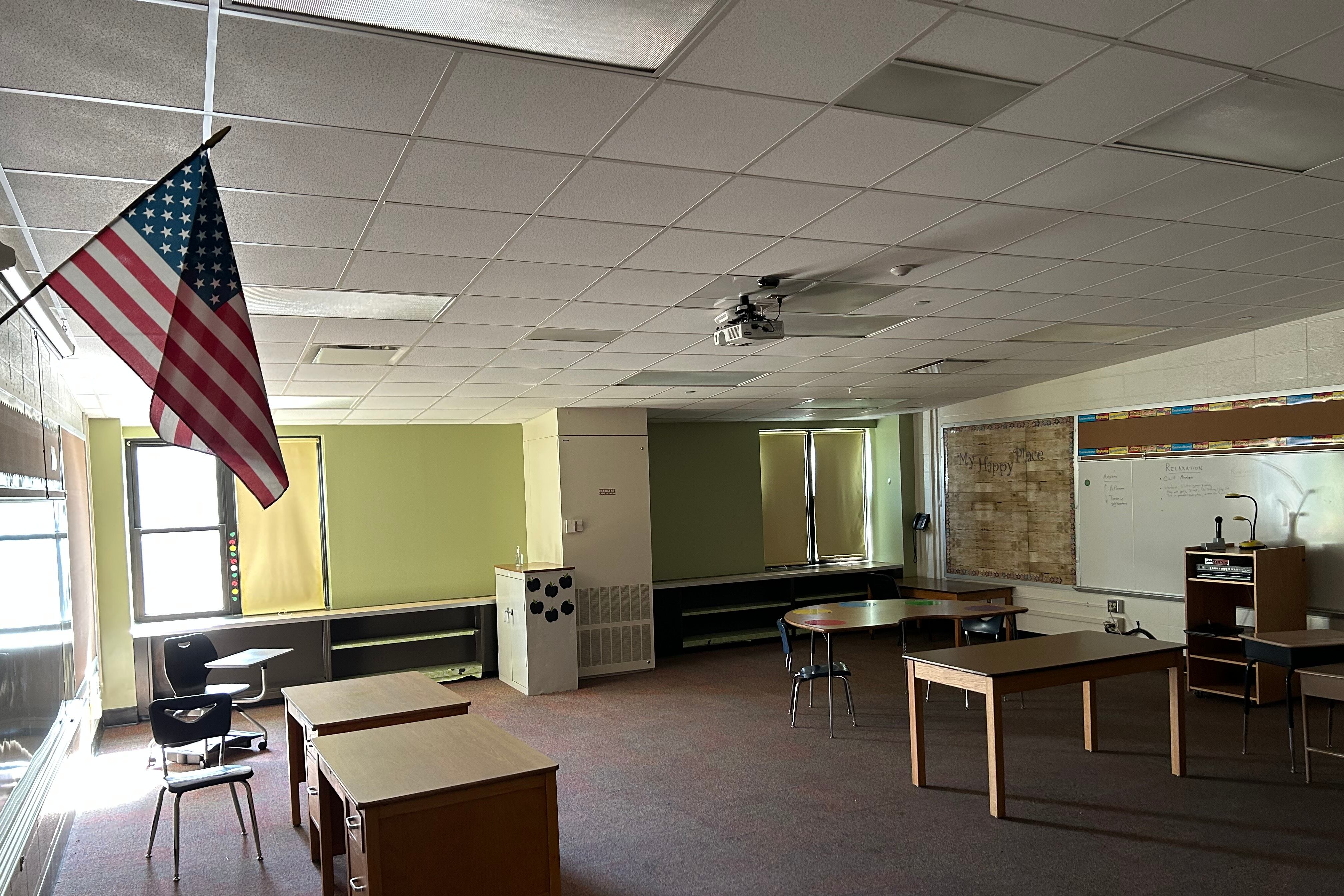
A bill in the Indiana Senate would significantly expand a state law that requires school districts to make their empty buildings available to charter schools.
While existing state law compels districts to make vacant or unused buildings available to sell or lease to charter schools for $1, Senate Bill 391 would clarify that the law also applies to an “underutilized” building.
It would require districts to compile an annual report of the buildings it uses for instruction to determine if any are underused, which the bill would define as occupied at less than 60% capacity. Underutilized buildings would be closed, and charter schools would be notified, unless the district could prove it uses a building for other qualified purposes.
The proposal would also allow charter schools or the state Department of Education to request a review at any time of whether a school building should be closed. And districts that don’t comply with the law would be subject to a funding penalty, losing 3% of their state tuition support for 12 months.
Bill author Sen. Linda Rogers (R-Granger) said the purpose of the bill was to provide more clarity to the existing laws that govern school building closures.
The state has recently seen several high-profile cases of charter schools accusing public school districts of unfairly holding onto buildings that they say should be offered under the $1 law. In one example, a judge ruled last month that Carmel Clay Schools in Hamilton County did not violate the law by closing an elementary school and refusing to offer it to the Hillsdale College-supported Valor Classical Academy. The judge cited the “ambiguity” of existing law.
“Taxpayers paid for that building to be used for public education,” Rogers said. “All too often, buildings are being kept open to use for storage or offices, when there are much less expensive options available.”
The bill applies only to districts where enrollment has dropped by at least 10% over five years and where there is another suitable building serving the same grades located within 20 minutes of the targeted building.
It provides exceptions for buildings being used for alternative programs, storage, or office space, but districts must meet certain requirements, like using at least half of the building for storage and exploring other potentially less expensive options that would serve the purpose.
The bill would turn authority over building closures — which currently rests with the Attorney General’s office — to the Department of Education.
If passed, the bill likely would immediately affect districts like Indianapolis Public Schools, which is in the midst of a plan to restructure its use of underutilized buildings. A district facility condition report found that the district’s average utilization rate is 60%, with some schools operating far below capacity.
The bill heard mixed public testimony at the Senate Education and Career Development Committee Wednesday, serving as a proxy in the long-standing fight between charter and traditional public school advocates.
Many speakers said the expansion of the law would impact a local school board’s authority to decide what to do with its buildings. One district requested an amendment that would exempt districts if a school building is being used for a nonprofit educational program, like a Boys & Girls Club.
Jerell Blakeley of the Indiana State Teachers Association objected to a provision that would allow charter schools to request reviews of school buildings.
“There is nothing to deter an interested party from tying up the school board for months in bad faith,” Blakeley said. “There are no penalties for trying to take a building without merit.”
But charter supporters said charter schools don’t have access to property tax funding as traditional districts do, and thus can’t accommodate growing interest in their programs. The legislature also is considering bills this year that would compel districts to share property tax dollars with charters.
“This funding disparity forces charter schools to pay for their facilities amongst other expenses out of the tuition support dollars used to educate their students,” said Molly Collins of the Institute for Quality Education, a nonprofit organization that advocates for charter education.
Lawmakers did not vote on the proposal, but Rogers said she would consider some of the testimony in making any changes ahead of next week’s hearing.
Aleksandra Appleton covers Indiana education policy and writes about K-12 schools across the state. Contact her at aappleton@chalkbeat.org.