Sign up for Chalkbeat Newark’s free newsletter to get the latest news about the city’s public school system delivered to your inbox.
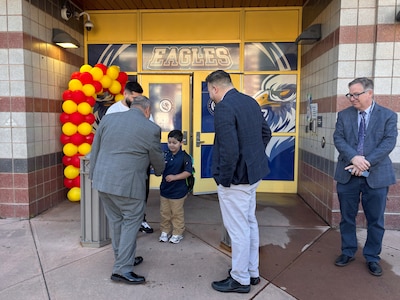
Newark Public Schools Superintendent Roger León started the first day of classes with a tour of elementary schools across the city, beginning at Elliott Street Elementary School.
León’s top priority for the day? It’s making sure students are coming to school on time, he told Chalkbeat Tuesday morning. The district’s chronic absenteeism rate, which had remained in the double digits for years, fell to 8.5% during the 2025-26 school year.
León stood near the school entrance, shaking hands with students and greeting parents and faculty as they entered the building.
Tuesday marked the first day of the 2026-27 school year for Newark students. This year, the district’s 43,200 students will experience some new changes: a bell-to-bell cellphone ban and newly elected school board members overseeing New Jersey’s largest school district amid issues like lagging literacy rates and aging infrastructure.
This is León’s ninth year as the district’s superintendent and the seventh of his 10-year strategy, known as “The Next Decade: 2020-30.” His strategy focuses on reopening closed schools and programs, lowering chronic absenteeism, shoring up school infrastructure, and strengthening curriculum and instruction. At last month’s school board retreat, León laid out his goals for this academic year, including improving student achievement, enhancing students’ literacy and writing skills, and boosting enrollment in advanced classes.
One factor educators and school officials hope will help students stay focused and improve academically is the new statewide cellphone ban. Newark piloted a ban at several schools last year with some apparent success.
Asked about his expectations for the ban, León said research shows that time spent interacting with other students is “super paramount.”
“A lot was learned during the pandemic, so keeping the students focused,” and communicating face to face with one another in classes is “the ultimate expectation of school,” León said.
Outside school walls, Newark families and teachers have also expressed concern about an increased Immigration and Customs Enforcement presence in the city.
Vivian Vasquez, a mother of two Elliott Street Elementary School students, told Chalkbeat in Spanish that she had no fears. But she added, “Sometimes for the kids, there’s a lot of fear that happens with immigration.”
Asked how the district is responding to a surge in ICE arrests across New Jersey, León told Chalkbeat that counseling is available to parents and students dealing with immigration-related concerns at home or in their neighborhoods. The district’s website has a section on immigration resources that includes immigrant-rights information and emergency preparedness plans for families in case of an ICE detention or deportation.
“It’s extremely important for our immigrant community to understand that our schools are safe, that we welcome our students,” León said.
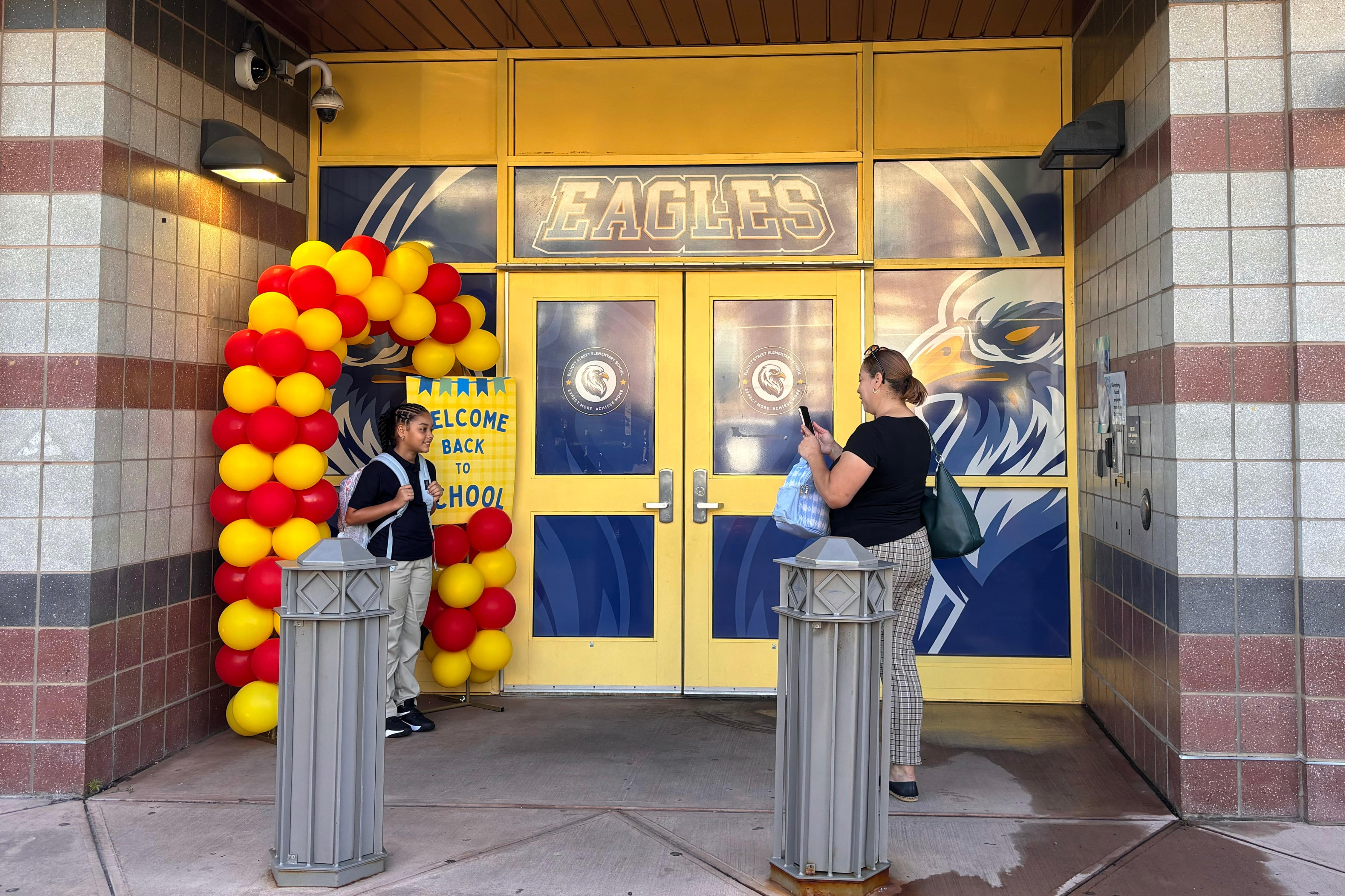
Ethan, a student entering fifth grade at Elliott Street Elementary School, said he’s looking forward to “being better at reading” this school year. His summer reading assignment was “Ban This Book,” a middle-grade novel by Alan Gratz about censorship.
Ethan’s grandfather, Kevin, who asked that their last names be withheld for privacy, accompanied him at drop-off. Kevin, a self-described “helicopter grandpa,” said he works hard to keep Ethan focused on school and away from any negative outside influences in the city that could distract him from his studies.
Also new this year, Bard High School Early College is temporarily sharing a building with the inaugural ninth grade class of New Media High School.
New Media is expected to remain there until it moves into a permanent building in the South Ward near Lionsgate Studios.
León said New Media aims to train students to become camera operators, producers, and directors. The school is part of the district’s push for specialized, career-focused high school programs, including programs centered on film and emergency response.
Max, a Bard junior, said he likes that the building is going to be shared with the New Media School. “It’s cool,” he said.