Did you know search engines like Google are changing the way you see news? Keep Chalkbeat’s valuable education coverage at the top of your feeds by clicking here and checking the box next to our name.
Several years after civil rights groups sued New Jersey over racial segregation in public schools, attorneys returned to court Thursday to debate whether the state’s own enrollment data is enough to establish a constitutional violation.
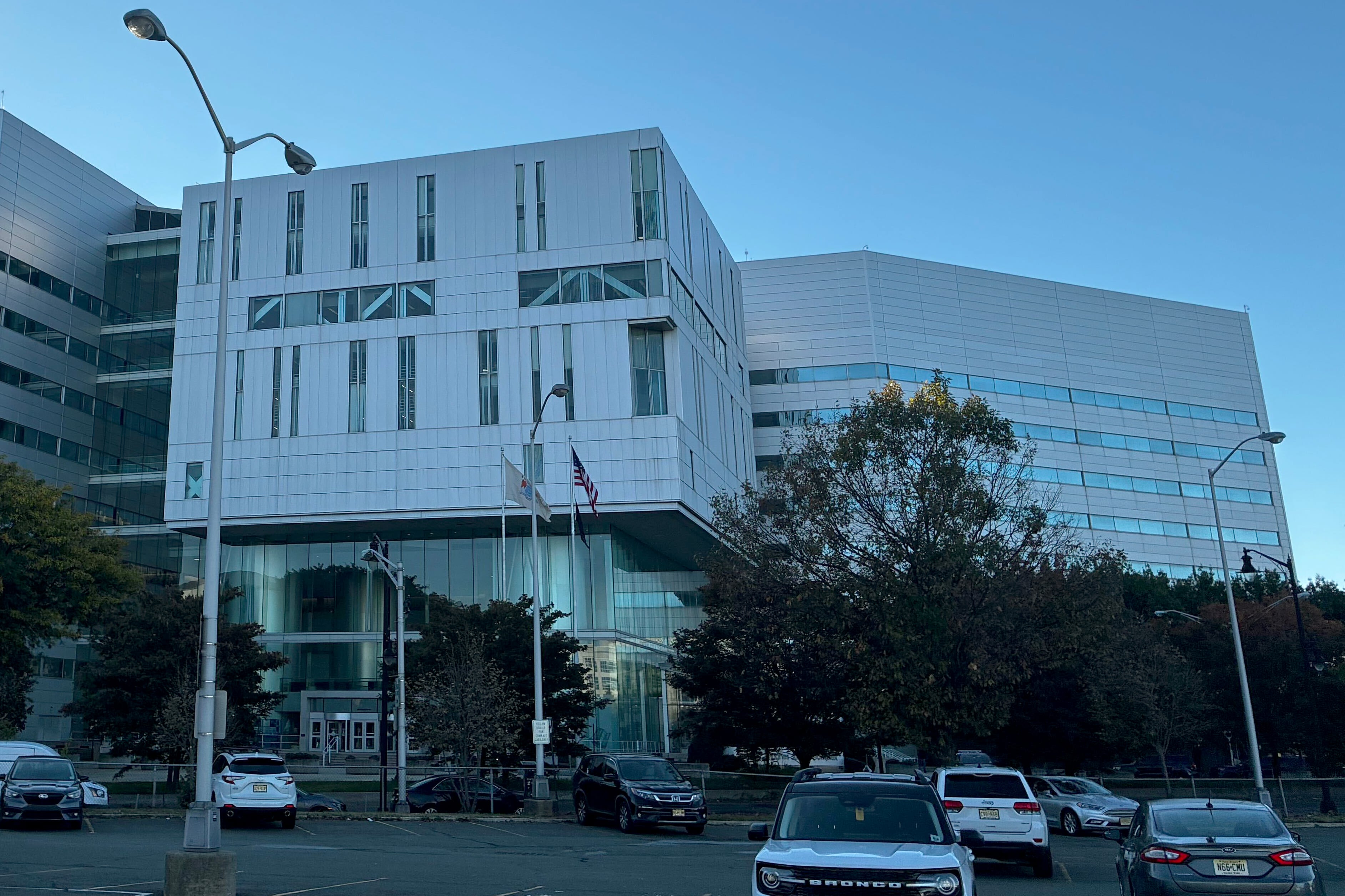
During oral arguments before a three-judge appeals court panel in Trenton, attorneys representing the plaintiffs urged the judges to overturn a 2023 ruling that acknowledged persistent racial segregation in New Jersey’s schools, but stopped short of declaring it unconstitutional.
The state countered that enrollment numbers alone cannot establish a constitutional violation, and called for a more detailed look at individual districts.
The hearing was the latest development in a landmark lawsuit that could eventually change how New Jersey students attend public school. The case could have far-reaching implications for Newark and neighboring Essex County municipalities, where predominantly Black and Latino school districts sit near wealthier, majority-white suburban districts. Children who were in kindergarten when the lawsuit began are now in ninth grade.
The lawsuit was filed in May 2018 by the Latino Action Network, NAACP New Jersey State Conference, other civil rights organizations, and families. It argues that the state’s requirement that most children attend schools in the districts where they already live perpetuates racial segregation in violation of New Jersey’s Constitution, the only state constitution that explicitly bans segregation in public schools.
According to state enrollment data cited in the lawsuit, an average of more than 270,000 Black and Latino students, or roughly 46% of those students statewide, attended schools where more than 90% of students were nonwhite each year from 2015-16 through 2019-20.
In addition, Lawrence Lustberg, an attorney for the plaintiffs, pointed to decades of “pervasive” segregation in New Jersey’s public schools during Thursday’s hearing.
In 2023, both sides asked the court to decide whether the state was legally responsible without a trial. Superior Court Judge Robert Lougy denied both requests. After more than a year of unsuccessful mediation, a state appeals court agreed in July 2025 to review the ruling.
On Thursday, the plaintiffs argued that the trial court had improperly required them to demonstrate unconstitutional segregation throughout the state’s entire public school system, even though their lawsuit only focused on 23 “severely segregated” districts.
Those districts enroll roughly 15% of New Jersey’s public school students, Lustberg said. He highlighted Essex County, where predominantly Black and Latino districts such as Newark, East Orange, Irvington, and Orange border wealthier, majority-white communities, as evidence of why the state must address segregation across district lines.
“If Newark decides that they want to send their children to some other districts in order to desegregate their schools, they can’t,” Lustberg told the judges. “They don’t have that power.”
That authority, he argued, rests with the state education commissioner.
Judge Hany Mawla questioned whether the evidence was sufficient to rule in the plaintiffs’ favor without a trial, noting that the 23 districts represented less than 4% of New Jersey’s school districts and that experts had offered differing definitions of segregation.
Deputy Attorney General Francesco Ferrantelli Jr., representing the state, argued that the plaintiffs had failed to account for individual districts’ circumstances, including geography, educational opportunities, and parental preferences.
Pointing to Newark, he questioned whether students might prefer their current schools and what benefits they would gain from attending neighboring suburban districts.
Ferrantelli also disputed the plaintiffs’ claims of state inaction, citing existing school choice programs, charter schools, and state oversight. In addition, he argued that the plaintiffs had failed to prove intentional discrimination.
“They plead this case under the theory that they can prove it just by looking at enrollment data,” Ferrantelli told the judges. “That’s the entire case.”
Following the hearing, Lustberg criticized the state’s argument about a lack of sufficient evidence for unconstitutional segregation.
“Today, for the first time, they crystallize this argument that somehow numbers cannot be enough,” he told Chalkbeat. “But that is not consistent with the law.”
Several civil rights organizations not a party to the lawsuit also presented arguments supporting the plaintiffs.
Micauri Vargas, litigation counsel for the New Jersey Institute for Social Justice, told the court that segregation deprives students of opportunities to learn alongside classmates from different backgrounds, and leaves them to grow up as “strangers to one another.”
After the hearing, Vargas and Lustberg expressed frustration about the prolonged legal battle over the case. Vargas also said existing school choice programs remained too limited to provide meaningful options for many families.
“Every day that goes by where there’s no remedy for this is tragic,” Lustberg said. “Students in Newark are going to have to suffer with how long this is taking.”
Retired New Jersey Supreme Court Justice Gary Stein, who helped launch the lawsuit in 2018, called it one of the most significant civil rights cases in the state’s history, and that its outcome could have implications far beyond New Jersey.
Asking the state “to desegregate its schools is not just to wave a flag,” Stein said in an interview with Chalkbeat on Wednesday. “It’s for the purpose of giving those children a better opportunity to succeed in life.”
The appellate judges did not issue a ruling Thursday. They could uphold the lower court’s decision, reverse it, or return the case for additional proceedings.
A ruling in the plaintiffs’ favor could eventually lead to a separate phase of litigation over what steps New Jersey must take to address unconstitutional segregation.
Either side could also seek review by the state Supreme Court, which declined to take up the case in May 2026 before the appeals court had ruled.