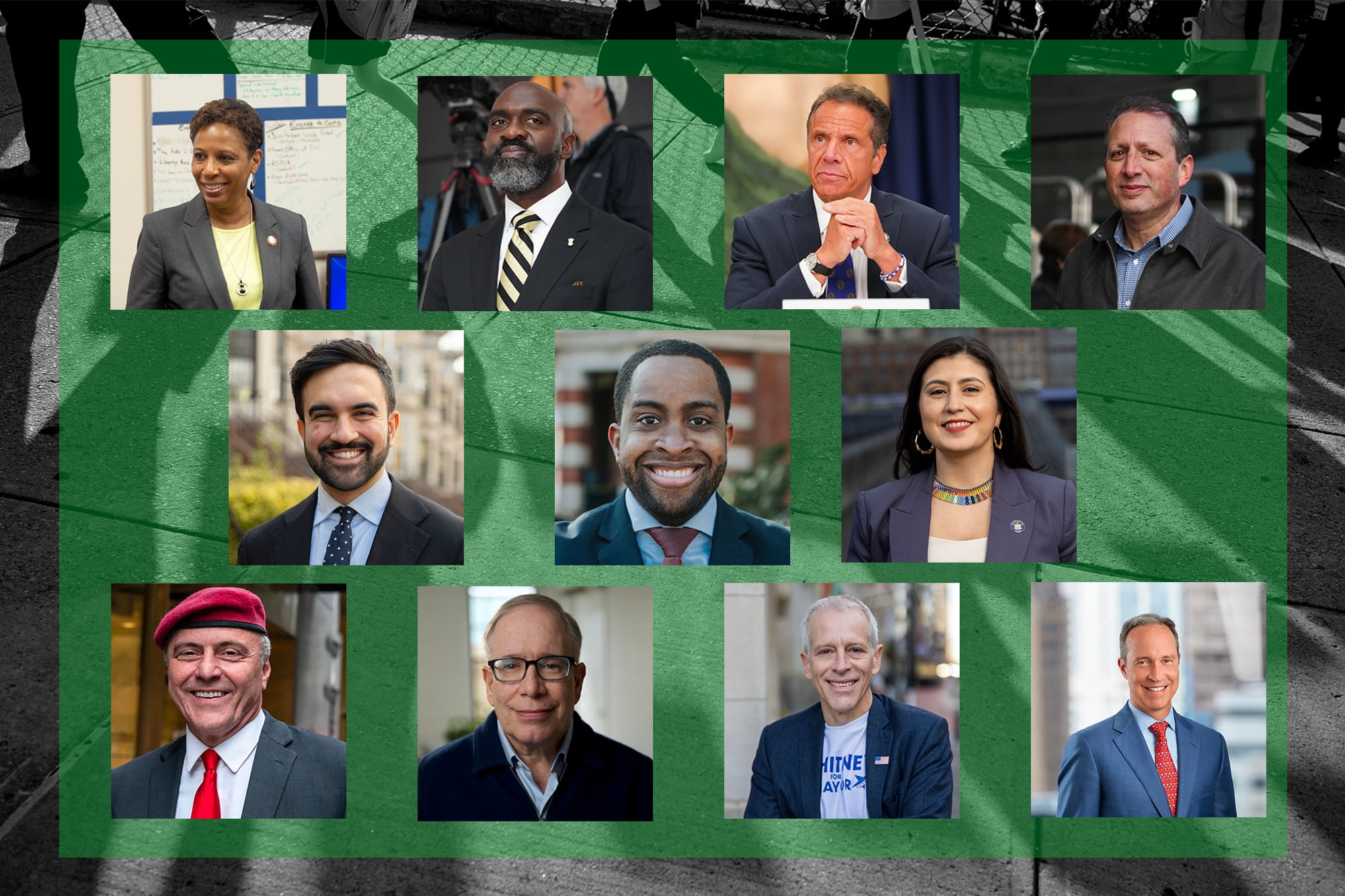
This is part of a series in which Chalkbeat asked the mayoral candidates questions about important education issues that will likely define the next four years. The primary is June 24, with early voting from June 14-22.
Perhaps no issue better reflects the seismic shifts from the last mayoral election to this one in both the state of New York City’s school system and the politics surrounding it than the question of how to keep school safe — and what role NYPD school safety agents should play.
The number of safety agents — uniformed but unarmed NYPD officers stationed at schools — has shrunk from 5,000 during the 2019-2020 school year to 3,600 currently, a drop of roughly 28%.
Experts and safety agents say the drop was driven by high attrition and slow hiring during the pandemic, and a starting annual pay of roughly $37,000, which makes it difficult to recruit.
The steep drop is concerning to many principals, who rarely have enough staff to patrol campus perimeters during arrival and drop-off, which can be potentially problematic during transitional times. Those who run schools with metal detectors have students waiting in long lines to get into their buildings when there’s not enough staff to run the scanning machines.
Last mayoral election, the city was still in the midst of a plan hatched during the George Floyd racial justice protests of 2020 to shift the school safety division from NYPD supervision to the Education Department. Multiple candidates explicitly backed the idea of shifting financial resources away from the NYPD and redirecting them toward mental health and other types of student support.
And while the public conversation around systemic reform to the city’s school safety apparatus has faded, some critics of the system see the declining headcount as an opportunity to embrace approaches to school safety less reliant on police.
Chalkbeat asked the leading candidates how they would address the staffing shortage as part of a questionnaire on March 25 to find out their views on seven pressing issues. A spokesperson for Mayor Eric Adams said he declined to participate since he isn’t in the primary.
Here’s what they told us about their approach to school safety.
Responses may have been edited for formatting or trimmed for length, but otherwise each candidate’s answers are as submitted, including hyperlinks.