Sign up for Chalkbeat New York’s free daily newsletter to get essential news about NYC’s public schools delivered to your inbox.
A traditional public school focused on hip-hop is expected to open in September in the Bronx, the birthplace of the art form. New York City officials say it’s the first of its kind in the nation.
New York City’s Panel of Educational Policy, the school board that approves new schools, voted unanimously on Wednesday night to green light the new school after Bronx residents and education officials spoke passionately about bringing the Bronx School of Hip-Hop to District 9 in the South Bronx.
“Hip-hop reflects the brilliance of our students, their potential, and while the world has profited off hip-hop … it’s time for our students and our community to make sure that it belongs and continues to belong to us,” said Harry Sherman, superintendent of District 9.
Hip-hop traces its roots to the Bronx, when DJ Kool Herc helped host a back-to-school party on Aug. 11, 1973, for his sister Cindy Campbell in the first-floor community room of their 18-story apartment building at 1520 Sedgwick Ave. DJ Kool Herc was known for his skills on the turntables, focusing on extending percussion breakdown, while dancers developed moves to the beats, and the DJ began speaking over the music in rhymes.
The Hip-Hop Museum, the first cultural institution to fully focus on hip-hop, is also expected to open in the South Bronx in the fall at 585 Exterior St., along the Harlem River. The museum is planning to have a Hip-Hop Science program, blending hip-hop culture and STEM learning by highlighting the scientific principles behind music production, dance, and technology, according to the museum’s website.
In its first year, the high school is expected to serve roughly 115-125 ninth graders and will continue adding grades in subsequent years, according to a proposal for the project. The school will teach hip-hop foundations, entrepreneurship, and civic engagement through music while creating pathways to college, internships, and careers for students, Sherman said. A Grammy-nominated producer, local business partners, and others are helping with the creation of the school, Sherman said.
“It’s about keeping the Bronx at the center of a culture we gave to the world,” said Carl Manalo, the high school superintendent for Districts 7, 9, and 12.
The panel also approved Wednesday a merger next school year of I.S. 313 and I.S. 339, two underenrolled schools at 1600 Webster Ave. The new hip-hop school will be co-located in the same building. Even with the merger and the addition of the Bronx School of Hip-Hop, the building is only expected to be about 34%-40% full, according to the merger proposal report.
The Bronx School of Hip-Hop will be the first non-charter school dedicated solely to hip-hop, officials said. (A charter school in St. Paul, Minnesota, called the High School for Recording Arts, is nicknamed “Hip-Hop High,” and teaches students hip-hop and “other art forms” according to their website.)
“We made history today, and I’m really proud of the panel for doing that,” said Gregory Faulkner, who chairs the Panel for Educational Policy.
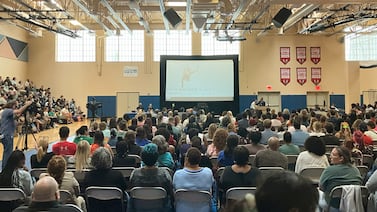
What began Wednesday night as public comment on the merger of I.S. 313 and I.S. 339 and the opening of the Bronx School of Hip-Hop quickly turned into a history lesson garnished with personal testimonies of the power of music, history, and culture.
Maribel Gonzalez, the president of District 9’s local parent education council, said DJ Kool Herc’s party at 1520 Sedgewick Ave went on to “spark a global cultural movement.”
“Establishment of the first hip-hop High School in the Bronx honors that legacy and represents a powerful investment in our students and culture,” Gonzalez said.
Panel for Educational Policy member Faraji Hannah-Jones spoke about how Grandmaster Flash, a pioneering hip-hop artist who invented the DJ technique called “Quick Mix Theory,” used mathematical equations in his music.
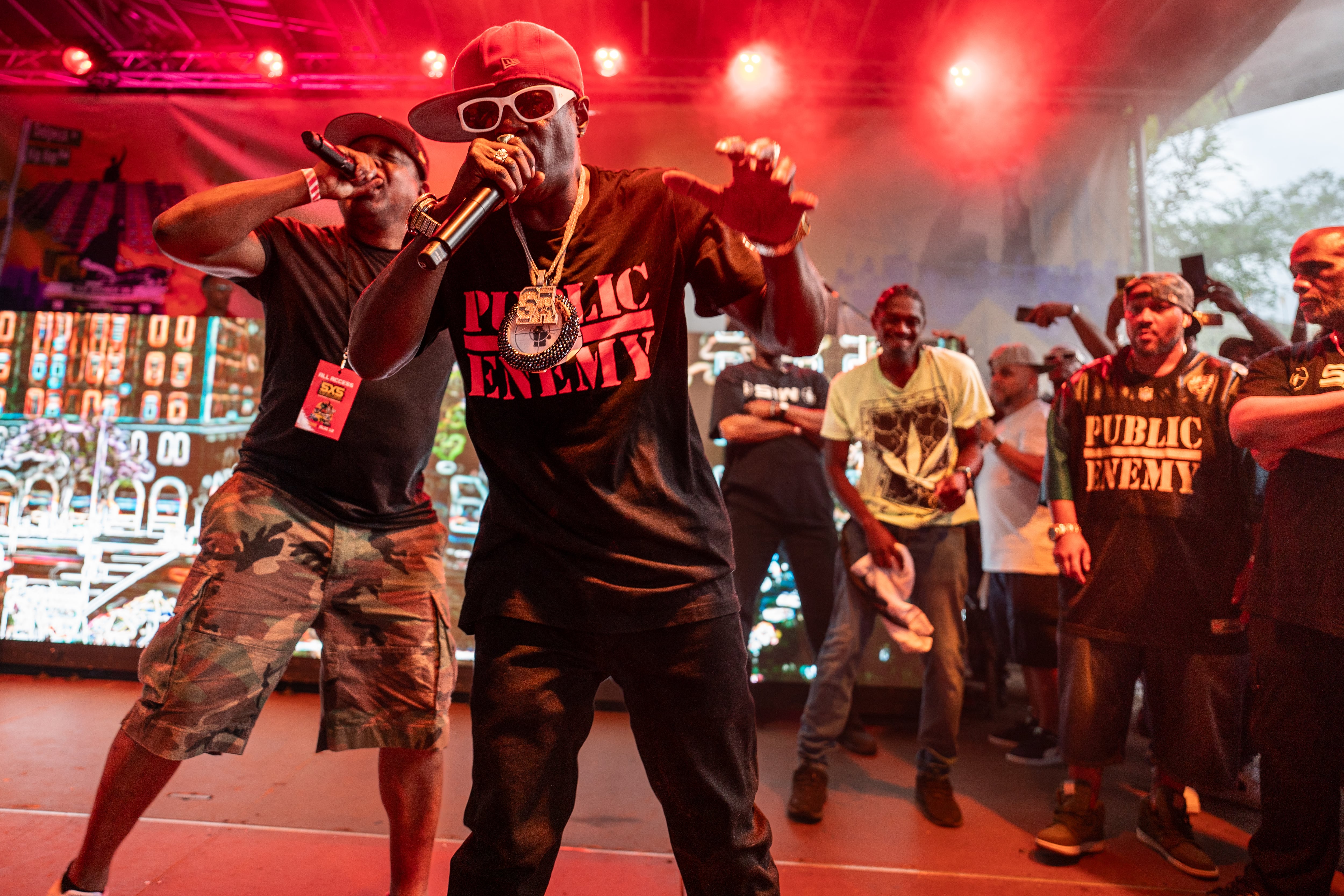
“Hip-hop is not just an art form. It’s a discipline,” Hannah-Jones said. “Our children, our Black children, are being taught Shakespeare, but we’re not being taught about Public Enemy and N.W.A. and Dr. Dre and Ice Cube and the absolute resistance and being able to think critically about the harms that our government and our political and even our public institutions have done to our people.”
Benita Parsons, another panel member, advocated for the school to focus on artistry – and also teach students about the business of the music industry.
“Our kids are creative, and they know how to do artist work,” Parsons said. “But there are no lawyers advocating for us in hip-hop. There are no record labels … we need to see more of that.”
Jessica Shuran Yu is a New York City-based journalist. You can reach her atjshuranyu@chalkbeat.org.