This story was originally published on Feb. 25 by THE CITY. Sign up here to get the latest stories from THE CITY delivered to you each morning.
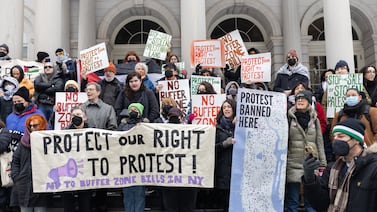
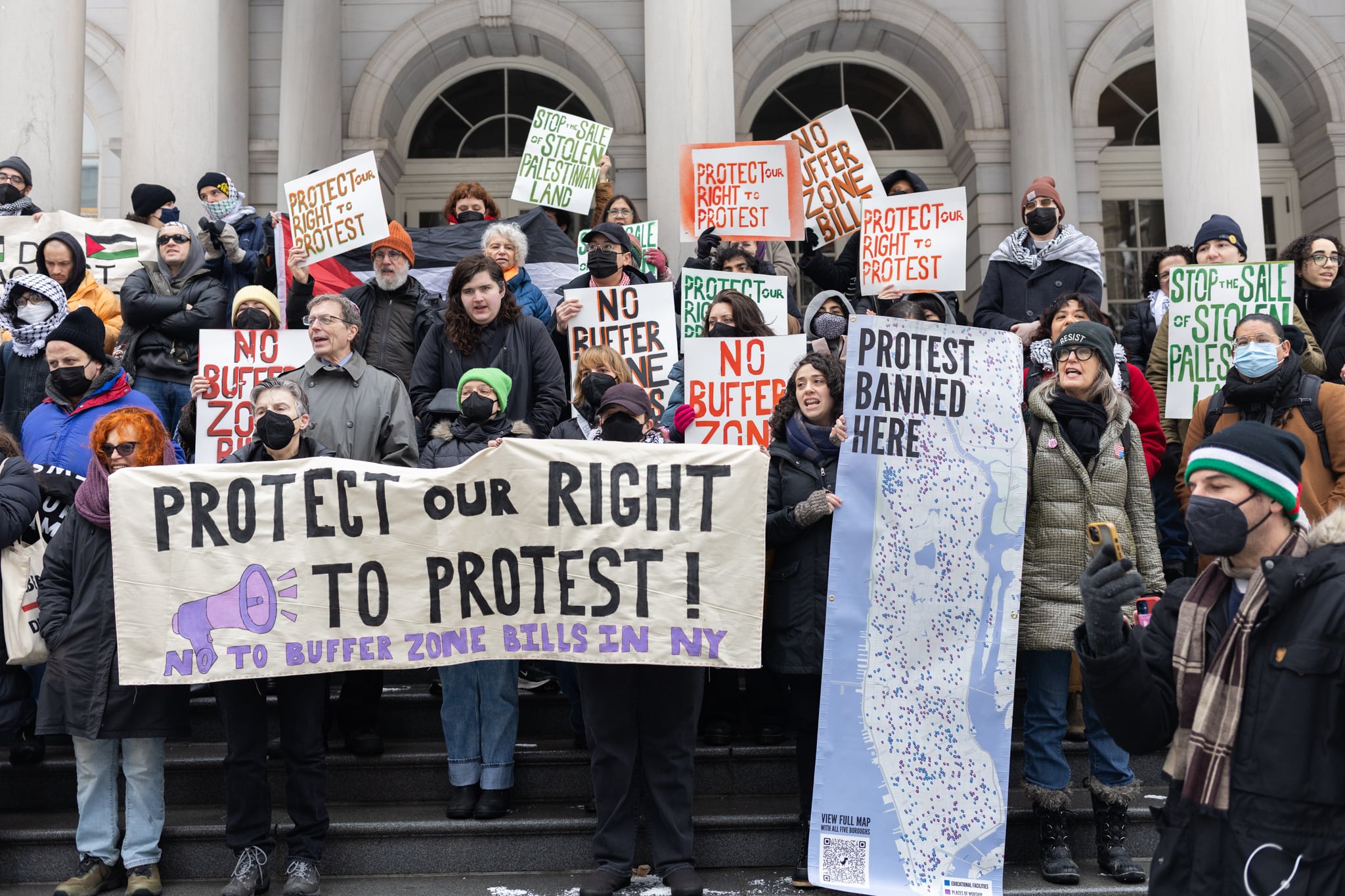
College faculty unions and the New York Civil Liberties Union are turning up the heat in their opposition to a bill they say would greatly restrict the ability to protest or rally at schools and college campuses. Council Speaker Julie Menin says the bill is necessary to help combat hate and antisemitism.
The bill, introduced by Bronx Councilmember Eric Dinowitz last month, would order the police commissioner to establish a “buffer zone” at every entrance and exit of public and private schools, college campuses, and educational facilities and to come up with a plan to address protests in those spaces. Menin, Dinowitz, and the Council’s new Committee to Combat Hate, where the bill was introduced, claim the proposals promote greater transparency for the NYPD around protests and protect free speech.
Though the bill does not explicitly bar protests by unions or any group, organized labor and the NYCLU remain concerned that it gives police greater control to determine who can protest on schools and campuses.
Professional Staff Congress-CUNY president James Davis noted that the police department already has the power to determine if a protest is unsafe and to set up barricades, dole out permits for large gatherings and amplified sound and protect access to sidewalks, entrances and exits.
“The NYPD already has broad discretion to determine if there’s a threat to public safety,” he said in an interview Wednesday morning. “In fact, the NYPD has exceeded their authority,” as evidenced by recent lawsuits and settlements in which the NYPD has been found to have violated the First Amendment rights of demonstrators, added Davis.
“We feel that [the Council] should just go back to the drawing board entirely,” he said.
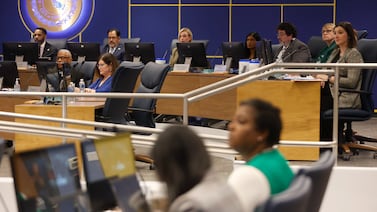
Dinowitz’s bill was the subject of a packed hearing on Wednesday of the Council’s Committee to Combat Hate, which considered a number of bills including one that would establish similar “buffer zones” at houses of worship.
The NYPD expressed skepticism over both “buffer zone” bills. The agency’s head of legal matters, Michael Gerber, testified that while the NYPD condemns antisemitism, it is “obligated to ensure the rights of protesters without regard to the content of protected speech.” He also voiced concern that some language in Dinowitz’s bill, which would order the agency to come up with a “buffer zone” plan even for private schools and universities, may be legally dubious.
Gerber later clarified that the NYPD has no objections to the amended bills.
Dinowitz and Menin defended their efforts to ensure police transparency at educational facilities and elsewhere — and denied that any of the bills up for a hearing on Wednesday threatened free speech.
“We are instructing the NYPD to come up with a plan, and to make transparent that plan, so that everyone no matter where you are on this issue, whether you’re outside or inside of school, can have transparency and can know what you’re getting from the city government – this is what people deserve,” said Dinowitz.
“In creating these buffer zones and making that plan public, we are preserving everyone’s civil liberties and enforcing and protecting people’s right to feel safe,” added Dinowitz, invoking the image of children being afraid to wear hijabs or yarmulkes in their schools.
An amended version of his bill posted late Monday eliminated language determining that the “buffer zone” would measure 100 feet from every entrance and exit of any educational facility, which UAW Region 9A president Brandon Mancilla said was too extreme and would essentially bar protests anywhere in a city as densely populated as New York.
It also more explicitly asserts unions’ federal right to picket their employers. Those changes are a result of feedback from several unions at a meeting convened by the NYC Central Labor Council last week, including PSC-CUNY and the UAW, with representatives from Menin and Dinowitz’s offices.
But PSC-CUNY and NYCLU still strongly oppose the bill and are expected to testify against it at the hearing on Wednesday. United Auto Workers Region 9A, which represents teaching staff at several private universities including Columbia, also opposes the bill.
Justin Harrison, senior policy counsel at the NYCLU, said the group opposes the committee’s entire slate of bills, including the proposal that would restrict protests at houses of worship.
“It’s also troubling that the Council amended these bills barely 36 hours before the Council hearing, leaving the public with little time to review and prepare a response,” Harrison said in a statement to THE CITY. “At a time when the Trump administration is actively targeting, arresting, and even killing dissenters, lawmakers must reject these rushed, ill-advised proposals that will criminalize and punish protest.”
Menin created the committee in January, one week into her tenure as Speaker, and soon after introduced a five-point plan to help “combat antisemitism, strengthen protections for schools and all houses of worship, and expand Holocaust education citywide.” She cited data from the NYPD showing antisemitic incidents accounted for 57% of reported hate crimes in 2025, though only 10% of city residents are Jewish.
Her proposals came on the heels of the police’s widely-criticized response to protesters who picketed the Park East Synagogue, which had rented space to an organization that helps Jews move to Israel and to settlements on the occupied West Bank. Jewish leaders, including Menin, condemned the demonstrations by pro-Palestinian protesters as antisemitic.
Intro 175, the bill creating the so-called “buffer zone” on schools and college campuses, currently has 23 co-sponsors in the City Council, below the threshold for approval. Council majority leader Shaun Abreu, whose district includes Columbia University and City College, has not signed onto the bill. He declined to comment on Tuesday.
(Disclosure: Irizarry Aponte is a PSC member in her role as an adjunct instructor at the Craig Newmark School of Journalism at CUNY.)