Did you know search engines like Google are changing the way you see news? Keep Chalkbeat’s valuable education coverage at the top of your feeds by clicking here and checking the box next to our name.
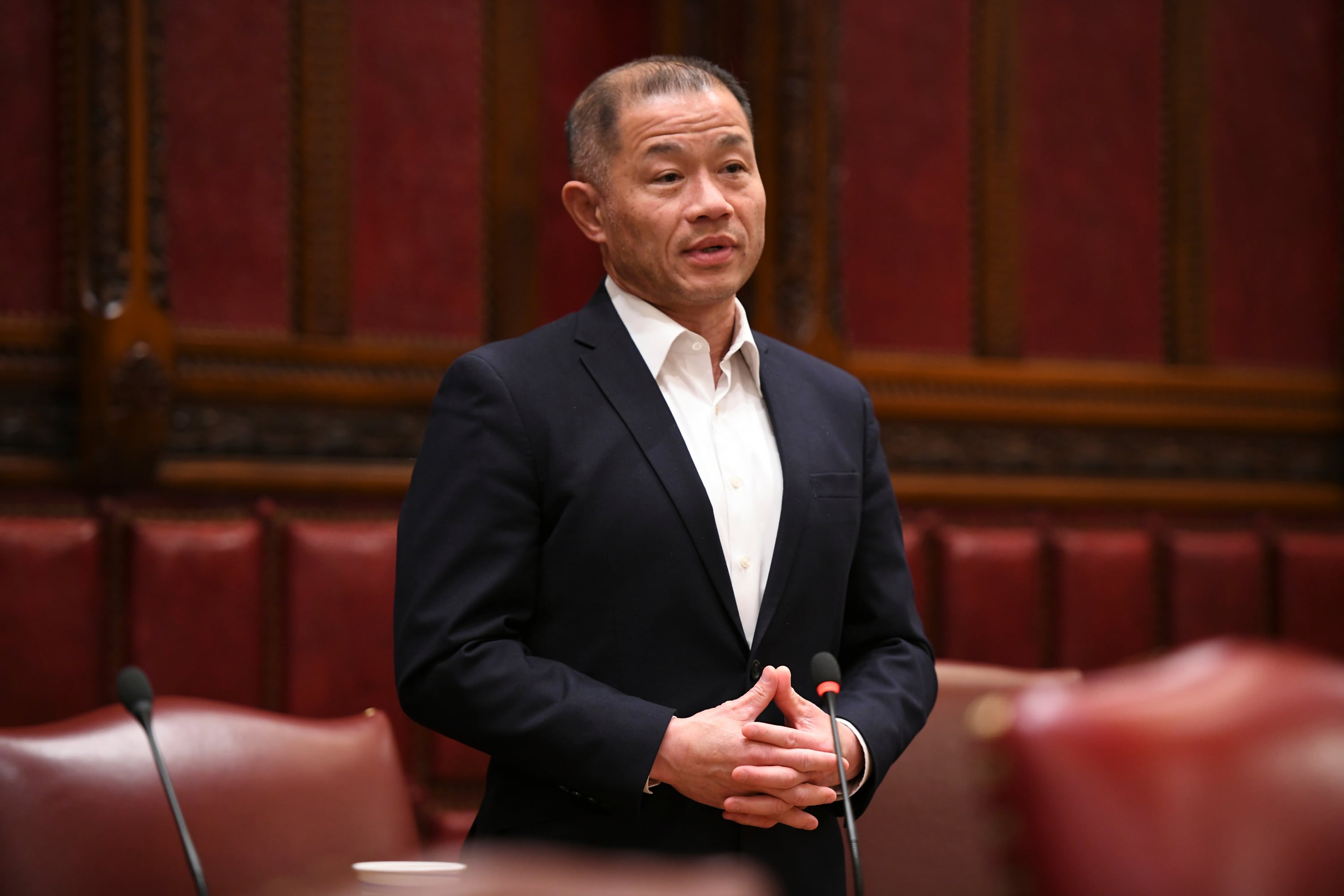
State Sen. John Liu plans to introduce a bill Monday that would strip Gov. Kathy Hochul and future New York governors of the power to opt into a Republican-backed federal tax credit scholarship program.
The legislation would grant the state’s 17-member Board of Regents authority to determine whether New York participates in the program, which is designed to expand private school choice and can also funnel money to public school students.
The program, part of the One Big Beautiful Bill Act signed into law by President Donald Trump, has divided Democrats. Last month, Hochul became the second Democratic governor to opt into the program despite strong objections from teachers unions and some civil rights groups. She argued that it is essentially free money from the federal government.
Beginning on Jan. 1, taxpayers can redirect up $1,700 of their tax bill to scholarship-granting organizations and get a full rebate from the federal government. Those organizations then give money to qualifying families through tuition scholarships to private schools or funding for tutoring and other services for public school students.
Liu opposes the voucher-like program that will allow taxpayer money to fund private schools. He has raised fears that it could nudge some public school students to enroll in private schools and dent public school budgets. (Still, public school funding has largely increased despite enrollment declines in recent years.)
The bill would not prevent private and public school students from receiving tax credit scholarship money in 2027, the program’s first year, Liu said. It would hand the Board of Regents the decision for 2028 and beyond, as states must decide whether to opt in annually.
“I know there are many colleagues [in the legislature] who have been chomping at the bit to do something about this federal voucher system,” Liu told Chalkbeat.
The Board of Regents, who are chosen by state lawmakers, are better situated to make the decision than Hochul because of their education expertise and independence, Liu contends. He also argues the program could be short-lived if a future Democratic president successfully repealed it, a possibility with strong Democratic majorities in congress.
A spokesperson for Hochul did not indicate if the governor would veto Liu’s bill if it came to her desk, though she recently said that she wants to exert more control over state education policy.
“Governor Hochul has been clear: she’s not going to leave money on the table when it could help our kids, including those in public schools,” spokesperson Jonah Allon said in a statement.
Backers of the federal tax credit scholarship see public school participation as a crucial way of building bipartisan political support for the program. If public school districts find ways to benefit from the federal funding boost to support special education, tutoring, and other services, the Board of Regents might face pressure to opt in to avoid cuts to those initiatives.
By the same token, Liu’s bill could lead some school districts to delay investing in fundraising efforts to capture the federal money if it’s unclear whether New York will participate in the future.
Board of Regents Chancellor Lester Young did not immediately return a request for comment. State Education Department spokesperson JP O’Hare welcomed the legislation.
“We appreciate Senator Liu’s commitment to preserving the independence of education policymaking and ensuring these important decisions remain where they belong, with those charged with protecting and strengthening education for all New Yorkers,” O’Hare said in a statement.
Other states have also taken some decisionmaking authority to opt in out of the governor’s hands, which is allowed under the federal law authorizing the program.
In Rhode Island, lawmakers passed a bill that requires legislative signoff for the state to opt in to the tax credit scholarship initiative, a measure the governor signed into law. In Kentucky, North Carolina, and Kansas, Republican state lawmakers overrode the vetoes of Democratic governors to opt their states in.
Alex Zimmerman is a senior reporter for Chalkbeat New York, covering NYC public schools. Contact Alex at azimmerman@chalkbeat.org.