Did you know search engines like Google are changing the way you see news? Keep Chalkbeat’s valuable education coverage at the top of your feeds by clicking here and checking the box next to our name.
Democrats’ far-reaching victories on Tuesday have the potential to reshape American schools and politics. Here’s how.
The end of Republican dominance of education in some states
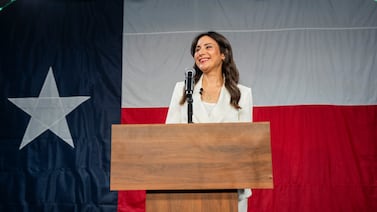
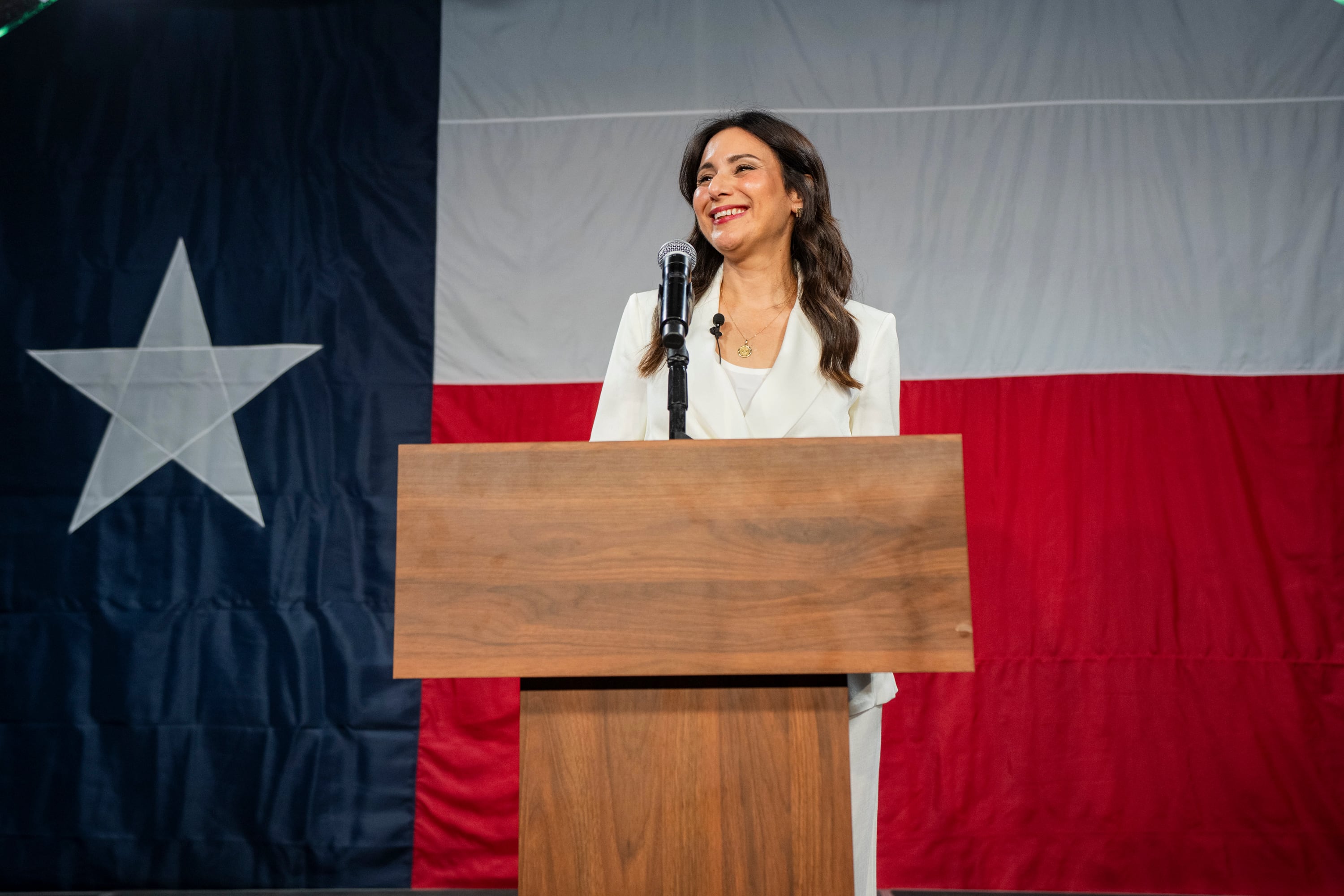
Gina Hinojosa got involved in politics to prevent her son’s elementary school from being closed. She got elected to the Austin school board, then the state House, and now will be Texas’ first Democratic governor in more than 30 years. “I am a mom who loves her children, who believes in their teachers, and who believes in Texas public schools,” Hinojosa said in her victory speech last night.
Hinojosa’s victory — along with wins by a crop of Democrats in states including Georgia, Iowa, and Ohio — marks the end of Republican control over education policy in several parts of the country. In recent years, these states, often considered safely red, created or vastly expanded subsidies for private schools, limited how teachers talk about fraught cultural topics, and, in Texas, took over school districts deemed underperforming. Now, Democrats will have a say in crafting education policies in a new set of states. For her part, Hinojosa wants to increase funding for public schools and give local control back to districts.
Private school choice programs have a target on their backs
Hinojosa also wants to limit the state’s new private school choice program. “We will work tirelessly to repair the damage of the Texas voucher scam and end an era in which our schools are sold for parts,” she said in her victory speech.
She, as well as Iowa governor-elect Rob Sand, campaigned on reining in private school subsidies and defending public schools. This populist strategy — bucking advice from many commentators in the wake of Trump’s 2024 victory — appeared to work. In coming years, more Democrats may adopt this playbook.
On policy, we can expect fights in a number of states over the future of school vouchers: whether they should exist and how to regulate them. But don’t write any early obituaries. It’s one thing to campaign against vouchers; it’s another to uproot a program with an existing group of beneficiaries, especially when most Democrats taking over governors’ offices are likely to be working within divided governments.
A setback for the federal school choice tax credit
A new federal tax credit meant to subsidize private schools and certain public school programs is set to launch next year. It’s the Trump administration’s signature accomplishment on education.
Yet suddenly it seems less stable. Governors opt into the program, and Democrats, many of whom have been skeptical of it, are set to lead most states.
The tax credit will be a complicated calculus for Democratic governors, though. It offers the promise of essentially free federal money, and some states with incoming Democrats have already opted in for next year under the current governor. Once the program launches, withdrawing could become politically difficult.
Meanwhile, with Democrats taking control of Congress, skeptics of the tax credit may see a chance to revise or scrap it altogether. If a Democrat wins the presidency in 2028 and the party maintains control of Congress, that’s a real possibility.
A warning sign for Democrats in Oregon
Democratic Gov. Tina Kotek held onto her seat, but she underperformed in a campaign where education was at the center. Kotek was hammered during the campaign over the performance of Oregon’s schools. In a number of counties, she actually ran behind Kamala Harris’s 2024 numbers — an unusual outcome, to put it mildly.
This is a warning to Democrats on an otherwise great night for the party. Many other blue states also have lagging educational outcomes. That’s a political liability that might matter more when the political environment is less favorable.
Will there be culture war detente or conflagration?
Many losing Republican candidates ran ads focusing on transgender athletes or warned about lessons on gender identity in schools. This pitch didn’t seem to resonate with voters. Some Democrats emphasized their moderate views on cultural issues or described them as a distraction.
It’s possible that the election results will cause something of a detente in the culture wars that have roiled public schools for years. Perhaps Republicans will feel they’re no longer gaining political advantage by talking about transgender rights or “critical race theory.” Maybe leaders in states with newly divided governments will try to find common ground on education issues. Some Democrats are not eager to fight cultural battles after all.
“Like most Iowa parents, we want to focus on math and reading — not political agendas from either extreme,” Sand, the incoming Iowa governor, said in one ad.
It’s also possible that fights over these cultural topics will just become more bitter. Ballot measures restricting transgender athletes passed or were leading in Arizona, Nebraska, Colorado, and Washington. Some conservatives may see this as an electoral bright spot that warrants more attention, not less.
Matt Barnum is Chalkbeat’s ideas editor. Reach him at mbarnum@chalkbeat.org.