Did you know search engines like Google are changing the way you see news? Keep Chalkbeat’s valuable education coverage at the top of your feeds by clicking here and checking the box next to our name.
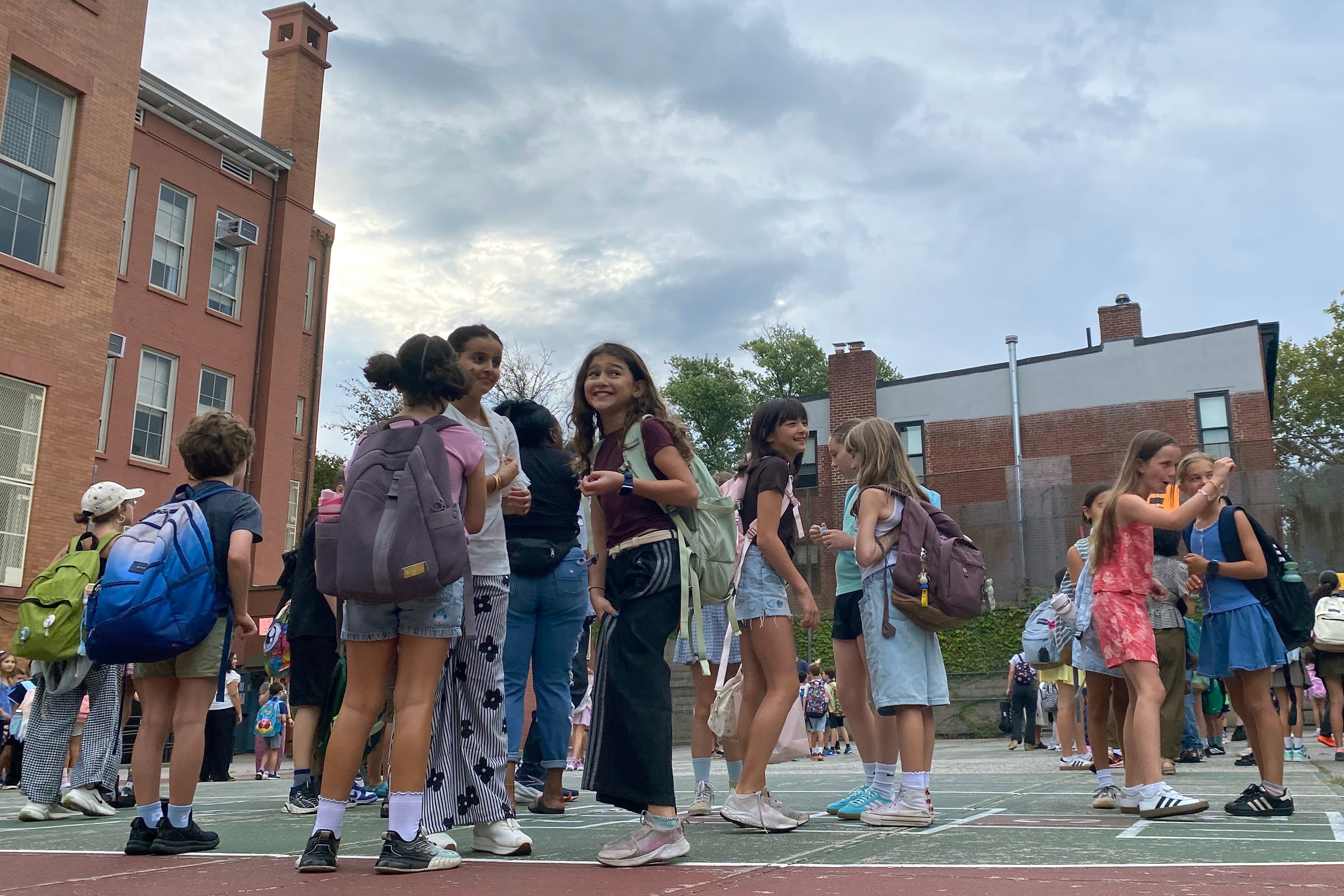
New York City’s public schools lost about 23,000 students, or nearly 3%, from the year before, according to preliminary numbers the Education Department released Monday.
That leaves the nation’s largest school system with about 766,900 students, from kindergarten through senior year, as of Oct. 31, with several contributing factors leading to the drop: falling birth rates, families leaving the city, and a slowdown of immigration into the five boroughs under President Donald Trump.
Over the past decade, the city has lost about 200,000 students, or nearly 20%.
Enrollment in city-funded preschool programs was up slightly, thanks to the rollout of a new program for 2,000 2-year-olds this year as well as an uptick in 4-year-olds signed up for prekindergarten programs.
What the dip means for school budgets remains murky. Historically, when schools have fewer students than projected on their roster, the Education Department claws back money in the middle of the school year. But since the pandemic, the city has largely kept school budgets steady despite enrollment declines. Officials declined to say whether they planned to continue that policy, known as being “held harmless.” Since 2020, New York City has spent nearly $2 billion to prop up budgets at schools with declining enrollment.
Any changes to wind down that policy could be politically explosive, as schools could have to cut back on after-school and other enrichment programs this school year and eventually let go of teachers. When former Mayor Eric Adams proposed phasing it out, the blowback was so intense that City Council members apologized for giving him the green light. (The decision was later rolled back.)
In his first budget deal, Mayor Zohran Mamdani kept school budgets whole, though some experts warn that approach is inequitable because it allows schools with declining enrollment to spend significantly more per student than other campuses.
Schools Chancellor Kamar Samuels has repeatedly raised concerns about declining enrollment, saying that the city will need to look closer at closures or mergers for schools too small to offer a full array of courses. Already, the city is floating proposals to close two small schools in Harlem and one in Brooklyn, as well as merge two sets of schools in the Bronx and Brooklyn, according to public documents. Those plans are expected to be voted on by the Panel for Educational Policy over the next two months.
“We’ve started to have conversations in communities,” Samuels told the Chancellor’s Parent Advisory Committee last week. “It doesn’t mean it’s not going to be tough sometimes, but they have been going pretty well.”
Enrollment is projected to continue declining. By the 2034-35 school year, the city is predicting that the student population will fall by another 130,000, according to demographic projections from the School Construction Authority.
The declines in New York City mirror national trends. Thirty states have seen public school enrollment declines since 2014. Many large school systems — including in Los Angeles, Chicago, Philadelphia, and Houston — are also grappling with sharp drops.
Mamdani’s administration pointed to some efforts to help bolster city schools, including reducing class sizes, which is required by state law and has likely been aided by declining student headcounts. Aside from continuing some of his predecessor’s initiatives, Mamdani has yet to articulate a vision for the public school system. He has focused more on his affordability agenda and expanding his free 2-K program, which expects to add 10,000 more seats next year.
When the city’s free preschool programs for 2-, 3-, and 4-year-olds are included in the enrollment tally, the total is 863,100, according to the Education Department’s preliminary data. That was down about 2.6% from the previous year.
Chalkbeat New York Reporter Michael Elsen-Rooney contributed.
Amy Zimmer is the bureau chief for Chalkbeat New York. Contact Amy at azimmer@chalkbeat.org.
Alex Zimmerman is a senior reporter for Chalkbeat New York, covering NYC public schools. Contact Alex at azimmerman@chalkbeat.org.