
Sign up for Chalkbeat’s free monthly newsletter How I Teach to get inspiration, news, and advice for — and from — educators.
Philadelphia wants to help fill the city’s severe teacher shortage by training some students to become educators before they leave high school.
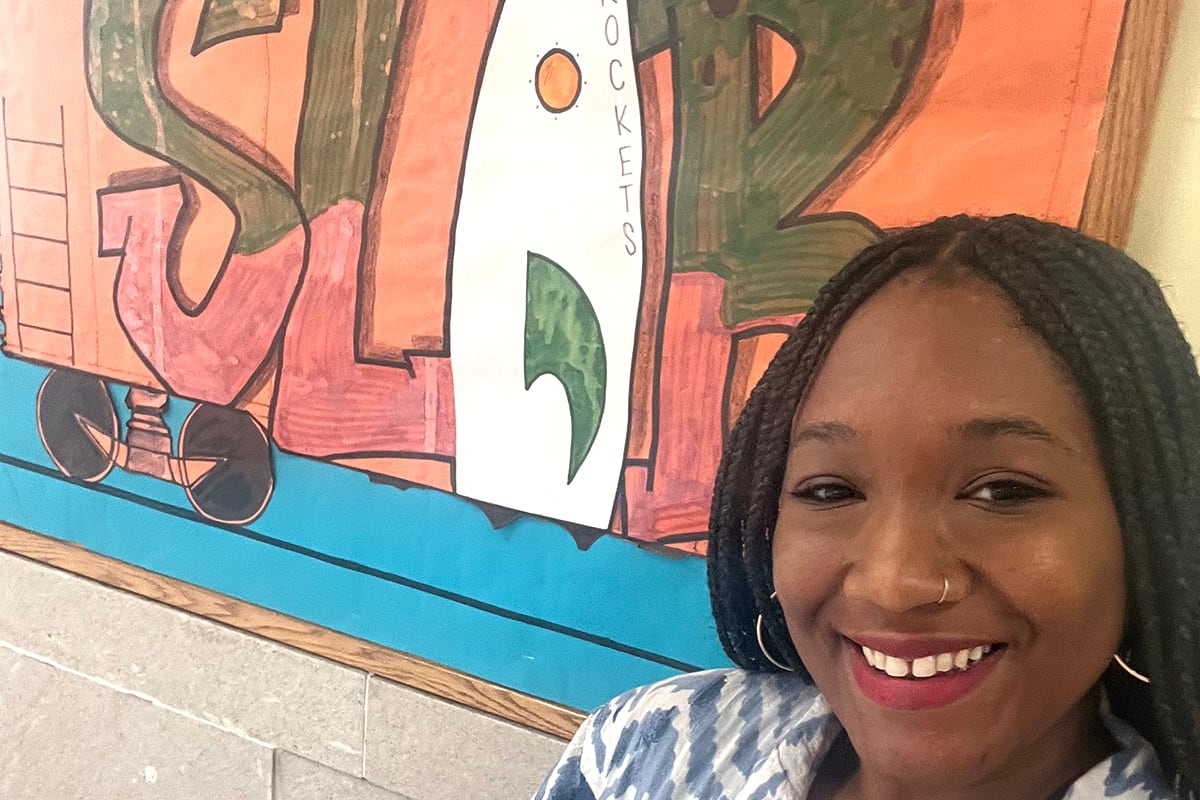
Gina Dukes champions that effort. She runs the district’s first career and technical education program meant to train future K-12 educators, which launched in 2023 at Science Leadership Academy at Beeber. The district also offers a similar program at Olney High School and an early childhood education program at Parkway West High School.
Students in the program at SLA Beeber learn the fundamentals of teaching, serve as teaching assistants, and have the opportunity to earn up to a year’s worth of college credit. The Center for Black Educator Development supports the program by providing curriculum and learning experiences.
Dukes, who has been teaching for nearly a decade, said the program isn’t just for students who are certain they want to become teachers. Her aim is to inspire any young person to look beyond what they think they’re capable of and plan for a career that can make a difference.
This interview has been edited for length and clarity.
How did you decide to become a teacher? What led you to want to teach the education career training program?
It was the first job I got out of college. I was always interested in education — I’m from Philadelphia, and I’m someone who had really awesome teachers. I felt in a lot of ways, I got really lucky. I felt like I was kind of plucked out of some environments and put on a different path that a lot of my peers and even family members didn’t have access to.
I was at Daroff Elementary, which has now closed. A counselor told me to apply to Andrew Hamilton, where they have an academic track for middle school. There, I had Ms. Abbott as a teacher, who inspired the TV show Abbott Elementary.
Ms. Abbott was amazing, but she also demanded a level of excellence. She was like, “You’re going to work; you’re going to do public speaking.” That was like the first real challenge I had, and I thrived in her class. Then I went to Science Leadership Academy, where I had a really awesome teacher, Matthew Kay. He made learning so much fun.
I always wanted to be someone like Mr. Kay or someone like Ms. Abbott, who helps students to see themselves beyond what they saw themselves as. I knew that I wanted to change the education system because I felt like I got lucky.
My faith sustains me and reminds me I don’t have to have all the answers or do it on my own strength. I am still growing as a teacher. I realized teaching is not about having it all figured out — it’s about having the courage to keep becoming.
How do you approach teaching and inspiring your students?
Not everyone wants to teach, obviously, and teaching is not for everybody. So my program is for future teachers, but also future leaders. I tell them, regardless of if you want to go into education, you’re going to learn tangible, practical skills that can improve your college application, that can improve your resume, that can take you far in the world professionally.
Teachers are making lesson plans, they’re managing the classroom, they’ve got social emotional skills. That planning, time management, creativity — whatever job they want to do, it’s relevant.
Public speaking is also a big part of my program, college exposure, and leadership. I give students the platform to figure out what they want for themselves. Who do they want to be? What does success look like for you? How can you use the stuff in this program to take you there?
How do you discuss challenges in the education system with your students?
We start with a foundational understanding of the history of education in the U.S., including when schools first started and who were allowed to attend. Students learn about the education reform movements, and we look at current policy.
Every year we go to the state Capitol for student advocacy day, and we meet with lawmakers. Last year, the push was for stipends for student teachers. That really helps students see that they’re not just learning this stuff — this is real. They can actually get involved in these things.
My students see the challenges. I think they see the shortage of teachers who look like them. I think sometimes talking about the challenges makes them get fired up, and I definitely have a lot of kids who are activists in my program.
Philly and many other cities have a severe teacher shortage. What do you think your students need most to continue down the path to become educators and thrive?
One of the biggest things I see is support with going to college. If there could be more scholarships available to students who are committed to teaching in Philadelphia, in schools where there’s a high need, I think that would relieve a burden.
Often for my students, the biggest thing that makes them not want to get into teaching is they think about the money. They think, “Oh, you can’t make a living.” I try to tell them, I’m doing alright. I have been able to do things above what my family has been able to do because of the salary, the stability, the benefits of teaching that I don’t think people often hear about.
I think they also need to see that teaching can be fun. So many people when I tell them I’m a teacher, they say, “Oh, thank you for your service.” Or they’re sad for me, like they pity me. We need to reframe that.
It should be like, “Wow, you’re doing something that’s amazing! You’re changing the future. You’re creating better opportunities.” Not that it’s something to be looked on as a burden, but like a beautiful gift.
Rebecca Redelmeier is a reporter at Chalkbeat Philadelphia. She writes about public schools, early childhood education, and issues that affect students, families, and educators across Philadelphia. Contact Rebecca at rredelmeier@chalkbeat.org.