The new body created to oversee Tennessee’s growing charter school sector is extending its search for an executive director after several members said they were disappointed with the first round of candidates.
The Tennessee Public Charter Schools Commission, created under a 2019 state law, had planned to hire a full-time leader this month as the body ramps up to assume its new role beginning in January. Those responsibilities, which will be handed off by the State Board of Education, include handling appeals from charter operators whose applications are denied by local school boards, as well as running a small but likely-to-grow crop of state-authorized charter schools.
Gov. Bill Lee championed the law and named the commission’s nine members last fall. Since the State Board of Education has numerous responsibilities, the Republican governor said Tennessee needs a governmental body focused solely on ensuring that high-quality charter schools can open and ineffective ones are closed.
During organizational meetings, the new commission’s members frequently said their most important decision will be hiring the right person to be its executive director, a high-profile job that will require building a staff of up to 10 people and engaging with school districts and stakeholders.
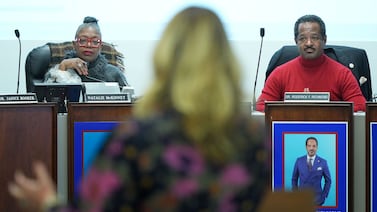
But at a meeting on Wednesday, two commissioners from Memphis were clearly frustrated with the pool of candidates brought forth by McPherson & Jacobson, the executive recruiter hired by the state.
Derwin Sisnett, who co-founded the Gestalt charter management group, said he was “frankly disappointed” with the list. Christine Richards, a former attorney for FedEx, said she was also “unimpressed” and worried that the commission is falling behind its timeline to become operational.
Sara Morrison, executive director of the state board, said the commission likely won’t exercise its appellate role until next summer. The board will continue to handle that responsibility this year.
“You still have a bit of time before the work gets real,” Morrison said. “This time of year is when the work heats up.”
Commissioners rejected a proposal to hire an interim leader and pledged to step up their own involvement with the search.
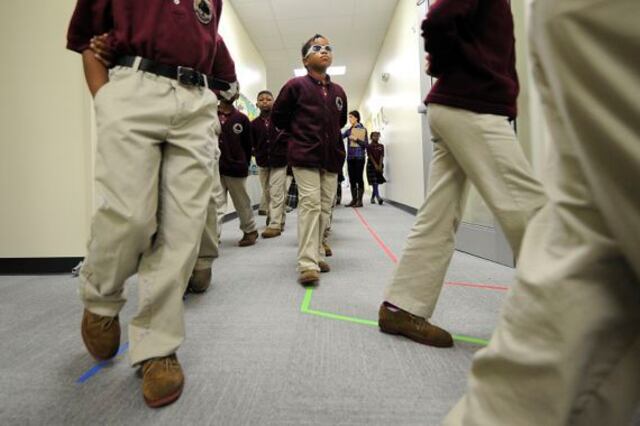
Tennessee’s charter schools sector has grown to 118 since a 2002 state law opened the door to the publicly funded, independently operated schools. Most are in Memphis.
Commissioners have been meeting almost monthly since being named and chose as its chairman Tom Griscom, a former newspaper publisher in Chattanooga who served as director of White House communications under President Ronald Reagan.
The body hired Steve Canavero, Nevada’s former education chief, as a consultant and contracted with Chris Reynolds, the former chief executive officer of LEAD Public Schools in Nashville, to provide staff support.