Sign up for Chalkbeat Tennessee’s free newsletter to keep up with statewide education policy and Memphis-Shelby County Schools.
The Shelby County Heath Department is offering free blood testing for all students who attend the 24 Memphis schools that reported lead-contaminated water last week.
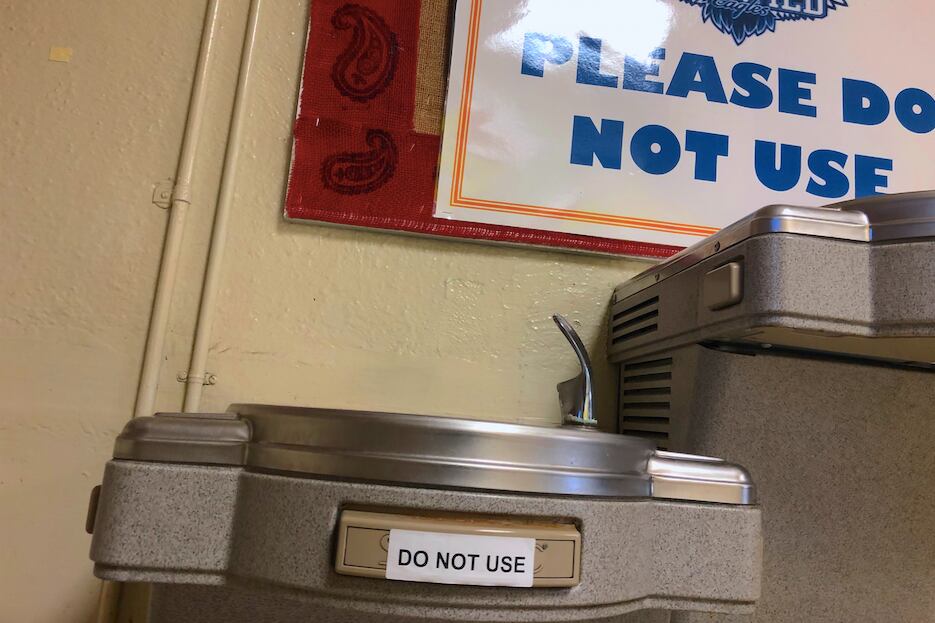
District officials said in a press release Aug. 8 that most sites with unsafe lead levels are kitchen or concession stand sinks. But seven schools have at least one water source containing over 10 times the state legal limit. And Kingsbury Middle and Raleigh Egypt High schools found the toxic metal in drinking fountains.
Health Department Director Bruce Randolph urged families notified of school lead risk to call 901-222-8219 to set up a blood screening appointment.
“Early detection and treatment is the best way to protect children who have been exposed to lead,” he said in a Thursday statement.
Children under six years old are especially vulnerable to the metal, according to the Centers for Disease Control and Prevention. Even a small amount of lead in a child’s bloodstream can damage developing brains and nervous systems, causing learning and behavior issues.
Memphis-Shelby County Schools officials said last week that they immediately shut off water sources with high lead levels, and will be providing bottled water in affected buildings. Health officials have already started visiting those campuses to ensure compliance.
MSCS will be required to test contaminated water sources annually, the health department said, until the lead level falls below the state-mandated maximum of 20 parts lead per billion parts of water.
Parents can also request a blood lead screening through their child’s primary health care provider.
The following MSCS schools reported water contamination:
- Bellevue Middle, kitchen sink (48 ppb).
- Bolton High, two concession sinks (148 and 28 ppb).
- Central High, kitchen sink (24 ppb).
- Cromwell Elementary, kitchen sink (29 ppb).
- Ford Road Elementary, kitchen sink (21 ppb).
- Geeter Middle, kitchen sink (44 ppb).
- Georgian Hills Elementary, kitchen sink (204 ppb).
- Germantown High, two stadium sinks (422 and 30 ppb).
- Invictus Academy at Airways, cafeteria sink (765 ppb).
- Jackson Elementary, kitchen sink (49 ppb).
- Kingsbury Middle, bottle filler outside cafeteria (23 ppb).
- Middle College High, concession sink (212 ppb).
- Northeast Prep Academy, kitchen sink (27 ppb).
- Oak Forest Elementary, kitchen sink (113 ppb).
- Peabody Elementary, kitchen sink (29 ppb).
- Raleigh-Bartlett Meadows Elementary, kitchen sink (235 ppb).
- Raleigh Egypt High, kitchen sink and cafeteria water cooler (276 and 31 ppb, respectively).
- Raleigh Egypt Middle, kitchen sink (23 ppb).
- Sheffield Career and Technical Center, kitchen sink (34 ppb).
- Sheffield Elementary, kitchen sink (42 ppb).
- Southwest Career and Technical, kitchen sink (161 ppb).
- Treadwell Middle, kitchen ice machine (236 ppb).
- White Station High, kitchen ice machine (36 ppb).
- Whitehaven Elementary, kitchen sink (581 ppb).
Bri Hatch covers Memphis-Shelby County Schools for Chalkbeat Tennessee. Reach Bri at bhatch@chalkbeat.org.