Sign up for Chalkbeat Tennessee’s free newsletter to keep up with statewide education policy and Memphis-Shelby County Schools.
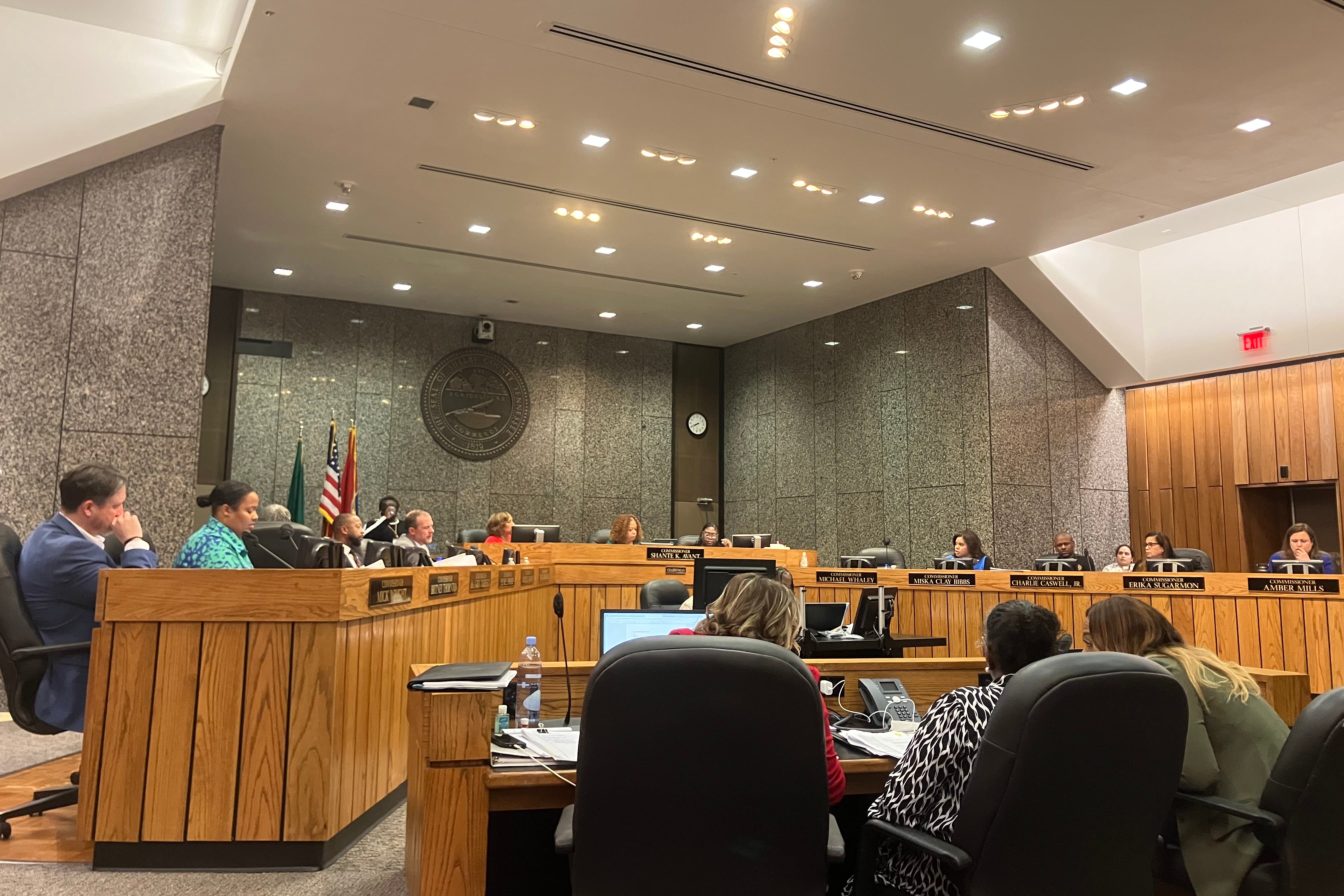
The Shelby County Commission voted to override the mayor’s veto of a full Memphis school board reset election, once again putting all nine seats on the ballot in 2026.
Monday’s vote is the latest twist in a monthslong back-and-forth about realigning school board election dates. It also means five Memphis-Shelby County Schools board members will be forced to run for reelection less than two years after taking office.
In early October, Mayor Lee Harris vetoed the commission’s 2026 election resolution because of those term cuts, saying elected officials should only be removed from office early because of emergencies or criminal conduct.
But in an 8-4 vote Monday, commissioners in favor of the override said the MSCS school board needs to be held accountable to voters in 2026. Commissioners opposed to the measure did not speak.
“Something is very off about what’s going on with our school board,” said Commissioner Britney Thornton, who sponsored the motion to override the mayor’s veto. The 2026 reelection is an opportunity to let the public confirm who they want their school leaders to be, she said.
As tensions rose during public comments, the commission chair threatened to clear the chamber. Community members in favor of the 2026 election reset said the move empowers local voters to choose their leaders; those against said a reset would null their votes from the 2024 election.
Commissioner Mickell Lowery, who was absent from the original vote in late September, sided with reelection advocates Monday to give just enough votes to override the mayor. Lowery said he voted to side with his colleagues and allow their original action to stand.
But questions still remain about the legality of shortening some board members’ terms. Commissioners have said they plan to punt those challenges to state leaders, who sponsored the 2025 law that made election realignment possible in the first place. Lowery said the resolution likely will be legally challenged.
“And it probably should be decided by a court at the end of the day,” he said.
MSCS board members have called the push for an election reset a form of retaliation for ousting former Superintendent Marie Feagins in January. Four of the five members now facing shortened terms voted to fire Feagins.
Since that decision, the school board has faced heavy backlash from some local stakeholders and state leaders alike. Two Republican lawmakers are bringing back their proposals to create a state-appointed “board of managers” to oversee MSCS in the coming legislative session. And Rep. Torrey Harris, a Democrat from Memphis, is introducing a bill that would give voters the power to recall local officials, including school board members.
Plus, 2026 will be the first year that MSCS board candidates will face partisan primaries. Hopeful candidates have until Feb. 19 to announce their bid for a school board seat. And Memphis residents will cast their first vote for the next education leaders at a May 5 primary election.
Bri Hatch covers Memphis-Shelby County Schools for Chalkbeat Tennessee. Reach Bri at bhatch@chalkbeat.org.