Sign up for Chalkbeat Tennessee’s free newsletter to keep up with statewide education policy and Memphis-Shelby County Schools.
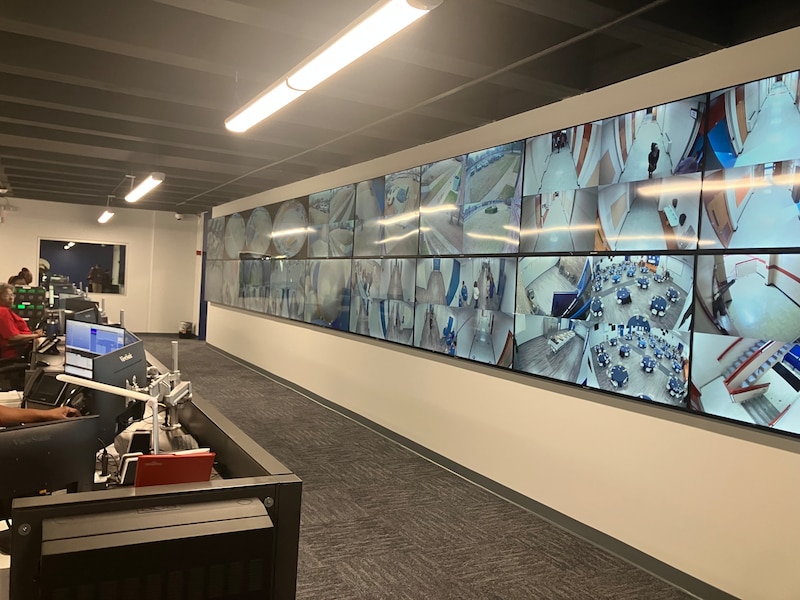
Tucked inside a former South Memphis elementary school is a room with 18 televisions and 30 computers showing live footage of campuses across the state’s largest public school district.
This is Memphis-Shelby County Schools’ new real-time safety center, where leaders say 20 trained staff will monitor video feed and use artificial intelligence tools around the clock to more quickly coordinate emergency responses. It’s part of a yearslong project to overhaul the district’s security system, which includes upgrading cameras at every school building to include AI detection technology.
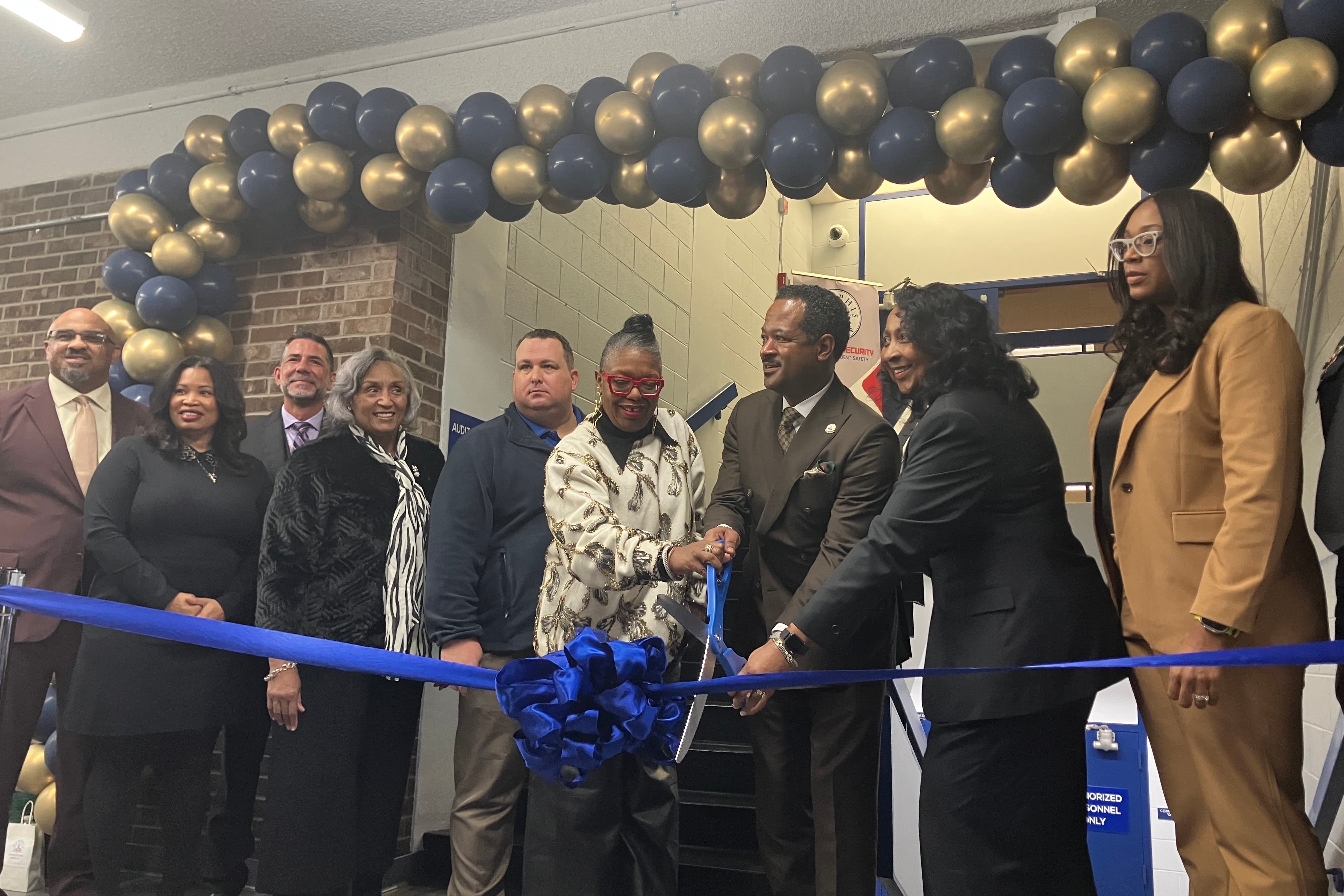
At a grand opening of the safety center Thursday, MSCS leaders dodged questions about how AI technology is being used in the new cameras. It’s unclear how much money the district spent on that technology and renovations to the old Alton Elementary school building.
Carolyn Jackson, the district’s interim chief of safety, said the changes were in large part motivated by a 2021 shooting at Cummings Elementary School that injured one Memphis student and put another in custody.
“That’s what kept me up at night. That’s why we’re here,” Jackson said. “Cummings was really a unique situation … it made me say, ‘We can’t have this anymore.’”
MSCS leaders said Thursday that they worked with the global technology company Bosch to design AI-enhanced cameras that fit the district’s needs. But they declined to share details. According to Bosch’s website, the equipment typically uses visual and audio AI to detect guns and recognize other “unsafe behavior” like crowd formations or students lying on the ground.
Districts across the country have started turning to AI in recent years to boost weapons detection security as the number of school shootings remains at a nationwide record high. Those moves are often met with concerns about the over-policing of students and the likelihood of false alarms.
And there have been recent instances of AI-assisted detection systems failing to work at all, such as the Nashville school shooting last January where the school’s detection technology failed to detect the gun used to kill a 16-year-old student.
MSCS board members approved a nearly $500,000 contract with Bosch to upgrade security cameras in 2022. And in 2024, the district set aside nearly $4 million to transform the old Alton building into a security hub. Interim Superintendent Roderick Richmond said Thursday that the district also used Title IV funding and state grants to finish the project.
Richmond said the center “will allow us to respond faster to potential threats or emergencies, reducing officer response times significantly.”
Jackson said over 50% of the district’s schools are equipped with the new cameras. The real-time safety center, she said, opened around three weeks ago. On top of monitoring and dispatch services, the building is also used as a training center.
Up the stairs from the TV monitoring room, there’s an active shooter simulator that Jackson said both MSCS officers and other local police departments use to practice responses. In a demonstration Thursday, an MSCS officer fired a fake gun as immersive videos played on a large screen.
In one scene, a student pulled a gun out of his backpack and began shooting in the cafeteria. In another, the officer ran into a school building to find a staff member being shot in the auditorium. Jackson said officers will train there annually in accordance with state law.
At Thursday’s opening ceremony, MSCS leaders praised the safety center as a guiding example for repurposing vacant school buildings. In the face of rising maintenance costs, the district formed a facilities committee this fall to come up with creative uses for inevitable school closures over the next decade.
Board members are expected to vote in February on Richmond’s proposal to close four schools at the end of this year. District leaders haven’t decided what those buildings will be used for if the closures are approved.
Bri Hatch covers Memphis-Shelby County Schools for Chalkbeat Tennessee. Reach Bri at bhatch@chalkbeat.org.