Sign up for Chalkbeat Tennessee’s free newsletter to keep up with statewide education policy and Memphis-Shelby County Schools.
Who gets to control Memphis schools while a federal lawsuit over Tennessee’s new school takeover law plays out in court?
That will be the question at the heart of a federal hearing next week in the ongoing Memphis takeover battle.
A federal judge has scheduled oral arguments on Oct. 2 to determine whether to allow a state-appointed oversight board to begin its work or let the local school board to retain control while the lawsuit plays out.
Nine oversight board members, appointed by top Tennessee Republicans in June, were set to seize control of Memphis-Shelby County Schools on July 1. But on June 30, MSCS leaders secured a temporary pause after filing a lawsuit, which argues the takeover is unconstitutional because it nullifies voters’ choices by stripping local school board members of their elected powers.
The October hearing will not delve into final arguments in the lawsuit, which could take months to conclude.
If the court allows the state-appointed board to take control, it would have final say over MSCS’ annual budget and charter approvals. Its members could also replace the district’s superintendent, the first move Houston’s takeover board made in 2023. Tennessee takeover proponents have often pointed to Houston as a model.
As the case moves forward, here are four things to know about the state takeover battle.
Why does the state want to take over MSCS?
Tennessee Republicans have been pushing to take control of MSCS for almost two years, largely in response to what they say is a long history of academic underperformance and district mismanagement.
Rep. Mark White and Sen. Brent Taylor, both Republicans in the state legislature, successfully passed a takeover law this spring after failing to do so in 2025. The law lays out six criteria that would trigger the state to set up a state-appointed board of managers within a local school district.
MSCS is the only district so far to meet the required threshold of at least four, including having less than half of students pass English and math standardized tests and more than a quarter of students being chronically absent.
Some local advocacy groups such as Memphis Lift and Together4Students have rallied behind the takeover and called for an end to the district’s lawsuit. Parents involved in those groups often say something needs to change in MSCS to better student outcomes — but they can’t always name specific issues or solutions.
What do opponents say?
Those against the MSCS takeover often argue that the last widespread state intervention, the Achievement School District, failed to improve student achievement.
Others say the district needs more federal and state investment and long-term leadership stability. That point was echoed in a state-ordered forensic audit of MSCS released this year, which showed that high leadership turnover — including four superintendents in five years — degraded internal policies and processes in the district.
During a Chalkbeat virtual panel in August, local education experts said MSCS also needs to better allocate resources, which will require more school closures amid falling enrollment and rising facility costs.
Current school board members and other local leaders decry the takeover for infringing on Memphis residents’ voter rights. The lawsuit also states that the takeover is unconstitutional and a violation of the 14th Amendment.
In April, a Memphis school board member called the oversight law “racist” because it would allow Tennessee Republicans, all of whom are white, to tap political appointees who would seize control from the locally elected school board, whose members are mostly Black.
Who’s on the state-appointed oversight board?
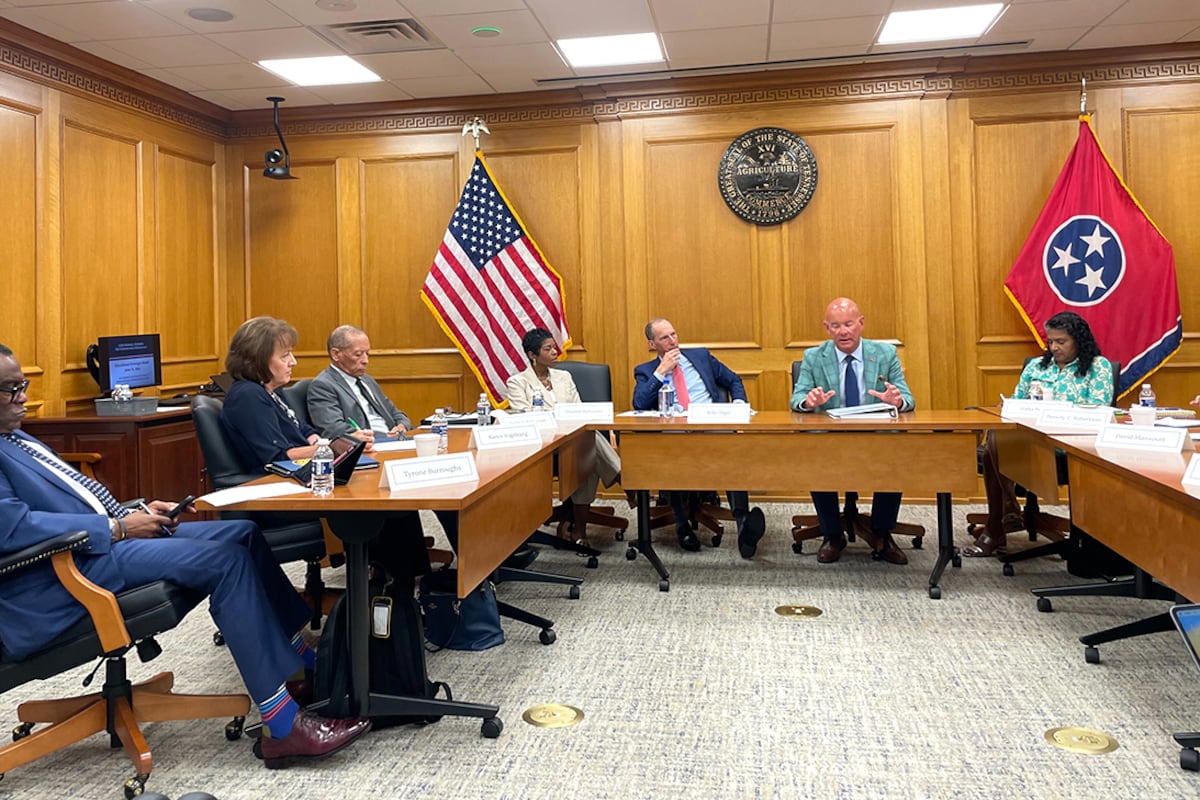
Before the takeover was temporarily blocked, top Tennessee Republicans chose the nine members to sit on Memphis’ oversight board. Many of the appointees have ties to charter schools and organizations, or to MSCS itself.
Former MSCS Superintendent Dorsey Hopson and former board member Billy Orgel are seated on the oversight board. Orgel was selected as the board chair at the body’s first and only meeting on June 18.
Former Tennessee Teacher of the Year Karen Vogelsang was the final board member appointed in mid-June. David Mansouri, who leads one of Tennessee’s most influential education advocacy organizations called Tennessee SCORE, is the only member who is not a Shelby County resident.
The other oversight board members include:
- Vice-Chair Shanea McKinney of Cigna, who is a member of the University of Tennessee’s board of trustees.
- Secretary Nisha Powers, who leads a Memphis civil engineering firm and has served on the Tennessee board of regents.
- Dedrick Brittenum Jr., a Memphis lawyer and former councilman.
- Beverly Robertson, a marketing executive and former president and CEO of the Greater Memphis Chamber of Commerce.
- Tyrone Burroughs, a Memphis CEO who sits on the Tennessee Lottery Commission and the Youth Villages board of directors.
What could happen under a state takeover of MSCS?
The state takeover law gives MSCS’ oversight board broad power over key district decisions, from staff contracts to school closures. The intervention could last up to six years if MSCS continues to meet four of the six criteria outlined in the law.
It’s likely that more schools would be shut down under a state takeover, according to intervention experts and recent examples in Houston and Fort Worth, the sites of two recent state takeovers that Tennessee proponents have often said they want to use as models for MSCS.
Houston’s takeover board voted to close 12 schools over the summer. Fort Worth’s decided to close 14, only two weeks after the state takeover became official. MSCS leaders have already started shuttering schools, with five closed at the end of last year and Superintendent Roderick Richmond vowing to close up to 10 more in the next two years.
Houston’s takeover also came with major curriculum and workforce changes. The newly appointed superintendent, Mike Miles, forced all teachers to reapply for their jobs, causing a mass exodus of educators at schools targeted specifically for state intervention.
Those schools were also required to adopt a new curriculum that some teachers said was too restrictive. In 2025, Miles began to pay teachers based on performance instead of experience. He also offered $10,000 bonuses for teachers who joined the staff at the district’s lowest-performing schools.
It’s unclear which levers MSCS’ takeover board would pull if it takes control of the district. But Houston’s timeline offers insights into early decisions the oversight board could make.
Bri Hatch covers Memphis-Shelby County Schools for Chalkbeat Tennessee. Reach Bri at bhatch@chalkbeat.org.