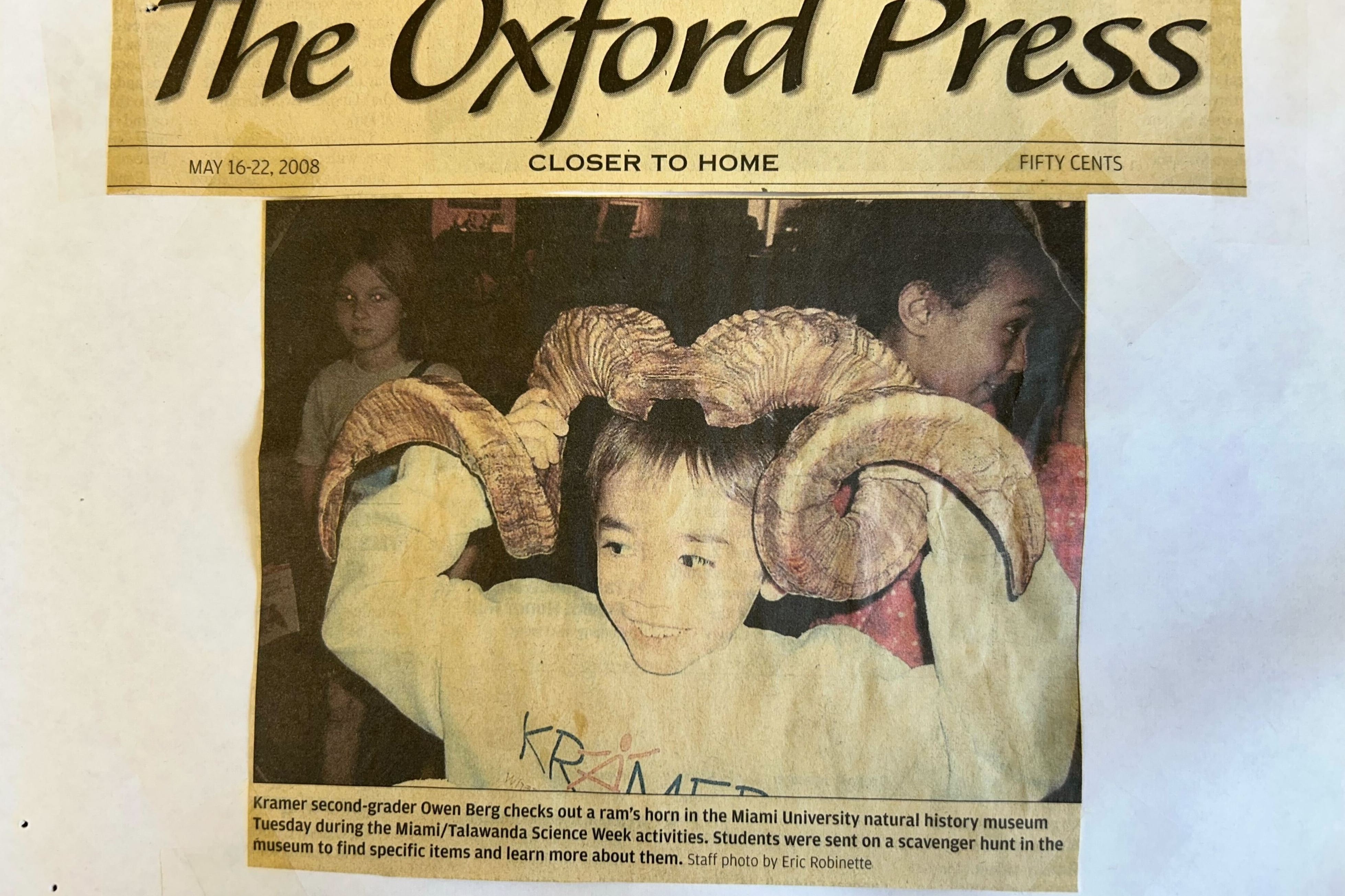

I grew up in Oxford, Ohio, home of Miami University, where I had a front seat to the shrinking local news industry.
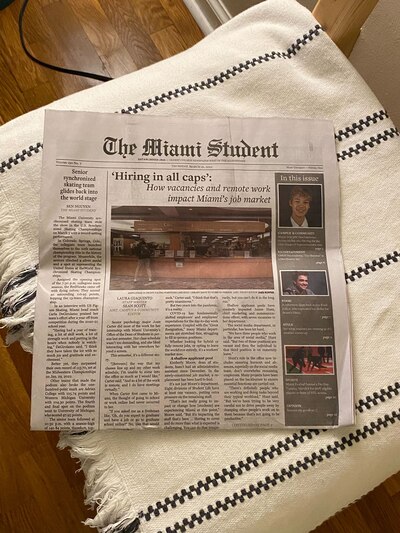
Our local paper, The Oxford Press, grew thinner each year before shutting down last winter. Miami’s on-campus NPR station stopped producing local programming in 2009. By the time I made it to the university in 2018, our student newspaper, The Miami Student, was the largest media organization in town.
I led The Student’s design team, creating illustrations and building layouts for our weekly print newspaper late into the night every Monday. I also wrote fashion columns and edited a small style section. Working at The Student taught me how to write, report, edit, design, and work on a team.
But I’ll admit: I thought very little about who was actually picking up the newspapers or clicking on our articles online. I should have paid more attention. I didn’t realize the responsibility I had to my community as a student journalist. As long as I got to write about whatever I wanted, I was happy. The impact that my work could have on Oxford’s community did not often cross my mind.
I didn’t come to terms with this until I joined Studio 20, a journalism master’s program at New York University, where I took a class called Audience-Centric Journalism. This course opened up my mind to the idea of audience engagement as a guiding principle for journalism in the modern age.
In that class, I was presented with a question that shook my perspective on news writing: Who decides what news matters?
Historically, it has been journalists who decided which stories were the most deserving of reader’s attention. In the age of print, whatever went on the front page was the most important. If reporters were missing the mark, they wouldn’t know unless readers wrote letters or called the newsroom.
Now, half of Americans get news through social media. This has facilitated a boom in journalism from independent online creators, but it has also allowed misinformation to spread like never before.
When anyone can amplify their voice to billions of people, how do we effectively listen to our audience and respond to their needs?
When it seems like there are endless ways for journalists to connect with readers, how do we pick the right strategies? And when readers have thousands of options for where to get their information, how do we ensure people are seeing accurate and thoroughly reported stories?

To me, audience engagement is about answering these questions. In practice, this might look like translating our work into different languages to make sure it reaches the communities that could use it. Or it might look like posting on social media and asking for reader questions or comments to better shape our coverage.
In other instances, audience engagement might mean taking our work offline and delivering articles in person. As a graduate student, I was lucky to work with The City, a publication in New York, on a postcard campaign that delivered impactful service journalism to new readers. Bringing digital news out into the “real world” isn’t always easy, but it’s our mission as journalists to reach the people affected by the topics we cover.
At Chalkbeat, I’ve already had fun posting on our Instagram and X accounts, but I’ll also be coming up with new ways to reach readers on platforms like Reddit and LinkedIn.
Most of all, I’m excited to hear from you. I know I have a lot to learn from our dedicated readers, so if you have a story or a suggestion for us, please reach out to me at oberg@civicnews.org.
Owen Berg is Chalkbeat’s audience engagement intern. He is a recent graduate of the Studio 20 program at New York University’s Arthur L. Carter Journalism Institute. He was born in Oxford, Ohio, and attended Miami University.