
Sign up for Chalkbeat’s free monthly newsletter How I Teach to get inspiration, news, and advice for — and from — educators.
The morning after federal immigration officers detained two Columbia Heights Public School District students in one day, including 5-year-old Liam Conejo Ramos, Superintendent Zena Stenvik woke up with one thought.
“We need justice for 5-year-olds and all these other children,” she thought.
The superintendent called her school board chair at 6 a.m. She was ready to speak publicly.
In the weeks leading up to that morning, as a surge of immigration enforcement crushed the Twin Cities, Stenvik had hoped her district in the inner-ring suburbs of Minneapolis would fly under the radar.
But those weeks took their toll on the district of roughly 3,400 students: Agents circled its schools “constantly throughout the day,” Stenvik said. Agents came on school property. ICE raids nearby drove recess inside.
“We felt that we couldn’t have any larger target on our back than we already had,” she said.
During an ensuing press conference, Stenvik and others told reporters what they knew: The story of students detained on their way to school, and of Liam, whose blue bunny hat became a symbol of the toll that immigration enforcement has taken on young children.
She felt compelled to speak for her community, she told Chalkbeat in an interview.
“When it’s impacting children, that is my business,” she said. “When it’s impacting our families and our communities, that is my business.”
The past month has altered Stenvik’s district, with fewer students in the classroom and more online. The disruptions are so severe that Twin Cities districts are considering asking for waivers to state testing requirements, she said.
Nearly half of Columbia Heights students are English language learners, and the district expected to feel the effects of increased immigration enforcement. The district began working with an immigration law firm and trained staff on what to do if an agent came to the school.
Instead, parents have been abruptly detained, and students have been stopped on their way to school. Seven students have been detained so far this year, and two are still at the Dilley Detention Center in Texas.
“We were prepared for an ICE agent to show up with a judicially signed warrant,” she said. “We were trained on what to do with that scenario, right? That’s not happening at all.”
For Stenvik, who grew up in the Twin Cities and has worked at Columbia Heights since 2007, her work is centered around community, she said.
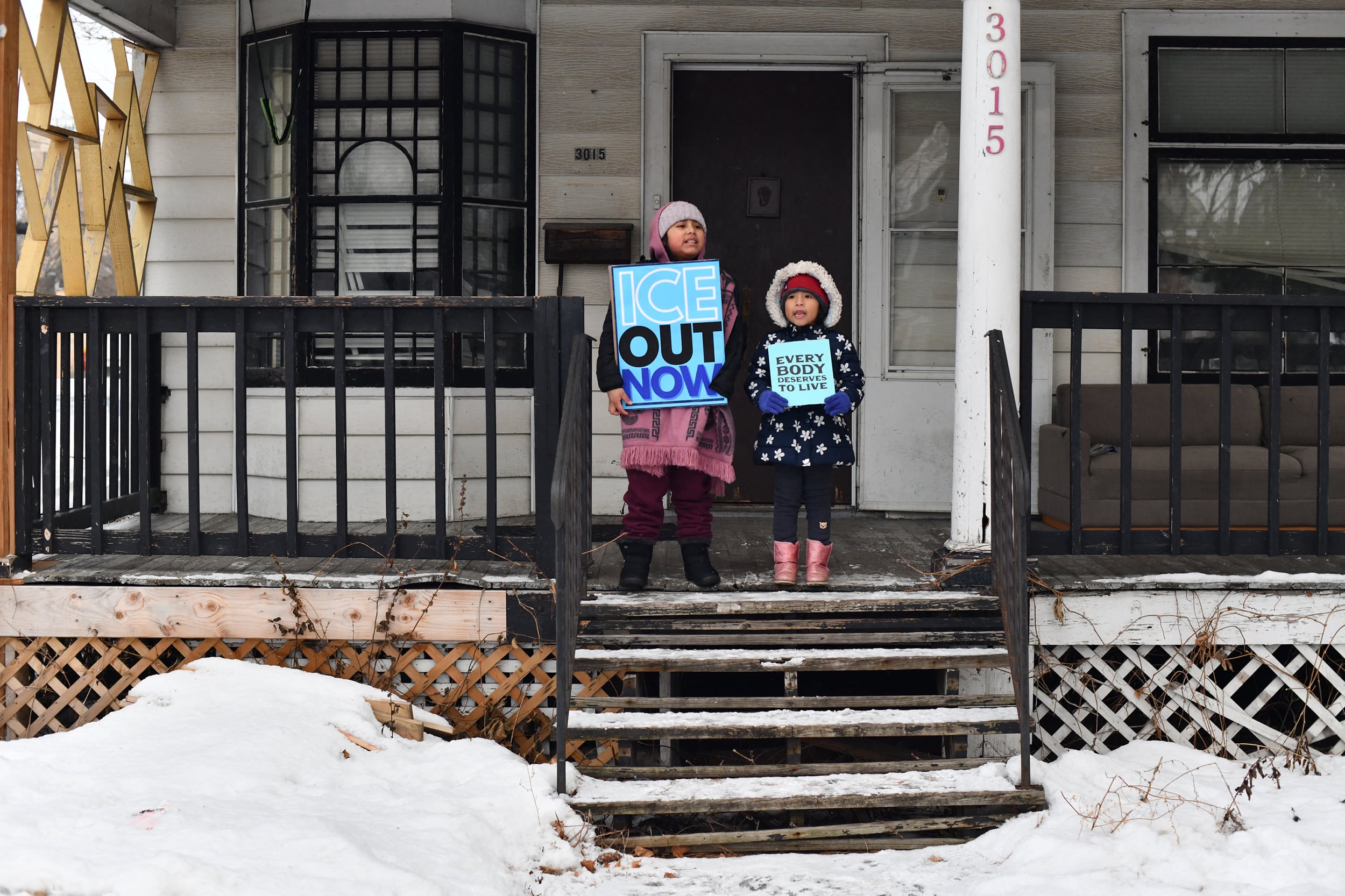
“We’ve got our core values and we’re really showing them,” she said. “There’s so many different people… even if they’re doing one small thing to contribute, they’re doing it, whether it’s parents standing on street corners or people delivering food.”
Stenvik spoke with Chalkbeat on Tuesday. On Thursday, border czar Tom Homan said he was winding down the enforcement surge in Minnesota. Local officials have expressed both relief and skepticism. Stenvik said she would welcome a drawdown, especially one that would allow students to return to the classroom.
Stenvik discussed how the district has confronted the crisis in her community, what she’s learned from her long career teaching students from around the world, and the moments of joy she’s witnessed during a dark time.
This interview has been lightly edited for length and clarity.
Department of Homeland Security officials have said they are not targeting schools or students. Does this reflect your district’s experience?
This morning, behind one of our elementary schools and behind our high school at around the time where children are coming to school, there were three or four ICE vehicles parked right behind our school, so they’re very present during arrival and dismissal time. I mean, the Dilley Detention Center exists because they’re detaining children, right? Our children who went into the Whipple [federal] building, and our staff members who went with them told me that they have cartoons playing. They’ve got a stack of children’s books. So children are being impacted.
I had multiple teenagers who were just driving to school, they were pulled over. At this point, our children are carrying their passports and whatnot and they weren’t apprehended. They were able to come to school. But when you’re surrounded by six or eight masked armed men who are not identifying themselves, who are shouting different orders, and you’re a 17- or 16-year-old kid just trying to get to school, it’s very traumatizing and very impactful.
How do you stay in contact with students who have been detained?
We start making phone calls and get a hold of family members to see if they have any more information. And then we have a list of different immigration attorneys who are in Texas and here in Minnesota as well, who are willing and able to support the families. And all of the cases that I’ve personally been involved in are people who have some sort of legal status.
We had a mother who went to her regularly scheduled immigration appointment, and then was detained there, even though she was following the law and following the rules.
How do you welcome students back when they return?
There are different community members and organizations who have been helping to get them a ride home from the airport.
We have a mobile clinic that we’re working with, and they’ll go to the child’s home and give them a checkup because they’re coming home sick. They’re all coming home sick. We have mental health providers at our school who are connecting with them, social workers, school psychologists, and therapists who are connecting with them.
Yesterday, some of our teachers from Valley View Elementary School went to one of our students who came back, and brought them pizza and groceries, and all of their teachers showed up that they’ve had over the years.
We’re trying to have this balance of giving them privacy and time to settle back in with determining what their needs are in terms of mental health and just basic needs like food and supplies.
How do you balance students’ academic needs when there’s so much happening outside of school in the community?
Our teachers are doing a phenomenal job of continuing to teach and to teach the academic standards. But they’re also balancing out their lessons with just providing time and space if kids want to talk about it or write, there’s art projects happening.
I’ve been working with other districts here in the metro area, and we are going to be seeking any sort of reprieve from some of this state testing that has to happen because it’s not going to be an accurate reflection of the academic prowess that our students have.
You once taught English learners. In the midst of a crisis that disproportionately affects them, what should people know about these students?
When I was an EL teacher, my students brought the whole world into my classroom. And people always think the teachers are giving all of the knowledge, right? But I learned so much from my students. At one point, I had 12 different languages in my classroom.
When I was in kindergarten in St. Paul Public Schools, that’s when the Hmong refugees came over [in the 1970s and 1980s]. So I remember being a kindergartner and having Hmong classmates and learning about them and their culture as peers. In recent weeks, there have been ICE raids at Hmong households. So many people likely don’t understand why Hmong people came to Minnesota and [how they rescued] many of our own American pilots during the war.
It’s just taking a moment to, rather than judge, learn and listen first.
In another interview, you said, “Education is such a joyful career.” What moments of joy have you felt recently?
In some of our really darkest weeks, I texted all of my principals, and I said, ‘Your assignment today is to find one moment of joy and share it with each other on this text chain.’ It’s important to not fall into despair.
This morning, before I came into my office, I stopped at two different elementary schools. Just seeing the kids at this point, in the wintertime in Minnesota, watching little children get all their snow gear off, it’s just quite a sight to see, so adorable.
I went around and saw the small class sizes, because we have many kids online at this point. But our staff and our teachers are continuing to provide these joyful classrooms. In our elementary schools right now, there’s hearts everywhere for getting ready for Valentine’s Day.
After they’ve been stopped by ICE agents on their way to school, I’ve been meeting with [students] individually, just to check in and see how they’re doing. I’ve heard different statements over the last month, like, ‘Why do they hate me?’
So I’m asking children and staff, ‘Do not internalize this. You’re good. You are. We want you here. You belong here. We love you.’
Lily Altavena is a national reporter at Chalkbeat. Contact Lily at laltavena@chalkbeat.org.