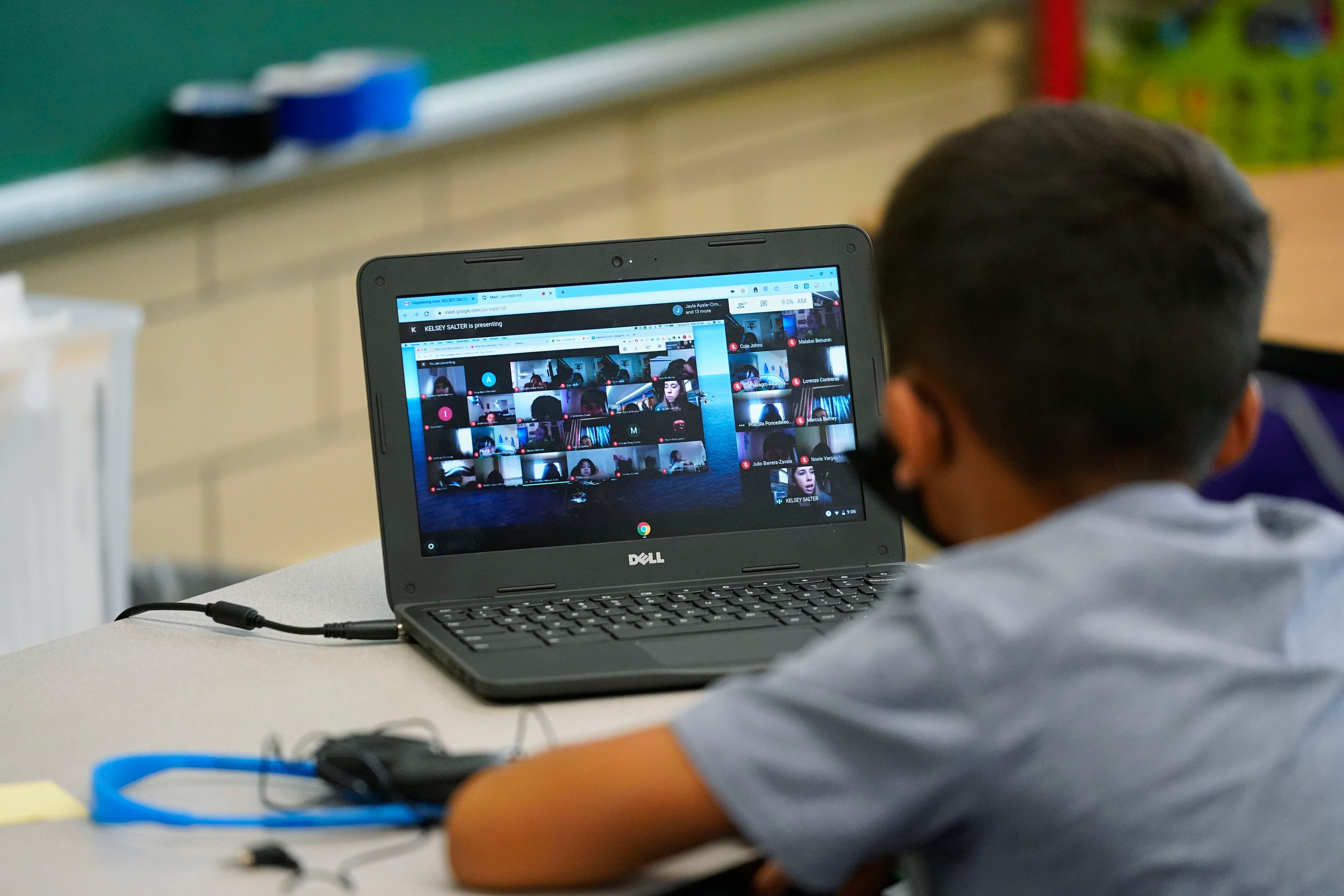
With the exact timeline for COVID-19 vaccines for children under 12 still uncertain, Chicago is launching a new virtual academy this fall for students with certain underlying medical conditions, with a late July deadline to enroll.
A new district remote education policy, which the school board will weigh on Wednesday, suggests the academy would remain a permanent school district fixture. Although the program next year will only serve medically fragile students as their peers return to full-time in-person learning, other students might qualify down the road, based on guidelines the district is crafting.
The district will solicit public comment on the policy for a month starting June 24 before it formally adopts it later this summer.
Officials last week announced criteria for admission into the district’s new Virtual Academy, which will serve students from across the district who can provide documentation from a physician that they have a qualifying medical condition. The district is also accepting applications from CPS educators interested in teaching in the academy.
According to school board documents, “It is the intent of the board to have remote learning be an essential part of how we educate students in future school years.”
The proposed policy says the district will work on guidelines outlining which students are “best suited to enroll” in remote learning based not just on their health, but also on living situations and academic or disciplinary records. Those guidelines will be updated each year.
Some families and advocates in Illinois and across the country have voiced concern about mandatory in-person attendance in the fall. They have noted that children younger than 12 likely would not be able to receive COVID-19 vaccines before the school year’s start and that parents in some communities hard hit by the pandemic remain deeply wary of sending their students to school buildings.
But district leaders have said that a full return to in-person instruction is essential to address the academic and mental health fallout from the coronavirus.
To be eligible for next fall’s Virtual Academy, students will have to show they have one of a list of medical conditions, divided into two groups. The first category — which includes illnesses such as certain cancers, spina bifida, lupus, and cystic fibrosis — guarantees admission into the academy. The second group — with conditions such as asthma, Down syndrome, diabetes, and cerebral palsy — makes students eligible only if they can also show their attendance is below 75%.
Families have until July 22 to enroll. Elementary students will be able to switch to in-person learning at the start of any quarter; high schoolers can do so at the start of the second semester.
In the future, the interim board policy states, students will have to show that remote learning best serves their learning needs, living situations, or medical needs — or have attendance, discipline, or academic records that qualify them. Families would have to submit an application each year, and if students have special needs, their Individualized Education Program teams will have to approve their participation in virtual learning.
Educators will have to craft a written remote education plan for each student “to ensure equity and transparency,” with input from parents or guardians.