Did you know search engines like Google are changing the way you see news? Keep Chalkbeat’s valuable education coverage at the top of your feeds by clicking here and checking the box next to our name.
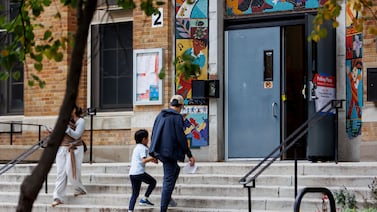
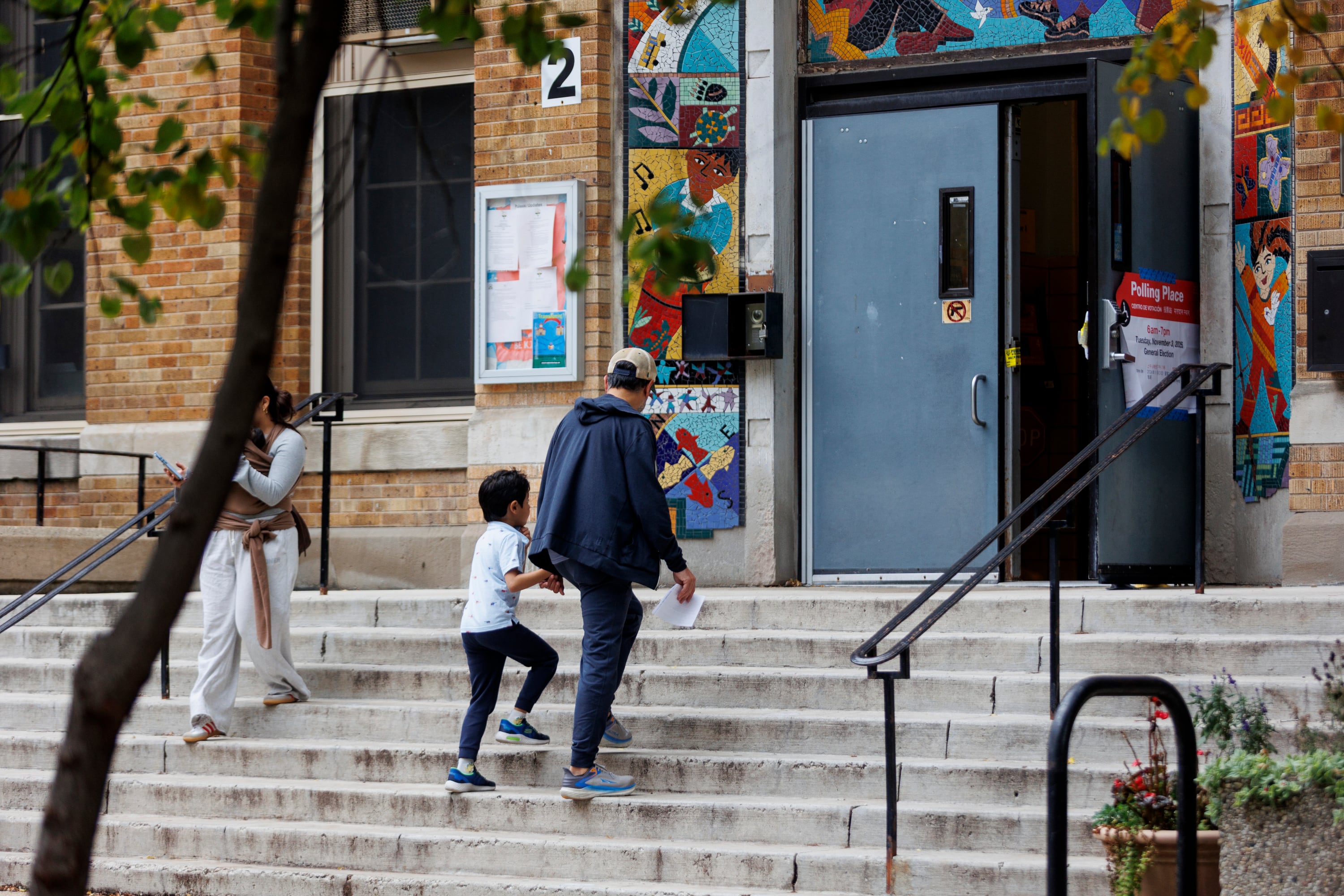
If all leads hold from Tuesday night’s election, Chicago’s first fully elected school board will bring together members backed by competing special interests who will spend the next two years confronting some of CPS’ biggest problems.
The Chicago Board of Elections is still counting ballots, and four races appear too close to call: districts 3b, 5b, 6a, and 7a. But preliminary results indicate pro-school-choice groups will pick up enough seats — including school board president — to clinch a thin majority on the board, reducing the stronghold the Chicago Teachers Union has had the past two years.
Meanwhile, the union representing school support staff, SEIU, was successful in backing the winning candidate for school board president Jessica Biggs, whose largest contribution, more than $1 million, came from billionaire Democratic donor Michael Sacks. SEIU has split with CTU on budget issues and in several school board contests after a labor-related dispute in 2024.
“We were one of (Biggs’) biggest supporters early on,” said Anthony Driver, executive director of the SEIU Illinois State Council, which heavily funded a political action committee that contributed more than $200,000 to Biggs’ campaign. “We felt like she had the knowledge, the wherewithal to build a coalition that could win, and it paid off.”
More than 1.1 million Chicagoans voted in the historic school board election — a number that will increase as ballots from outstanding precincts are counted. So far, that’s about 200,000 more voters than in 2024, when just half of the school board seats were up for election across ten big districts that were not yet split in two like they were this year.
So what does this all mean for Chicago’s schools and students?
Voters may have picked a board that is, by a narrow margin, likely less open to CTU-backed proposals and more friendly toward charter schools than the current board. While this majority of board members may lean toward more fiscally conservative policies, just six of them have said they support closing schools.
To Hal Woods of the parent advocacy group Kids First, the new board makeup could mean some gridlock — or open the possibility of coalition-building across different factions.
“I don’t think anyone can assume either side can control key decisions,” Woods said of CTU-aligned candidates and those elected with backing from anti-CTU groups. “I think the new board will have to work through different policy perspectives to get things done.”
The new board will be stacked with as many as eight newcomers, and it will face some pressing decisions, including how to manage a shortfall if added state money the current board assumed to balance the budget doesn’t materialize during a November veto session. The start of 2027 will test the promise of a fully elected school board, Woods said: taking the time to hear out Chicagoans rather than making top-down decisions and following political marching orders.
“Parents don’t care who was endorsed by a political entity,” Woods said. “They want to know whether members will change the way they do business.”
Some members of the new board, particularly those serving for the first time, might find their positions shift or moderate as they confront the realities of overseeing the complex district. A majority of the presumed winners has said they oppose automatically raising property taxes to the legal limit, but that’s one lever for balancing the budget the cash-strapped district controls.
A majority of the newly elected members have also signed a pledge to ban all AI-based tools for both students and employees, but might settle on a more nuanced policy after learning more about their use. And when it comes to offering more financial support to struggling charter schools — particularly those unionized by the CTU — union-backed and charter-backed members might turn into strange bedfellows.
Here are three takeaways from the race.
A narrow majority, multiple factions, and maybe two swing votes
If all current leads hold, candidates who were backed by pro-school-choice groups who oppose CTU’s influence on the board will make up 11 of the board’s 21 seats. That includes Biggs, plus Margie Luczak in 1a, Ellen Rosenfeld in 4b, LaPamela Williams in 5a, Isaiah White in 6a, Brittany Kimble in 6b, Angel Gutierrez in 8a, Juan Igancio Gonzalez in 8b, Brittany Preston in 9a, Therese Boyle in 9b, and Che “Rhymefest” Smith in 10a.
These candidates were endorsed by or received money from three political organizations who spent big to oppose CTU candidates: the Illinois Network of Charter Schools, or INCS, which advocates for publicly funded but privately managed charters; the Urban Center, a centrist organization that supports public and private school choice policies; or Common Ground Collective, a new political action committee opposed to the CTU that received more than $2 million from Sacks since September. More than half of these candidates were backed by all three groups.
Sacks is a longtime Democrat donor and fixture of Chicago politics. He was an ally of former Mayor Rahm Emanuel, played a role in negotiations over funding for CPS during Illinois’ budget crisis in 2017, and has invested millions in scholarships for district graduates. Sacks has not responded to requests for comment on his spending motivations.
Ten presumed winners were backed by SEIU: Biggs, Claudia Peralta in 1b, Ebony DeBerry in 2a, Norma Rios-Sierra in 3a, Rosenfeld in 4b, Yesenia Lopez in 7b, Gutierrez in 8a, Preston in 9a, Boyle in 9b, and Smith in 10a. Six of these candidates were also backed by the pro-school choice groups.
CTU’s endorsed candidates could win a total nine seats if Jason Dones in 3b, Blaise in 5b, and Lozano in 7a hold on to their leads. The union also endorsed Peralta in 1b, DeBerry in 2a, Pope in 2b, Rios-Sierra in 3a, Karen Zaccor in 4a, Michilia Blaise in 5b, and Connie Anderson in 10b.
Some new and returning board members might be wild cards as different factions jockey for influence over key decisions. The CTU did not endorse Yesenia Lopez, a one-time union ally who cruised to reelection on the Southwest Side, after she broke with the union on key budget and other votes. But Lopez, a progressive who was endorsed by SEIU and Our Schools, a heavily CTU-funded PAC, could still band with union-backed candidates on issues such as school staffing or sharper oversight of charter schools.
Kimble, a South Side newcomer to the board who was backed by Urban Center, ran in a race where neither the SEIU nor the CTU endorsed a candidate. She has voiced a nuanced position on school closures, an issue where the CTU and the mayor have taken a hard line despite sharply declining enrollment: She has said she would support closing some underenrolled schools, but only after careful planning and engagement.
The split between SEIU and CTU began in 2024 after a dispute over staffing of special education classrooms. Since then, SEIU has publicly diverged with CTU, describing the teachers union’s financial preferences for CPS as risky for workers and students.
Andrew Broy, president of the state charter network, argued that the citywide president race carried more weight as a bellwether for the kind of board residents want to see: “That’s the race people paid the most attention to.” In district races with much lower name recognition for candidates, incumbents, including CTU stalwarts such as Pope and Zaccor on the North Side, had an edge, Broy said.
In contrast, Jackson Potter, the teachers union’s vice president, downplayed the president’s race, arguing that Dominguez had faced an onslaught of prime TV ads and personal attacks, though the union itself spent disproportionately on backing his candidacy. He noted the string of races in which CTU-backed candidates faced massive spending criticizing them or supporting their opponents — but nevertheless came out on top.
“Despite being outspent 5 to 1, we are in a virtual tie,” he said. “That’s a pretty good outcome.”
Potter said the union should have mobilized its ground game and jumped on getting the word out about its endorsed candidates sooner, before voters formed opinions based on ads and mailers by CTU opponents.
Going back to the spring, he also said the union ran into setbacks recruiting candidates who could dedicate significant time to an unpaid position. That resulted in a number of races where the CTU had no preferred candidate on the ballot.
“We tried our darndest to get the word out and see who was interested,” he said. “We just ran out of runway.”
Elected representatives setting the agenda
Biggs will hold the power of deciding what goes on the board’s agenda — and there’s no shortage of issues for this board to tackle.
This elected school board will confront consistent challenges, such as budget shortfalls, and face new policy dilemmas, including what to do about AI and technology in the classroom. There’s also the conundrum of potentially closing schools amid dramatic declines in enrollment.
Biggs will be able to vote on all matters, not just tiebreaker situations like the board’s current mayorally appointed president, and on the campaign trail she made herself clear on many of these issues. But she will need to rally another 10 votes to govern effectively.
Biggs could be part of a majority that’s more open to making certain budget cuts, limiting tax increases, issuing longer renewal terms for charter schools, and be more skeptical about the CTU’s priorities.
School board members don’t always vote in line with their backers. For example, some board members backed by the CTU voted in favor of the district’s budget plan in 2025, which the union opposed. And even CTU’s critics approved its new contract with the district last year.
Jennifer Custer, a former teacher who was elected to the board in 2024, said she won CTU’s endorsement at the time even though they “didn’t align very closely” but agreed that they wanted the best for students. Custer fell out of the union’s favor after she countered its position on several matters, including budget and charter school closure votes. This year, Custer ran against Biggs, a former ally, for board president before suspending her campaign in August.
“I think it’s really important to understand you may come in with support from unions, you may come in with support from interest groups and your values may align with them, but you are CPS, you are the district, and you make decisions that are best for the district,” Custer said, referring to students, schools, and the bureaucracy. “That’s your brand, so to speak.”
Driver, the SEIU Illinois State Council executive director, said he’s “not that convinced” the board will be too divided and that elected officials “should be representing the interests of kids, of parents, of the community, of the taxpayer.”
Potter, the CTU vice president, said the union plans to reach out to some election winners it did not endorse in hopes they might support the CTU’s priorities, including an increase in staffing and afterschool program spending.
“We are very willing to collaborate and broaden and deepen our coalition,” he said.
New faces, many parents, and a future that is female
Thirteen of the presumed winners have already spent time on the board, from Anderson in 10b, who the mayor appointed to the board in the fall to fill a vacancy, to elected board members who have served since January 2025 and mayoral appointees who have been on the board since 2024.
Another eight are newcomers with varying degrees of experience in education. A dozen are current or former CPS parents. Less than half attended CPS. And 16 are women.
One third are former teachers, with most located on the North Side. Six new members had careers outside schools, including two former law enforcement officers, an attorney, and a political organizer.
Being new to the board comes with a learning curve: Getting used to long meetings, reading hundreds of pages of documents ahead of meetings, and making high-stakes decisions that impact how schools are funded or how they serve kids.
Part of the learning curve will also include learning about the inner workings of CPS, a $10 billion organization that employs more than 40,000 people.
Becky Vevea contributed.
Reema Amin is a reporter covering Chicago Public Schools. Contact Reema at ramin@chalkbeat.org.
Makiya Seminera is a reporter covering how the state and federal government affect education in Chicago and across Illinois. Contact Makiya at mseminera@chalkbeat.org.
Mila Koumpilova is Chalkbeat Chicago’s senior reporter covering Chicago Public Schools. Contact Mila at mkoumpilova@chalkbeat.org.