Sign up for Chalkbeat Chicago’s free daily newsletter to keep up with the latest news on Chicago Public Schools.
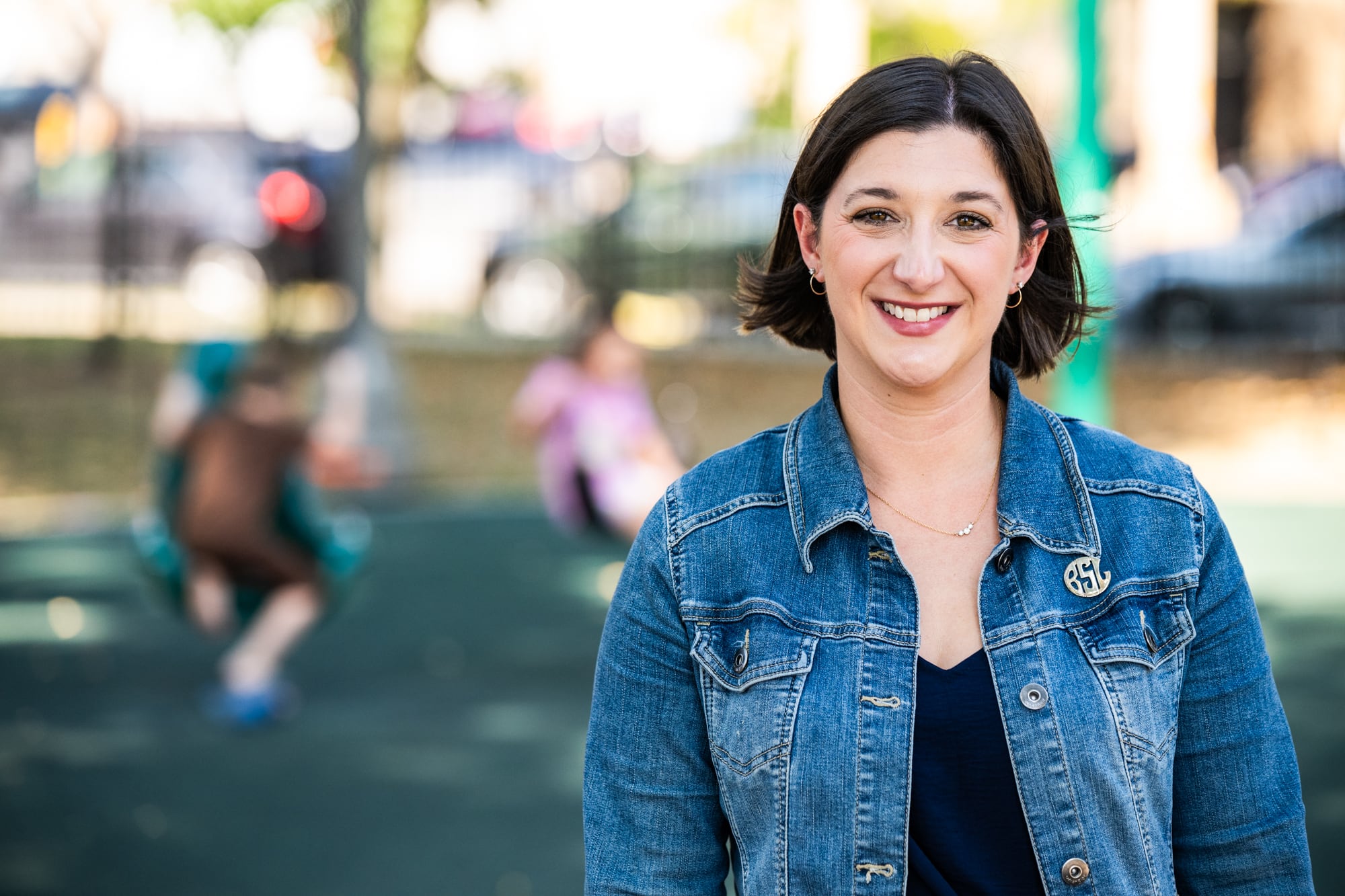
Jennifer Custer, an incumbent school board member, is withdrawing from the race to be the first elected Chicago Board of Education president.
In a statement, she said she filed paperwork Thursday with the Chicago Board of Elections to withdraw. Custer was the only candidate in the race whose petition signatures were not challenged.
“I am exiting because it became abundantly clear that various special interests are prepared to spend millions of dollars in this race,” she wrote in the statement. “Going up against that kind of spending in our political system creates an uphill battle that I ultimately decided I did not want to put my family, endorsers, volunteers, and supporters through.”
Custer did not make an endorsement, but left the door open to doing so. Four other candidates remain: Jessica Biggs, a former CPS principal and incumbent school board member; Hilario Dominguez, former political director for the Chicago Teachers Union and former special education teacher; Victor Henderson, an attorney, and Sendhil Revuluri, a consultant and former vice president of the school board appointed by then-Mayor Lori Lightfoot.
“I know the other candidates in this race well, and I will ask the same question I have asked throughout my time on the Board: Who shares my North Star of doing what is best for our children?” Custer wrote.
The former suburban educator and mom of three narrowly won her seat in 2024 over Michelle Pierre, who is now running again to represent district 1b. Custer had the support of the Chicago Teachers Union, but forged a more independent path over the past two years serving on the board.
Recently, she was the only no vote on the board’s decision to put two non-binding referendums about raising new revenue for CPS on the November ballot. Both questions were put forward by Mayor Brandon Johnson’s allies and Custer was the only one of a more independent bloc of school board members to attend the meeting. She was also the lone no vote against hiring Chicago Public Schools CEO Macquline King as the permanent leader.
In July, Custer joined with six other school board members to vote against an amended budget that assumes $150 million more in state revenue. She also voted against taking out a high-interest loan last year to reimburse the city for a portion of a payment to a municipal pension fund that supports non-teaching staff and retirees in CPS.
Custer’s fundraising lagged behind the other candidates in the race. One of her top donors has been the political action committee of the Operating Engineers Local 150, where her husband, Jeremy, is the political director. In April, she told Chalkbeat one of her biggest campaign expenses has been child care, which is a permissible expenditure under state campaign finance laws. Arranging care for her children had allowed her to visit schools, meet with potential supporters, and attend board meetings, she said.
In her statement, Custer thanked her campaign staff and her family, “especially my three little ones, who have seen less of me than they deserve,” she wrote.
Prior to serving on Chicago’s school board, Custer worked as a paraprofessional, and classroom teacher and administrator in school districts in Wisconsin and Chicago’s suburbs. She served for two years as president of the teachers union in Itasca and was an assistant principal and interim principal in Addison School District 4.
Becky Vevea is the bureau chief for Chalkbeat Chicago. Contact Becky at bvevea@chalkbeat.org.