Sign up for Chalkbeat Chicago’s free daily newsletter to keep up with the latest news on Chicago Public Schools.
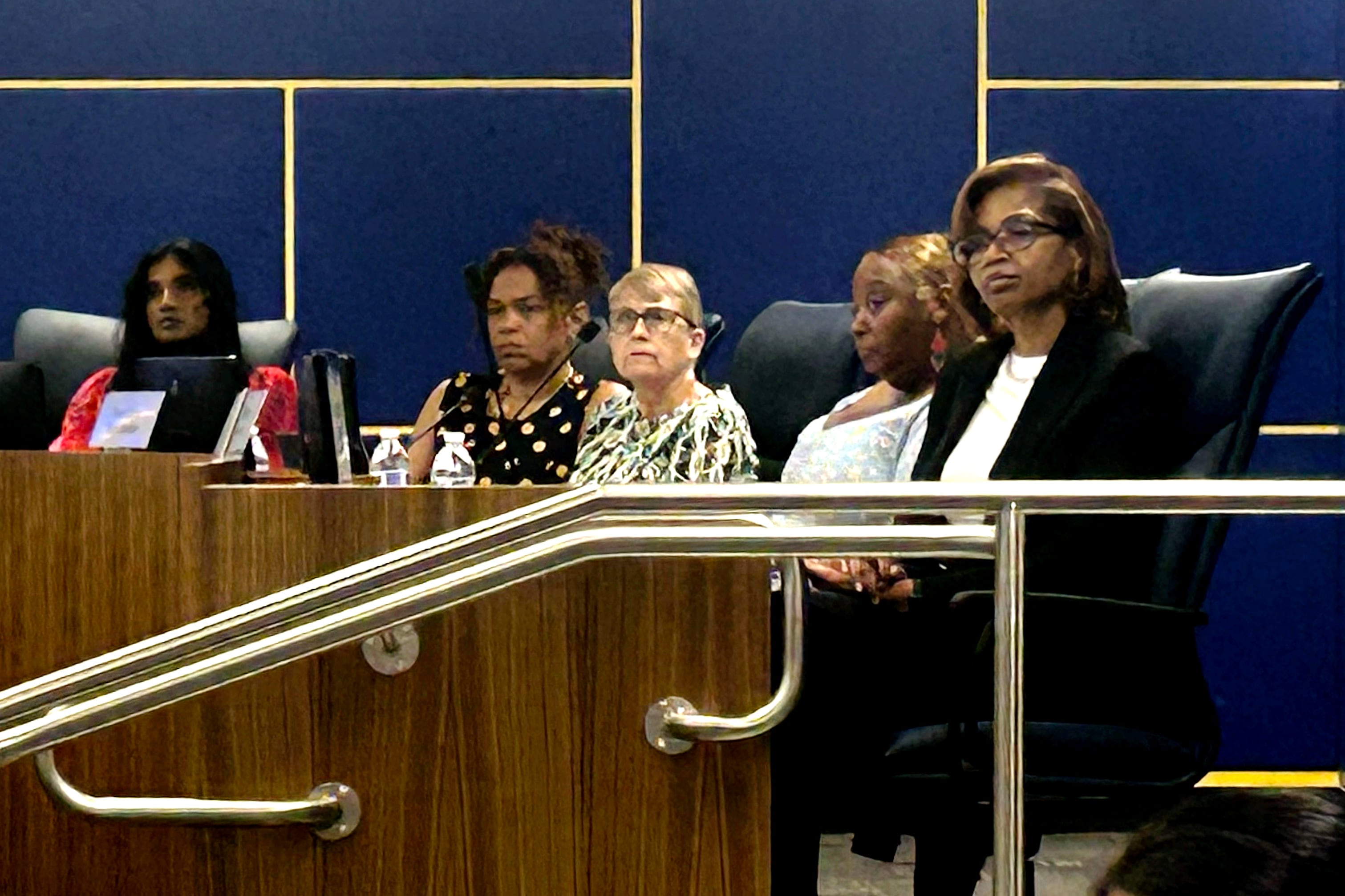
For the first time in its history, Chicago’s school board voted Thursday to put two questions on the November ballot gauging voter opinions on proposals to bring in more money for the deficit-plagued district.
One referendum would ask voters if they support a statewide millionaires tax to raise money for public education. The other would ask if they would favor a new financial penalty on the owners of vacant city land to steer additional dollars to Chicago Public Schools. The school board needed to decide on these questions before a Monday deadline to add them to the ballot.
Because both are non-binding, neither would compel the state or the city to enact the new taxes and turn the revenue over to the district. But supporters of the referendums hoped they could put pressure on state and city decision-makers. Last spring, state lawmakers considered a binding referendum to enact a millionaires tax to fund education and provide property tax relief on the ballot. But the measure failed.
In response to board members arguing the referendums do little to ease CPS’s immediate fiscal pressures, board President Sean Harden argued the board should pursue more urgent fixes but also let the public weigh in on possible longer-term solutions.
“What we have before us is a window of opportunity — pretty short in nature — to activate and use a new muscle,” he said.
The special meeting initially lacked a quorum. Some board members who showed up — largely those appointed by Mayor Brandon Johnson or elected with backing from his former employer, the Chicago Teachers Union — accused their colleagues of boycotting to derail the referendums. Some of the missing board members decried the hastily called special meeting to vote on what they described as half-baked proposals and said it conflicted with prior commitments or work. The meeting was eventually reconvened, with two board members supportive of the referendums joining virtually.
The debate about the referendums comes a couple of weeks after a majority on the board rallied around a high-stakes budget gamble: They rejected educator and staff layoffs under CEO Macquline King’s budget proposals. King had argued the layoffs were a responsible way to address the district’s deficits after years of shrinking enrollments and a growing workforce. Instead, the board opted to balance the budget by assuming an influx of additional state revenue. If state lawmakers do not approve that revenue during a November veto session, the district would likely face disruptive midyear cuts and other fallout.
Angel Velez, the board vice president, invoked a growing gap between what Illinois’ formula considers “adequate” district funding and the amount CPS receives. The tax on high earners is a favored proposal of Johnson, who appointed Velez.
“This is fundamentally about how we build the public support needed to move our schools from scarcity to adequacy,” Velez said during Wednesday’s board meeting to review this month’s agenda.
Cydney Wallace, another Johnson school board appointee who introduced the vacant lot question, said the thousands lots across the city are eyesores that impact public safety and cause other issues. She cited research suggesting that developing vacant urban land leads to improvement in residents’ mental health.
“Safe passage to school should also include healthy, cared-for blocks,” she said Wednesday.
Some board members voiced concerns about how the city would target vacant land for the new financial penalty without inadvertently punishing owners who plan to develop it. Supporters of the proposals argued that it will be up to the city to work out the details.
Jennifer Custer, the sole no vote on both ballot questions, said the board must focus on finding immediate solutions to the district’s budget crisis rather than soliciting voter opinions about proposals other agencies would have to enact.
“I don’t see these as being actionable items,” she said. “I see them as window dressing to a larger problem.”
Like Custer, the Civic Federation, a nonpartisan watchdog group based in Chicago, noted in a statement that referendums make little headway in addressing CPS’ pressing financial challenges and urged the board to stay focused on fixes that it can directly control.
Jessica Biggs, a board member who like Custer is currently running for school board president, said the last-minute special meeting showed a board term “rife with chaos and disorganization.” But she said she would have backed the millionaires tax referendum if she had been able to attend.
“I have been clear that I believe it is long past time to require the very wealthy and big corporations to pay their fair share so we can fully fund our schools,” she said in a statement.
At Wednesday’s meeting, the board also appointed a new chief lobbyist to lead efforts to secure the additional $150 million from the state that the board baked into its amended budget. Iris Millán, now the associate vice chancellor of government affairs and civic engagement at City Colleges of Chicago, will become CPS’s new chief of the Office of Intergovernmental Affairs — a position vacant for more than a year.
Some board members, such as Michilla Blaise, ripped into colleagues who missed the Thursday meeting, accusing them of “lack of leadership.” On social media, Blaise referred to them as “the recipients of Billionaire Mike Sacks donations” — a Chicago hedge fund executive and donor to Democratic causes — invoking a line of attack against non-CTU-aligned school board members that the union has embraced ahead of the November school board races.
Several school board members criticized the hastily called meeting to take a vote, saying they couldn’t miss work or other commitments, especially after a marathon board meeting the previous day. One member, Che “Rhymefest” Smith, said the last-minute meeting to vote on proposals he said lacked detail or teeth showed “really poor planning on someone’s part.”
Mila Koumpilova is Chalkbeat Chicago’s senior reporter covering Chicago Public Schools. Contact Mila at mkoumpilova@chalkbeat.org.