This is part one of a two-part series. Sign up for Chalkbeat New York’s free email newsletter to be the first to know when the next story publishes.
At the beginning of last school year, a second grader in Emily Levin and Christina O’Connell’s class at P.S. 105 in Far Rockaway kept walking out of the classroom during lessons.
When students repeatedly refuse to stay where they are supposed to be — a behavior teachers call “eloping” — it often becomes a discipline issue or power struggle, leading to worse behavior and bigger problems over time. For some kids, the situation escalates so intensely that staff call school safety agents or police officers to intervene.
But this Queens elementary school is one of eight schools across New York City participating in the Path program, a four-year-old project designed to serve students with emotional and behavioral difficulties that interfere with their education. Rather than punishing the student or trying to force him to stop leaving, Levin and O’Connell had training and support to focus on the motivation behind the behavior: What was making him uncomfortable in the classroom and how could he feel safe to stay?
It’s a new approach to a population of kids that faces extraordinarily poor outcomes in city schools. Federal law requires districts to keep students with disabilities in general education settings whenever possible, but New York City sends nearly 30% of its 8,000 kids classified as having emotional disabilities to separate, special-education schools run by the city’s District 75, according to an analysis of 2024-25 data published Thursday by the New York City Independent Budget Office at Chalkbeat’s request.
Concentrating students with behavior problems into a few schools leads to chaos and makes it hard to learn, advocates and educators say. Almost 40% of students with emotional disabilities drop out of school. Just over a third graduate with a standard diploma.
A significant number end up in juvenile detention facilities or jail: More than 90% of students in the city’s schools for incarcerated youth have disabilities, and of those, 40% are classified as emotionally disabled, the Independent Budget Office analysis found.
In the Path program, the goal is to help kids learn to manage challenging behaviors while keeping them integrated with general education classmates. Outcomes are promising, educational officials say, but the program is resource-intensive and remains very small. This year, the program costs about $14 million to operate 35 Path classrooms in prekindergarten through eighth grade. Each classroom serves 16-20 students, four of whom are classified as having emotional disabilities. Students have two teachers and daily support from a social worker and occupational therapist, all of whom are trained in evidence-based emotional and behavioral support for kids. Staff meet weekly with coaches from New York University’s Trauma Informed Schools Institute, who observe classrooms, get to know students, and help develop strategies for each child.
Advocates say the investment is worth it and believe that it will pay off with a rise in graduation rates for students with emotional disabilities. Many would like to see the Path approach expanded, especially for older students who they say are less supported and more likely to land in jail.
Without training and resources, schools turn “to the tools that they have, which are unfortunately suspensions and discipline and getting the school safety agents involved,” said Rohini Singh, the director of the School Justice Project at Advocates for Children.
While the city opened a Path preschool class this fall as part of its push to serve younger kids with disabilities, officials say they don’t know if or when Path will expand to older students.
“I am optimistic that we’re going to be able to do more of this, but scaling is always a challenge when we’re talking about whole school programming,” Christina Foti, the city’s deputy chancellor of the Division of Inclusive and Accessible Learning, told Chalkbeat in February.
“What I can say is that we are looking at special-education programming generally, looking at the programs that are most successful, and looking to do more of them,” Foti continued.
Moving past the punishment trap for students with emotional disabilities
The emotional disabilities classification is notoriously broad and vague, and it can indicate anything from anxiety to an undiagnosed neurological disorder. But it’s most often given to kids with difficult behavior, and it’s disproportionately applied to Black boys. That’s partly because of bias, educators say, but it’s also because Black children are less likely to receive detailed neurological evaluations, which can pinpoint developmental challenges but typically cost families thousands of dollars.
Students with behavior problems have often experienced serious trauma that makes it hard for them to follow instructions or trust adults, said Dorothy Siegel, a former education researcher at New York University who helped found many of the city’s inclusion programs for students with disabilities, including Path.
Punishment only makes that worse, Siegel said. Instead, kids need to get the message that no matter how they behave, they are valued and loved. “You make school the place where they get what they want and what they need, and they love being there, and so that child can now learn.”
“The whole environment has to be unconditional love and acceptance,” Siegel continued.
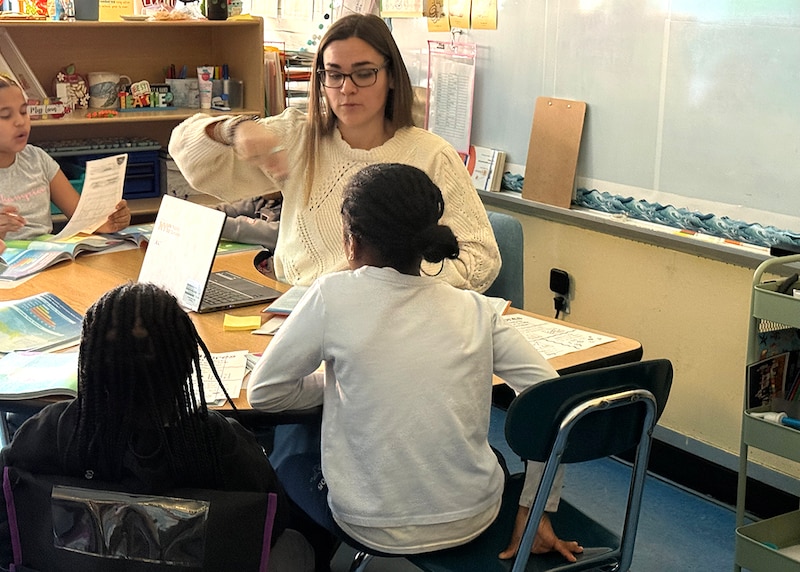
In the Path program, kids don’t get ostracized for struggling to manage their behaviors. That can require a mind shift for teachers, said Marjory Passaro, a Path classroom teacher who started at P.S. 105 back when kids sat in rows, facing a blackboard.
“There’s never going to be a power struggle in my room. I am a leader in my classroom; I’m not the boss,” Passaro said. “You have to empower those children to believe, ‘This is in my control.’”
Researchers at NYU are currently tracking whether Path classroom staff adhere to their training, classrooms are warmer and more organized, and students are better able to regulate their behavior and engage with instruction, city education department officials said. NYU has a federal grant to compare Path students’ outcomes to those of similar students in other settings over the next several years.
Preventing dysregulation before it starts
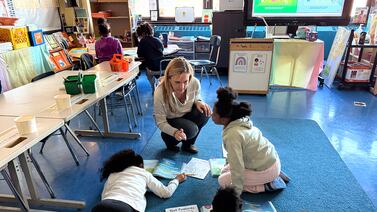
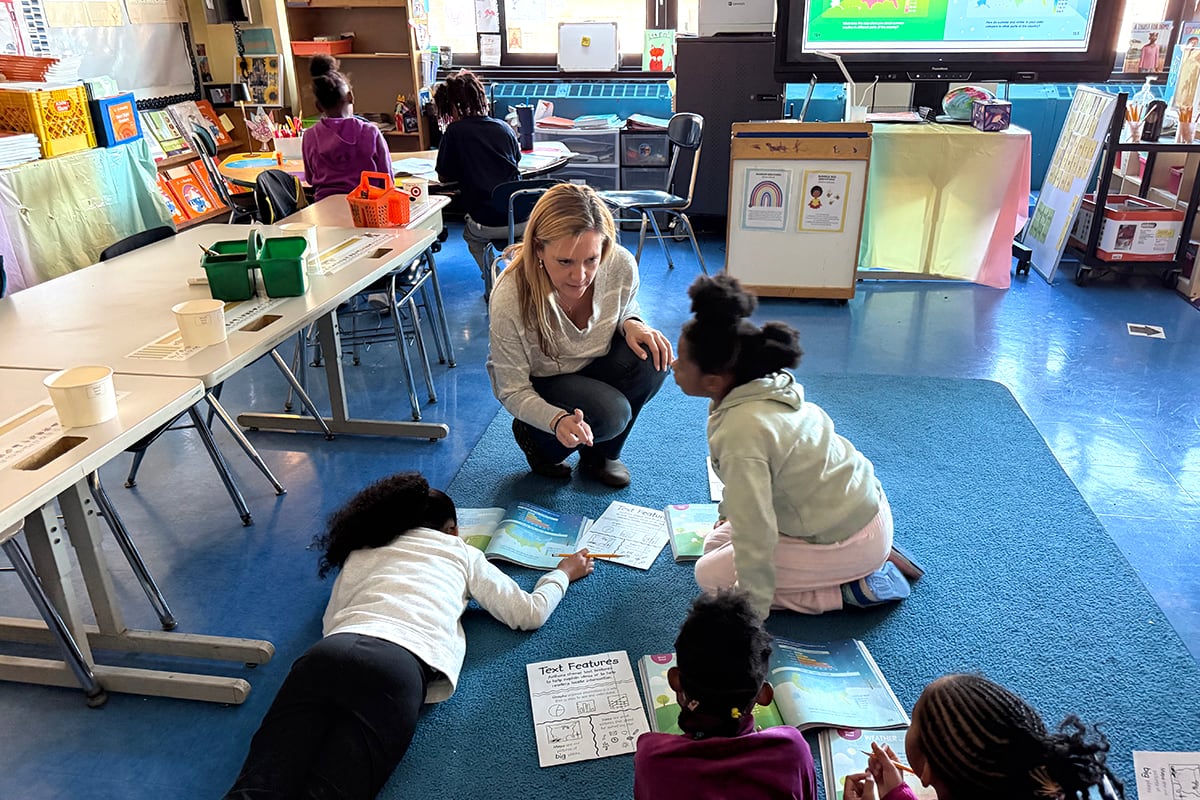
On a Thursday morning in February, most of Levin’s and O’Connell’s second graders sat on the rug for a lesson on weather. Their former eloper — the boy who used to leave the classroom — wandered around the room for a bit, stopping by the “calming corner,” an area with a soft rug and a teepee that kids can sit in when they need a break. Eventually, he made his way to a table and played with a fidget toy.
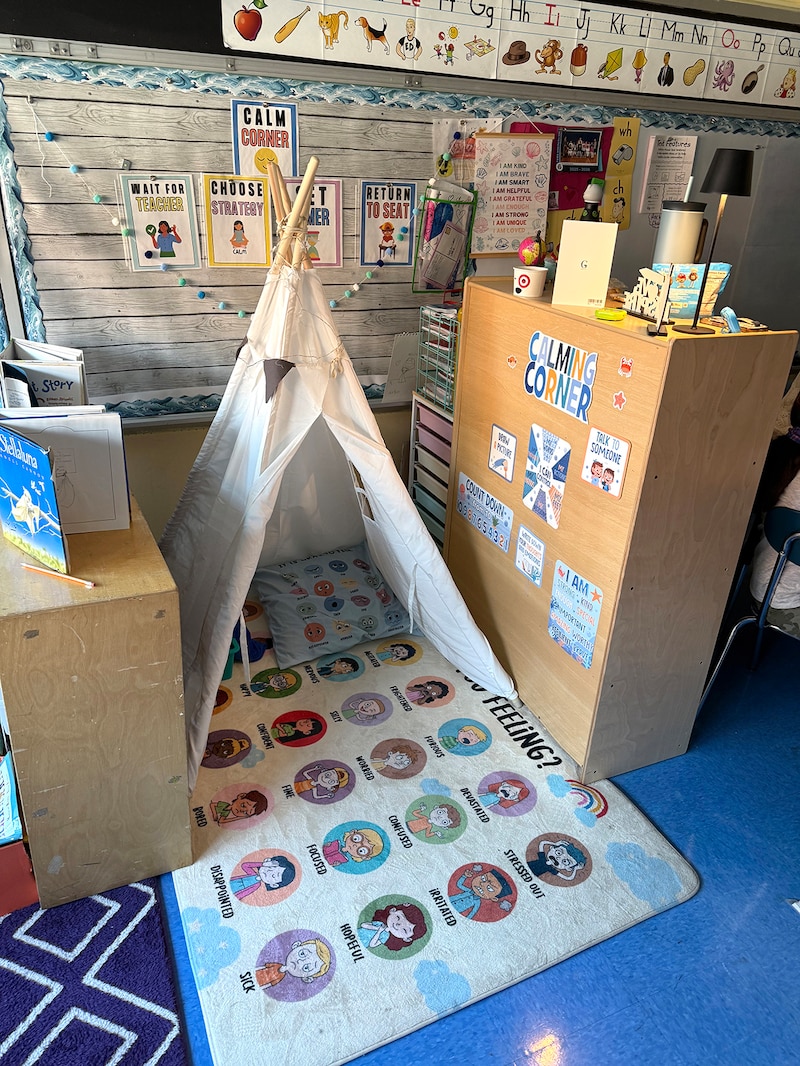
A teacher came and sat close by — not to reprimand him but to let him know that she was available if he needed anything.
While Path aims to be flexible for students, its classrooms are highly structured. At the first sign that her students’ attention had strayed from their weather words, Levin snapped her fingers and said, “Let’s reset,” bringing their focus back to herself and the topic at hand.
Path teachers are “constantly thinking about preventing dysregulation and distraction,” said Michelle Flemen-Tung, program director for the Path Support Team at NYU.
“When we see behaviors in students, it’s not happening zero to 60. There’s actually a lot of tells” before a child gets escalated, Flemen-Tung continued. “So what the teachers and the social workers are really doing is they have a very prescribed set of actions and supports that happen at each of those levels.”
Classrooms have designated areas for occupational therapy exercises to help kids regulate their nervous systems. Students work in small groups to help them focus, and teachers work to make the day as predictable as possible. Kids experiencing ongoing trauma or instability need opportunities to feel a sense of control, said Ailsa Stiell, a social worker for the Path program at P.S. 105.
“Things are always happening to them in their lives,” Stiell said. “You cannot just say, ‘This is what’s going to happen,’ and then don’t ever go back and check in. It’s constant, constant support and check-ins.”
It’s also crucial to celebrate success, Stiell said. Early in the year, teachers set up sensory activities just outside the classroom door for the boy who used to leave. That way, they could keep him nearby while buying time to show him that he could get his needs met by staying with the group.
He may not be ready to sit on the rug, Stiell said. But he’s in the room and starting to tune into the lesson. “That’s a big win.”
Abigail Kramer is a New York City-based journalist. You can reach her at: abigailkramer@gmail.com.