Sign up for Chalkbeat Chicago’s free daily newsletter to keep up with the latest news on Chicago Public Schools.
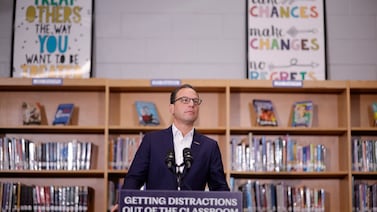
Illinois is poised to join a majority of states that have mandated restrictions on cell phone use in schools — a priority of Gov. JB Pritzker that he and other supporters say will boost learning and student mental health.
A bill limiting cell phone use floundered last year despite winning unanimous approval in the state Senate. But an amended version this spring passed the House and appears headed for Senate backing.
The bill would ban cell phone use in elementary and middle schools throughout the school day but give districts the option of restricting high school use only during instruction time. It also aims to address concerns about overly punitive or uneven discipline for students and about the access some students — such as those with certain disabilities or medical conditions — need to their phones throughout the day.
The proposal has gotten a lukewarm reception by the Illinois Federation of Teachers. Though they are not actively opposing the bill, union leaders have raised concerns about the possible cost and logistics of implementing the restrictions.
But backers of the legislation, which would go into effect in 2027, have voiced unbridled enthusiasm.
“We think this bill is one of the most impactful things we could be doing in education now,” said Jessica Handy, the executive director of the nonprofit Stand for Children Illinois.
She added, “Kids lose a significant amount of instructional time because of time on their phones. It’s such a barrier to students being able to focus.”
A modest but growing body of research has suggested that limited cell phone use in school can indeed improve learning. A recent study by the research organization RAND Corp., for instance, found a cell phone ban in one large urban Florida district led to test score and attendance improvements, particularly in the middle and high school grades.
Chicago Public Schools, the state’s largest district, currently gives principals discretion to limit cell phone use and doesn’t track how many do so. In a statement, the district said it “supports initiatives aimed at improving educational focus that serve the best interests of students.”
The Illinois Senate will likely take up the bill later in May — and Michelle Mussman, its sponsor in the House, feels good about its odds of passage. So does the Senate sponsor, Cristina Castro, who notes that similar proposals have drawn bipartisan backing across the country.
“I feel we are in a good place to finally send this bill to the governor,” she said.
Last year, Stand for Children and the legislature’s Black Caucus had voiced concern that the cell phone ban could lead to a rise in punitive discipline for students who violate restrictions — and a widening in existing racial disparities in punishment. The new version says schools cannot suspend or expel students over cell phone use infractions.
The bill also includes exceptions for students who need their cell phones for medical reasons, English learners who use them for translation, and students who care for family members.
Handy of Stand for Children said these changes make the legislation “a model bill in terms of how we treat equity and discipline.” But the advocacy group was disappointed that high schools would have the discretion to allow phone use outside of class time. Handy said that would hamper the bill’s potential to help students “rebuild that muscle of having human interaction” and put more of an onus on teachers to make sure phones are put away for class.
“We feel strongly that a bell-to-bell ban is best,” she said. “We don’t love that high schools get to opt out if they choose to.”
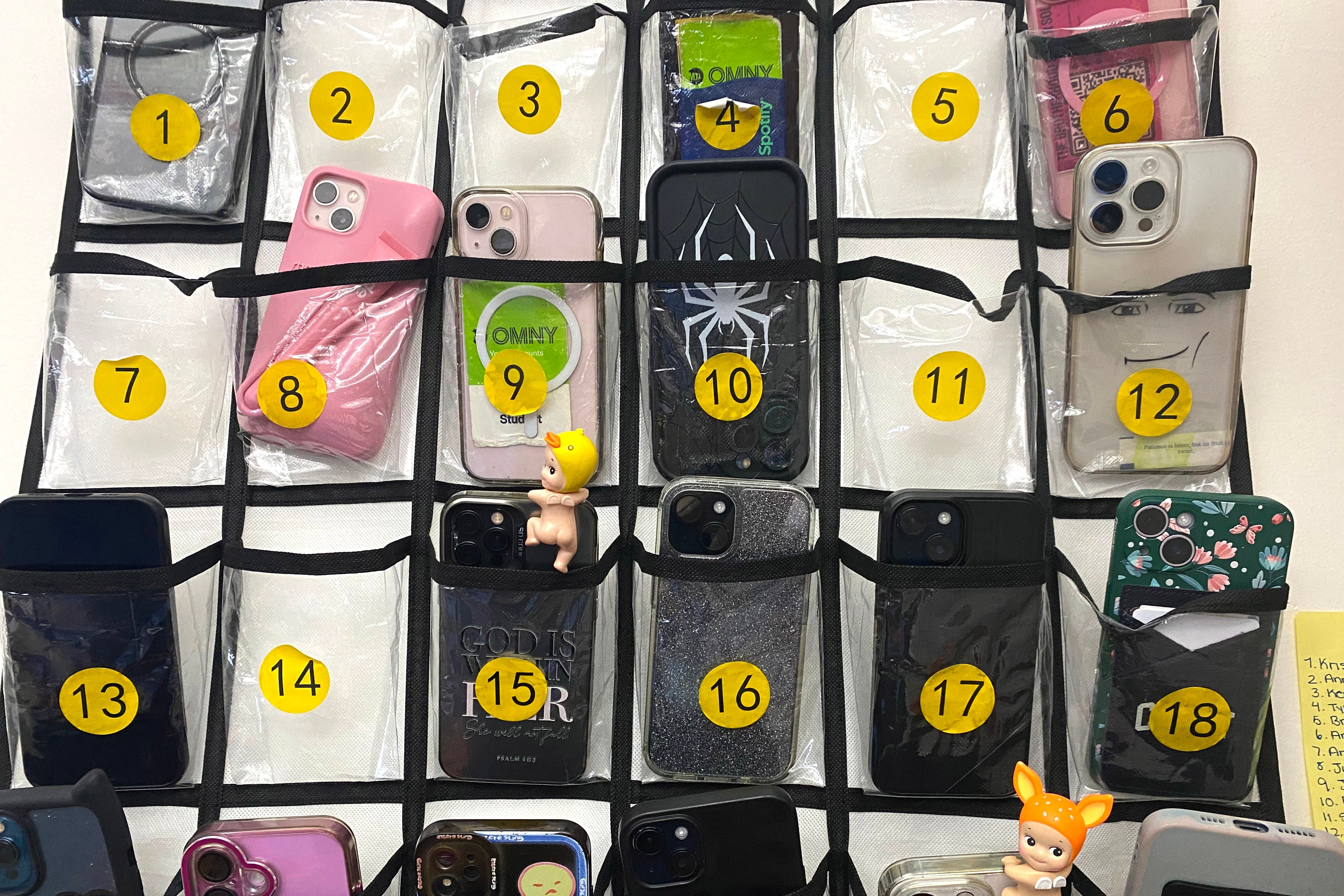
The Illinois Federation of Teachers has said the cell phone bill imposes another “unfunded mandate,” noting that the Peoria school district spent almost $250,000 on pouches to store cell phones during the school day. The union says that only adds to other obligations the state places on districts without providing full funding for them, such as providing transportation for students with disabilities. Leaving cell phones at home is not an option for some students, including those from immigrant families terrified of stepped-up immigration enforcement near schools, a union spokesman said.
In an earlier statement, the union’s executive vice president, Cyndi Oberle-Dahm, criticized Pritzker, with whom the union has clashed, over the proposal.
“Schools already have the authority to set cell phone policies, but what they cannot do is fund themselves or the cellphone lockers or pockets that will be required to enforce this unfunded mandate,” she wrote.
Mussman, the House sponsor, said a key benefit of the bill would be making teachers’ lives easier by reducing cell phone-powered distraction and conflict. Districts could use existing student lockers to store phones or lean on apps that disable phone capabilities during the school day.
“There are low- or no-cost options out there,” she said. “Each school has to decide for themselves how to best manage this.”
Karen Foley, president and CEO of the Juvenile Protective Association, a nonprofit that provides mental health services in Chicago schools, said she understands the concerns about the bill’s implementation. Besides the phone storage question, she anticipates a need for more clerical support, as front offices field more calls and messages from parents who would have previously contacted students directly. Districts should also plan to prepare teachers for an initial uptick in behavioral issues and to check in regularly on the rollout and its academic and mental health outcomes, she said.
But the nonprofit is strongly supportive of the legislation based on numerous conversations with students, parents, and educators, who have all spoken frankly about the damage to learning and school climate that phones cause. The JPA has also vocally supported another Pritzker-backed bill that would impose more safeguards and restrictions on social media use by children.
Foley has also been encouraged by anecdotal reports and emerging research from other states that have implemented such restrictions.
“Kids start to talk to each other more face to face,” she said, “and that is such a good thing.”
As for navigating some of the implementation challenges, Foley recommended more input from students and their families: “Kids have incredible ideas if only you ask them.”
Mila Koumpilova is Chalkbeat Chicago’s senior reporter covering Chicago Public Schools. Contact Mila at mkoumpilova@chalkbeat.org.