Sign up for Chalkbeat Chicago’s free daily newsletter to keep up with the latest news on Chicago Public Schools.
Katrina Kasten, a mother of two CPS students on the North Side, remembers a lot of political flyers and canvassers at her door two years ago when the city’s first school board elections were underway. That year, the North Center resident had six candidates competing for her vote.
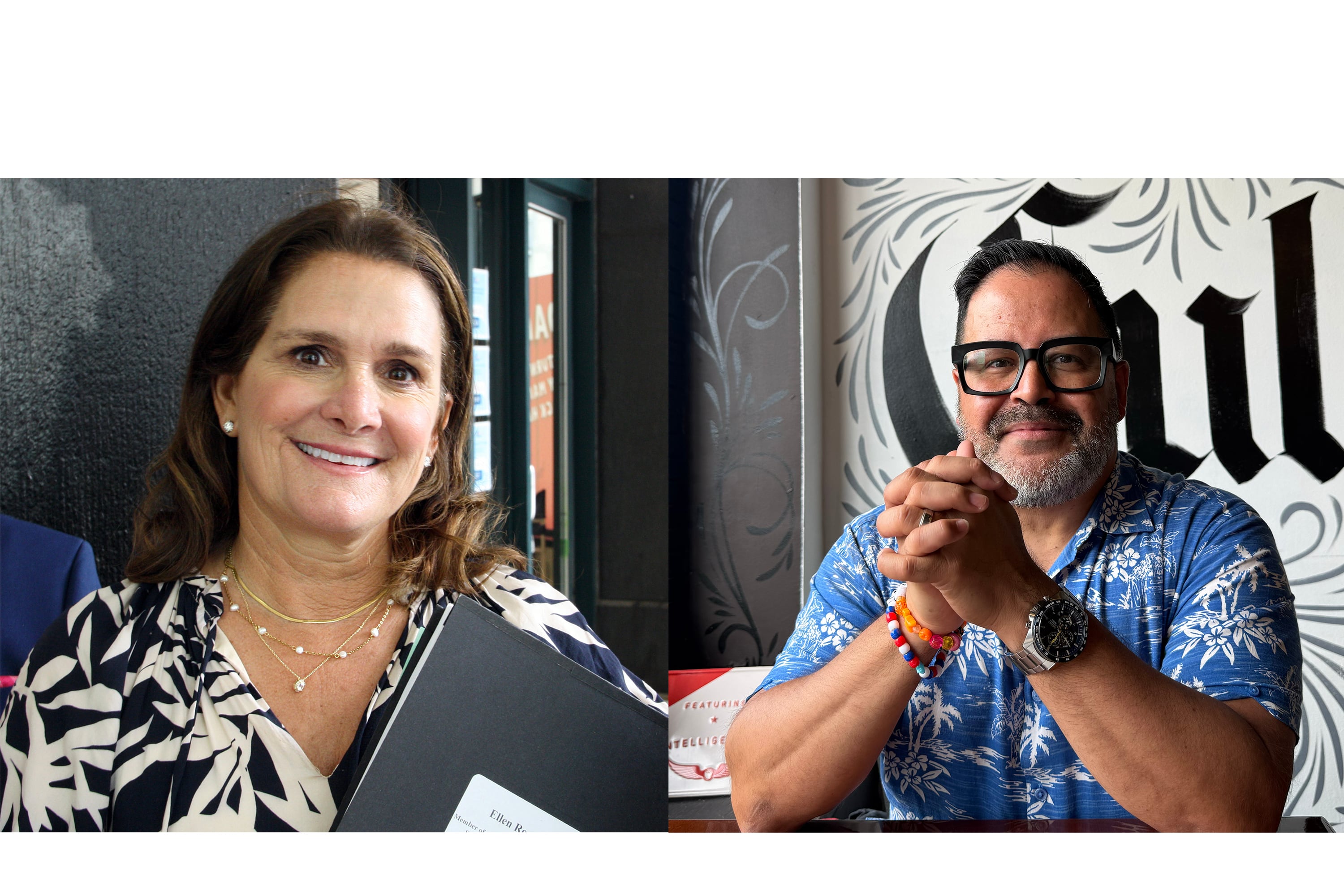
Now, there’s just one person running in her district: incumbent Ellen Rosenfeld.
“I always appreciate when there’s more than one candidate on the ballot, because it brings to light conversations — people are forced to share their plans a little bit more than when it’s just an unopposed slate,” Kasten said.
Instead of courting voters at block parties and farmers’ markets as she’d originally planned, Rosenfeld said she doesn’t have a campaign operation because no one filed the 500 signatures needed to run against her.
She isn’t the only incumbent who entered the race without any challengers. Angel Gutierrez, who represents parts of the Southwest Side, also is running unopposed. Petition challenges have knocked even more candidates off the ballot, leaving three additional districts uncontested.
This November, Chicago voters will for the first time choose all 21 members of the Board of Education, ending more than three decades of mayoral control. But after a yearslong fight to establish an elected school board, the lack of competition in some districts raises questions about how often voters will be able to choose who represents them — or if the new board will favor insiders and incumbents.
Nine of the dozen people interviewed for this story who live in Rosenfeld’s or Gutierrez’s districts said they wished they had more choices in November, even those who liked the incumbents.
A combination of factors likely led to both races being unopposed: Gutierrez and Rosenfeld easily won their districts in 2024 and are backed by powerful officials and organizations, possibly scaring off potential opponents. Serving on the school board is similar to a part-time job but it’s unpaid, which could deter people who would otherwise run.
Some competition is good in electoral politics, said Joanna Klonsky, a political consultant who helps run Democratic campaigns and is currently working on elected board member Jessica Biggs’ run for school board president.
“It’s better for our democratic system (and) it’s better for the candidates because it requires them to engage in robust debate,” Klonsky said, adding that election season can be an opportunity for unopposed candidates to build a following for years to come.
Gutierrez and Rosenfeld won big in the 2024 election
Rosenfeld and Gutierrez, who are running in vastly different districts, each dominated in the 2024 election.
Last election, 10 of the 21 board members were elected, and candidates ran in larger districts. Rosenfeld competed against five others in district 4 and won almost 42% of the vote. Gutierrez won his district with almost 63% of the vote against a teachers union-backed candidate.
Now, each candidate is only running in the half of the district where they live. A Chalkbeat analysis of last year’s election results at the precinct level show signs that both Gutierrez and Rosenfeld could have put up a strong fight if they were opposed this year. Gutierrez won double the number of votes as the second-place winner in precincts that overlap with the subdistrict he’s running in now, while Rosenfeld won by a margin that was almost as large.
“Other potential candidates probably looked at that and decided to pass,” said Andrew Broy, president of the Illinois Network of Charter Schools.
INCS says it supports both candidates.
Gutierrez described himself and Rosenfeld as “physical representations” of their districts.
Gutierrez’s Southwest Side district, 8a, encompasses the Ashburn, Chicago Lawn, West Lawn, Clearing, and Garfield Ridge neighborhoods. It is more than 60% Latino, more than double the share of Latinos citywide, according to data analyzed by the University of Chicago’s To&Through Project, which uses the most recent available U.S. Census data. Roughly a quarter of people have college degrees, less than the city as a whole. About 40% of households earn $100,000 or more, and 83% of high schoolers in the area attend CPS schools.
In Rosenfeld’s district of 4b, 75% of residents are white, more than double the rate of the city overall. They’re also wealthier and more educated than the city as a whole: 62% of people earn more than $100,000, and 86% have a college degree. Just over half of high schoolers attend a CPS school.
Gutierrez’s district is more politically conservative while Rosenfeld’s is more liberal. But they have one similarity: During the 2023 mayoral runoff election, voters in both areas rejected Mayor Brandon Johnson, a former teachers union organizer and progressive, and voted for Paul Vallas, the more conservative candidate and former CPS CEO.
Gutierrez and Rosenfeld have been criticized by the Chicago Teachers Union. CTU did not respond to a request for an interview about not backing a candidate in these districts this election.
Because of Rosenfeld’s and Gutierrez’s commanding wins in the 2024 race, the political makeup of their districts, and who they were backed by in the last election, opponents may have decided it wouldn’t be worth their resources to jump in, according to multiple Democratic political consultants and other observers.
Rosenfeld and Gutierrez were endorsed by organizations other than the union, such as the anti-CTU Chicago Democrats for Education, and many local elected officials. In 2024, Rosenfeld was endorsed by more than a dozen elected officials, including state lawmakers who helped create the elected school board, the Chicago Federation of Labor, and the 44th and 47th Democratic Ward Organizations, the latter of which her husband leads. Gutierrez was also backed by many elected officials, including powerful 13th Ward Ald. Marty Quinn, and the Chicago Laborers’ District Council.
Unpaid nature of the job may have scared off competition
The lack of candidates could be because many people still don’t know about Chicago’s elected school board, political consultants said.
One survey of more than 1,300 Chicago adults found that two-thirds didn’t know the school board will be fully elected next year. Several voters in Rosenfeld’s and Gutierrez’s districts who spoke with Chalkbeat for this story couldn’t remember who they voted for in 2024 or didn’t know there was an election this year.
Being on the school board is an unpaid job with long hours, which could deter people who can’t afford not to work or don’t have flexible jobs that allow them to take on the extra responsibilities of board member.
Nicole Woods, whose 4-year-old daughter will soon attend Francis Parker, a private school in Lincoln Park, was surprised to hear no one else is running, given how strongly the community pushed back this spring against Parker’s plans to expand.
“With so many people fired up about that, it’s kind of interesting that no one is fired up about being on the school board,” she said.
But as Woods and her young daughter hustled to a piano class on a recent weekday afternoon, she considered her packed schedule and said with a laugh, “I mean, I don’t think I would want to do it.”
It’s costly and labor intensive to run a campaign. Even if a candidate collects enough signatures to get on the ballot, they may face a challenge alleging their signatures aren’t eligible, which can require hiring expensive attorneys, causing some people to drop out. And if candidates make it on the ballot, they must spend months hosting events, talking to voters, and collecting donations to pay for mailers, websites, and campaign staff.
It can also be difficult to run without the backing of special interest groups with money and resources, like charter school advocates and the teachers union.
Voters say they want a choice
About half of the residents Chalkbeat spoke with said they either recognized Gutierrez or Rosenfeld or found the names familiar. None knew about the candidates’ track records or voting history while in office.
Rosenfeld said she thinks voters view her as accessible and saw the lack of a challenger as “a big compliment.”
“I believe that’s because the voters have watched me on this board the last couple of years and seen me remain moderate, remain reasonable, remain calm,” she said.
Gutierrez said he tries to represent all kinds of interests. He highlighted his “yes” vote on last year’s budget plan that the union and mayor’s office opposed and his approval of the latest teachers union contract.
“I represented this district, and everybody, everyone — the unions, my residents — very well, I think,” Gutierrez said.
Voters in Gutierrez’s district, he said, value local elected officials who are responsive and can deliver on “constituent services,” like making sure the streets get plowed after a snowstorm.
One of those voters is Rose, a mother of three in the Garfield Ridge neighborhood near Midway Airport, who said she met Gutierrez on election day in 2024.
Rose, who declined to share her last name, said she told Gutierrez about her concerns with safety at Kennedy High School, where her daughter was a junior at the time. Gutierrez told her he’d look into those concerns if he was elected.
Since then, Rose’s daughter graduated, but Rose doesn’t feel that safety at the school has improved.
Gutierrez said he’s heard some reports of bullying at Kennedy and it’s “on his list” to think about solutions. He noted, however, that his job is to help set the direction for the district and “not really interject myself into the day-to-day operations of schools.”
What matters to Rose is that she doesn’t feel like her safety concerns were addressed. As she stood on her porch with a Class of 2026 Kennedy High School sign piercing her front lawn, she said, “I think we should have another voice.”
Reema Amin is a reporter covering Chicago Public Schools. Contact Reema at ramin@chalkbeat.org.