As Aurora school officials consider multiple scenarios for how students might return in the fall, board members Tuesday pushed back on the idea that the superintendent needs emergency powers to make policy changes.
Aurora Superintendent Rico Munn did not request additional authority, but told the board that rolling out the plan in the next few months might require changes in policy around transportation, the school calendar, staffing, and student enrollment.
He told the board that it could either hold various emergency meetings in June and July, or it could give him temporary emergency powers to make changes himself.
School board members told Munn they preferred to take part. Typically the school board takes the month of July off.
“We’ve got a platform through which we can meet virtually. With enough notice we should be able to have emergency meetings,” said board member Marques Ivey. “The board really needs to be involved.”
Munn raised the concern that under Aurora’s board policy, members cannot take action in just one meeting, but must have a first reading of the proposed item for a vote and then can cast a vote at another meeting. Board members said that because that’s a district policy, not a state law, they could consider changing it. The board will have a closed-door meeting to discuss the options with an attorney next week.
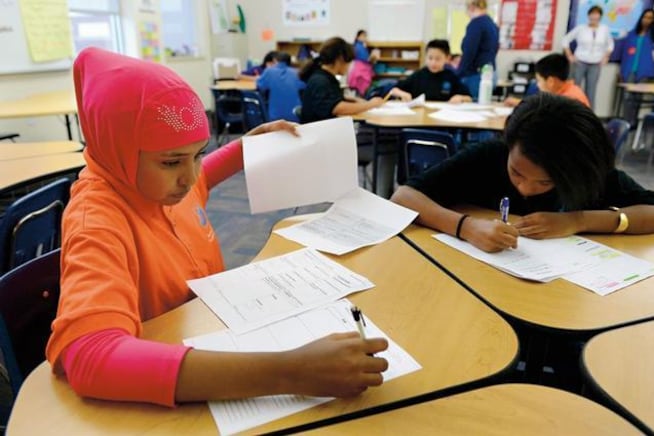
The question was part of a long district presentation Tuesday to the board with details about various fall scenarios. Like most other districts, Aurora is considering several options: Students could return to full-time in-person learning, or alternate being in school a few days a week and learning from home the rest of the days, or learn from home full-time.
Munn told the school board he expects to announce a final plan on June 30, though he cautioned that future changes to health guidelines could force the district to change plans again.
Aurora’s fall plans are all considerably different from what it rolled out in the spring as school buildings closed. In the spring, the district focused on providing students with access to online resources but did not require most teachers to provide instruction. High school students were required to complete online coursework, but students in lower grades weren’t.
Throughout the presentation, Aurora officials said that they’ve learned that teachers, families, and students craved more interaction and higher engagement.
At the beginning of the month, the district surveyed parents, staff, students, and community members on their preferences for fall learning. Of 8,307 responses the district received in 12 languages, more than 5,600 were from parents, 60% of whom said they are likely to send their children back to in-person learning if it becomes available.
“How do we keep students engaged with their peers?” said Andre Wright, chief academic officer for Aurora. “That’s been a big question.”
The district’s survey also asked families about their technology needs. Of the families who responded, about 32% indicated they have checked out devices for their children, 9% indicated that they currently have a device checked out but will need a new device next year, and 12% said they will need to check out technology devices next year.
The district expects to pay for additional devices and technology, as well as other fall needs, with federal relief dollars.
Board members also questioned the district’s plan to ask students to wear masks in school buildings without providing them.
Board president Kayla Armstrong-Romero said that in her family, like in many others, it can be tough getting her stepson to wear a coat, and said she “can’t even imagine” having to ensure children have masks and wear them without losing them.
The district is planning to incorporate health education for students that could include guidance on how to properly wear a face mask.
“I would expect we would have a certain stockpile available in schools,” Munn said. “But the idea that we would be able to buy masks for all students every single day, it’s not a road we’ve been down.”
Officials said they may provide masks for staff when schools reopen, depending on the health guidelines.