Just weeks after Colorado schools were straining under the omicron wave, state public health officials say that soon they can start treating COVID more like other communicable diseases, such as flu and norovirus.
The Colorado Department of Public Health and Environment announced the guidance change Friday with a target date of Feb. 28, just a few weeks shy of the two-year anniversary of widespread school closures in March 2020.
“As COVID-19 case rates, percent positivity, and hospitalization rates continue to decrease and stabilize, it is appropriate for schools to choose a more typical routine disease control model,” State Epidemiologist Rachel Herlihy said in a press release. “This approach will help schools, parents, and teachers continue in-person learning with fewer disruptions, but schools should consider transitioning to this option cautiously, as moving too soon could result in an increase in transmission.”
With the exception of one county, the federal Centers for Disease Control and Prevention reports that all of Colorado has high rates of transmission, shown as red on its maps. State public health officials said they recommend schools not move to more relaxed protocols until case rates are at moderate or low levels and have stabilized there.
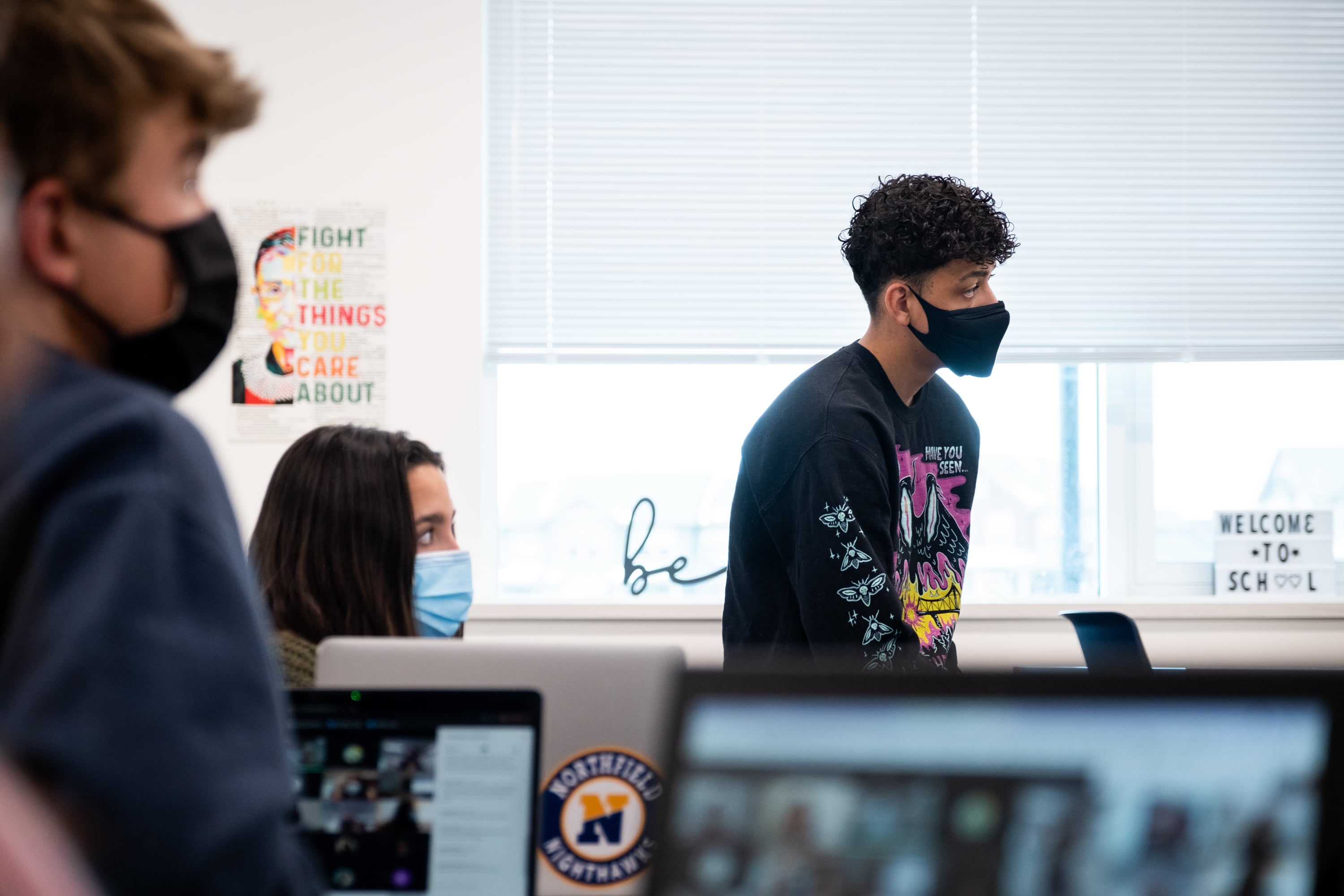
The new state guidance comes after most Colorado school districts already have dropped their mask mandates or set deadlines for later this month to make masks optional. Many schools have also changed their approach to quarantine, stating they will no longer require close contacts of people who test positive for COVID to stay home unless there is an active outbreak at the school.
Some public health experts believe the move to drop mask and quarantine requirements is premature. While COVID cases are much lower than they were a month ago, they remain very high, and most elementary students still aren’t vaccinated.
“I’m firmly in the position that it’s too early to be dropping these precautions,” said Susan Hassig, an epidemiology professor at Tulane University’s School of Public Health. “I know it’s probably futile, but I would like people to wait until you’re at least in the orange and preferably in the yellow,” meaning substantial or moderate rates of transmission.
Routine disease control in the case of COVID means that schools should continue to encourage vaccination and masking and report known positive cases to local public health authorities. People who test positive should stay home for five days or until symptoms resolve. Students and staff who live with someone who tested positive should also stay home.
However, schools won’t need to investigate individual cases, do contact tracing, or quarantine people who were exposed at schools.
Schools should step up their efforts if there is an outbreak — meaning a situation in which it seems likely transmission is occurring at schools — but public health officials acknowledged those will be more difficult to detect.
“Without routine case investigation and contact tracing in place, outbreaks may be difficult to identify and outbreak thresholds challenging to implement,” the guidance states.
Schools should report absenteeism due to respiratory illness to local public health authorities, as they have during flu season for years, and should consider signing up for wastewater monitoring where feasible, the guidance states.
When outbreaks are identified, schools should return to the types of protections they’ve used in the last two years, such as requiring masks on a temporary basis, offering testing, and limiting mixing of affected grades and classrooms.