Denver Public Schools is resisting releasing a recording of a March closed-door meeting of the school board as a Denver District Court judge had ordered the district to do.
DPS appealed the district court ruling Monday to the Colorado Court of Appeals. The school district’s lawyers had indicated at a court hearing earlier this month that they would continue to oppose the release of the recording of the five-hour meeting.
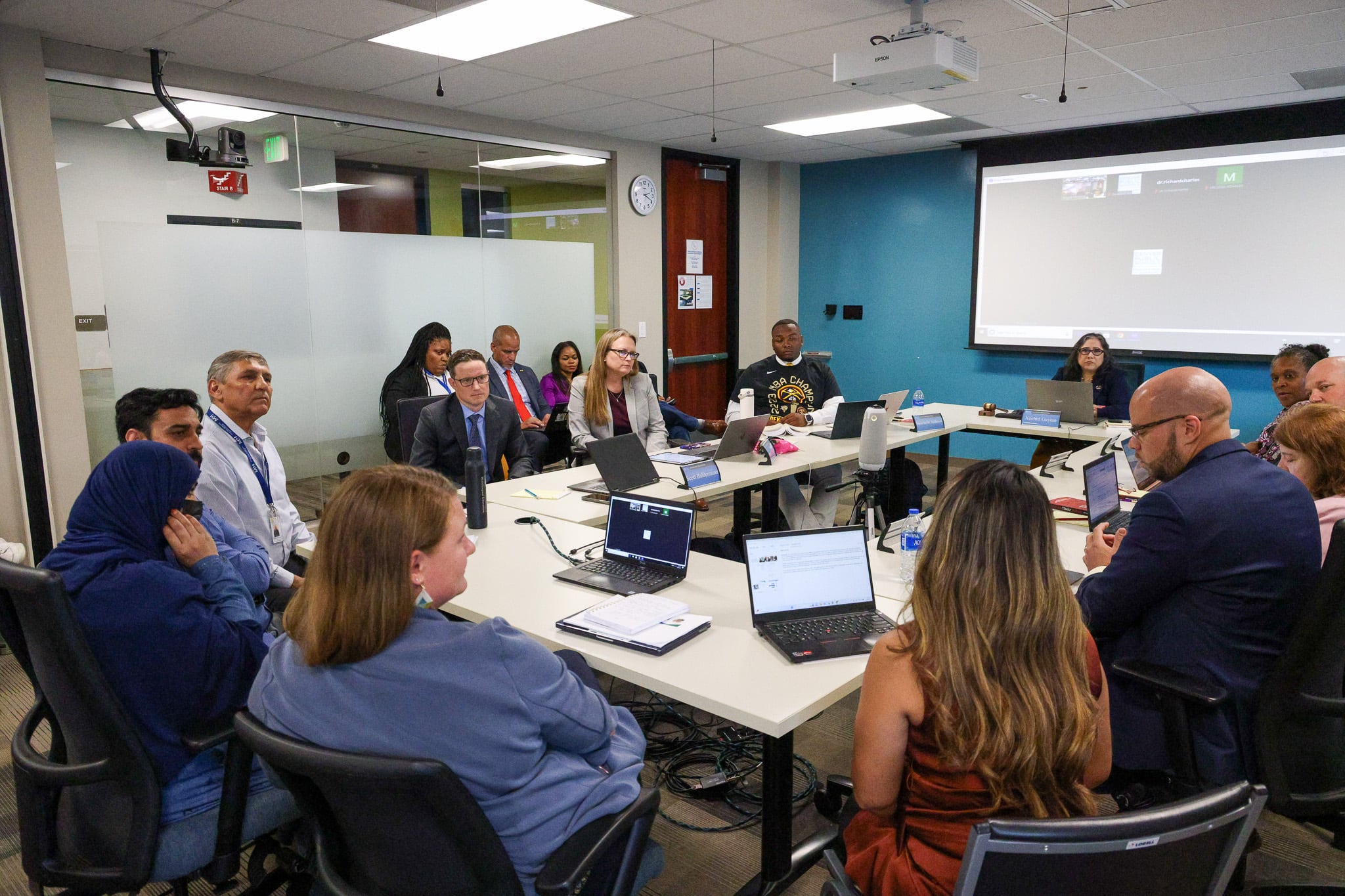
The meeting, called an executive session, occurred on March 23, one day after an East High School student shot and injured two deans inside the school before fleeing and taking his own life. The school board emerged from the executive session and with no discussion voted unanimously to temporarily suspend its policy banning police in schools.
Chalkbeat and six other media organizations sued DPS for the recording of the executive session. The media organizations argued that the topics of the meeting were not properly noticed and that the board made its decision in private, despite the public vote. State law says the “formation of public policy is public business and may not be conducted in secret.”
Denver District Court Judge Andrew Luxen listened to the recording and ruled Friday in favor of the media organizations. He ordered DPS to release the recording publicly at noon Monday.
But DPS’s appeal now puts the process on hold. In its notice of appeal, the school district’s lawyers asked the appellate court to consider whether the district court judge was wrong to listen to the recording and determine that the discussion in the executive session did not meet the criteria under state law for when boards can meet privately.
Melanie Asmar is a senior reporter for Chalkbeat Colorado, covering Denver Public Schools. Contact Melanie at masmar@chalkbeat.org.