Beyond High School is our free monthly newsletter covering higher education policy and practices in Colorado. Sign up to get it delivered to your inbox early.
For the first time ever, the federal government has placed a cap on student loan borrowing. Borrowers will now have a lifetime limit of $257,500 for all federal student loans.
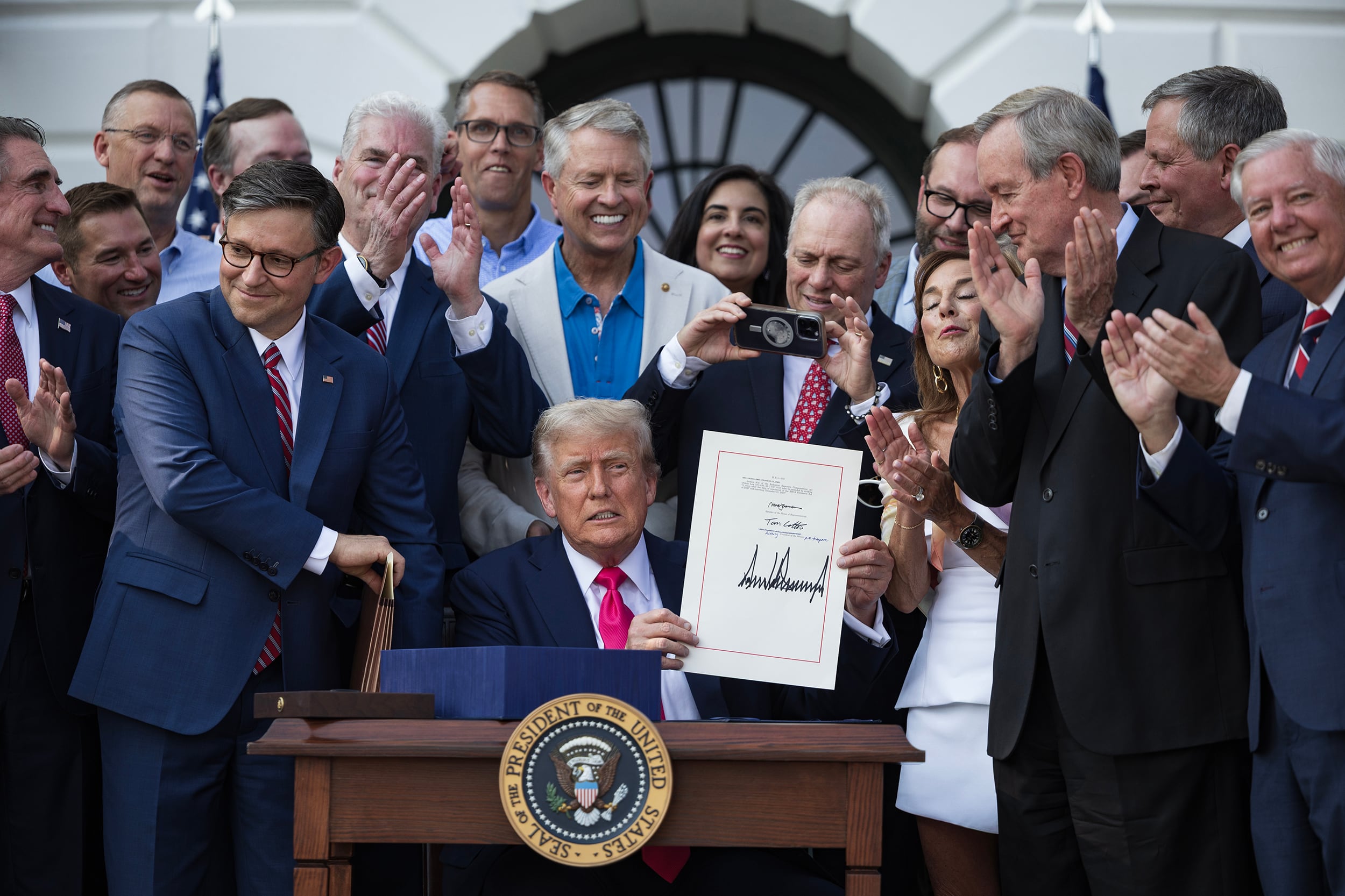
Congress approved the changes in President Donald Trump’s “big, beautiful bill” passed earlier this month. And there’s plenty more borrowers should know:
- First, unsubsidized student loans will be capped at $20,500 a year. Graduate students will have a lifetime limit of $100,000 for those loans.
- Aspiring doctors and lawyers will also be limited in their borrowing. They’ll now only be able to borrow $50,000 a year, with a $200,000 lifetime limit.
- Parents paying for their children’s education won’t be able to borrow as much. They previously were able to borrow up to an amount equal to the cost of their child’s full college education. Parent PLUS loans, as they are known, will now be capped at $20,000 per year per child. Parents will also have a $65,000 lifetime limit per child.
The changes highlight the Trump administration’s desire to pull back from the student loan borrowing business.
Experts worry the changes will just drive borrowers to more costly private student loans. Or they fear students just won’t go to college at all. Others are concerned that the bill will exacerbate doctor shortages nationwide.
Groups like the National Association of Student Financial Aid Administrators issued a statement just before Trump signed the bill on July 4 about its concerns.
NASFAA President & CEO Melanie Storey said in a July 3 statement the bill could limit access to college for low-income students. Storey, whose nonprofit association represents financial aid professionals, said she has multiple concerns about the bill, including the new limits imposed on the Parent PLUS loan programs.
This “may drive borrowers to riskier private loans, which are not available to all borrowers,” she said.
Higher ed stories from Chalkbeat
Colorado students, education leaders try to help TRIO college-access program avoid Trump cuts — College administrators said Trump cuts to TRIO hurt the about 17,500 students who benefit from the program in Colorado.
Broken car? Late rent? Community College of Aurora gives students help with life emergencies — The Community College of Aurora received a grant to provide students money when they’re facing life emergencies. They hope the emergency aid keeps students in school.
What we’re reading
What a smaller Education Department is doing under Trump The New York Times
The Trump administration wants to eradicate DEI in higher education. These Black scholars still plan to thrive. The Denver Post
A Colorado trucking school is trying to train drivers to handle the unique challenges of mountain driving The Colorado Sun
Successful program for migrant students is on Trump’s chopping block Inside Higher Ed
Jason Gonzales is a reporter covering higher education and the Colorado legislature. Chalkbeat Colorado partners with Open Campus on higher education coverage. Contact Jason at jgonzales@chalkbeat.org.