Sign up for Chalkbeat Colorado’s free daily newsletter to get the latest reporting from us, plus curated news from other Colorado outlets, delivered to your inbox.
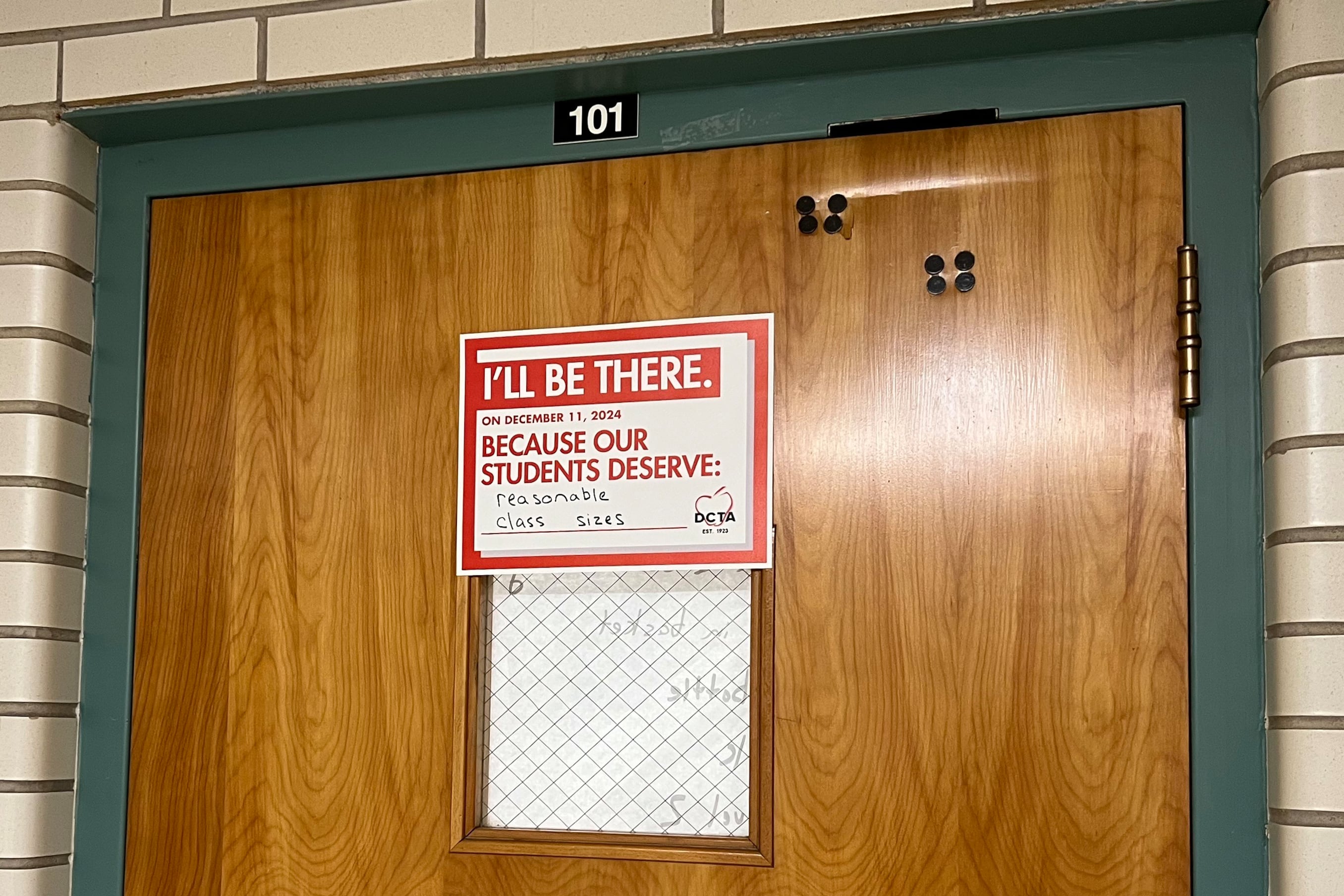
The Denver teachers union is alleging that Denver Public Schools is violating a new provision of the teachers contract that requires schools to publicly report class sizes.
The contract, which went into effect in September, requires each principal to report class size data to their school’s collaborative school committee, or CSC. The CSC is a group of parents, teachers, and community members who advise the principal on budget priorities and other decisions. State law requires every school to have one.
The latest Denver teachers contract says that by Nov. 1 each year, CSCs must publish meeting minutes on their school website that list the number of students in each class.
But President Rob Gould said that by the union’s count, just 43 out of 139 district-run schools reported class sizes in publicly posted CSC meeting minutes by Nov. 1. The Denver Classroom Teachers Association filed a grievance Wednesday asking the school district to ensure that principals are trained and schools comply.
“This is about reporting to parents and reporting to the community and making it very transparent what our class sizes are,” Gould said in an interview. “We can’t tackle class sizes unless we have an idea of what those class sizes actually are.”
In a statement, Denver Public Schools said it “looks forward to working with DCTA through the grievance process to resolve this alleged violation on class size reporting.” The district said it couldn’t comment on the content of the grievance because the process is confidential.
The Denver teachers union has long pushed for smaller class sizes, but it ramped up its advocacy during contract negotiations earlier this year. The union wanted strict caps on class sizes. Instead, the two sides agreed to a compromise that calls for the district to “make reasonable efforts to reduce oversized classes” and aim for elementary class sizes of 30 students by 2026-27, with the caveat that several factors “may impact compliance.”
The contract also requires the public reporting of class sizes through CSC meeting minutes and the formation of a committee to identify “patterns deserving of further attention and analysis.”
A spot check by Chalkbeat on Friday afternoon revealed wide variation in whether and how schools are reporting class size data. Some schools didn’t have a CSC webpage at all. Others had a CSC webpage but didn’t list any meetings or minutes for the current school year. Others had meeting minutes from this fall but no mention of class sizes.
Even among schools that reported their class sizes, how they parsed the data differed. South High School reported average class sizes, including an average of 24 students per English class and 25 students per math class.
West High School’s CSC minutes simply said, “Class sizes - 18.” Northfield High School listed class size averages by teacher and course, among other data. The grievance asks schools to report individual class size numbers, not averages.
Melanie Asmar is the bureau chief for Chalkbeat Colorado. Contact Melanie at masmar@chalkbeat.org.