Sign up for Chalkbeat Detroit’s free newsletter to keep up with the city’s public school system and Michigan education policy.
Shadiya Begum, 16, waited patiently on a Corktown porch in the blistering heat Wednesday afternoon.
She decided it was time to move on after a couple of minutes. She left a pamphlet that read, “Vote yes on Proposal S!” and a handwritten note before soldiering on to the next door.
Begum said she and her Cass Technical High School peers will be directly affected if Detroit voters reject Proposal S, a measure on the Aug. 4 primary ballot. The proposal would authorize an operating millage — a tax levy on businesses and rental property owners – for the Detroit Public Schools Community District. If the millage is not approved by July 1, 2027, administrators say there will be a deficit of $111 million the following school year.
“I think the most important thing is getting people aware because a lot of people may support the bill or whatever we’re doing, but they don’t know about it,” Begum said.
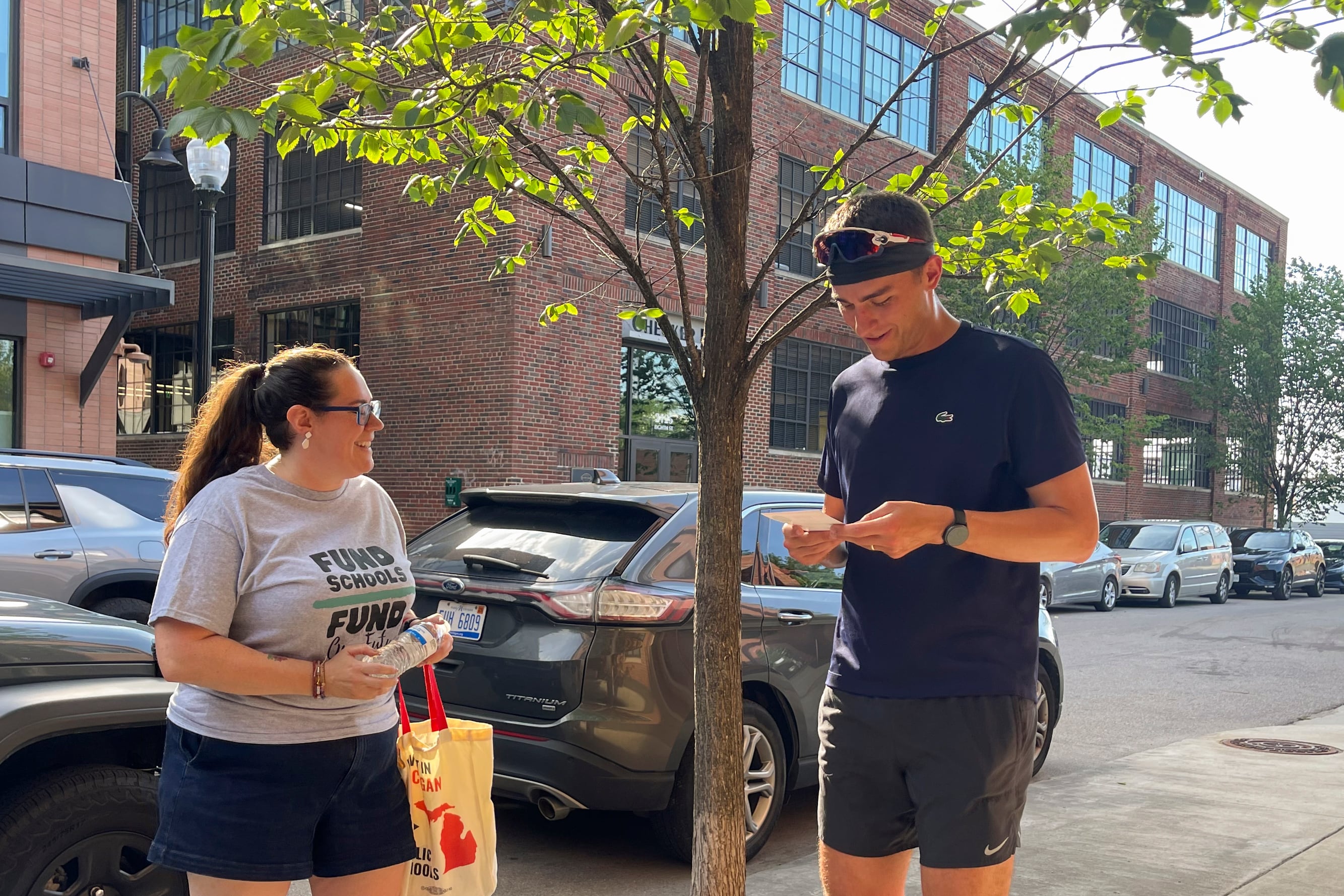
Around 80 volunteers with the local education equity nonprofit 482Forward have canvassed so far to garner voter support for the millage. With less than a month to go until the election, the group’s goal is to knock on 4,000 doors and make 150,000 phone calls.
Before heading out Wednesday, students, teachers, parents, and community members went over the basics of the millage at the Detroit Hispanic Development Corporation building on Trumbull Street. Juanita Zuniga, youth lead organizer for 482Forward, asked if they knew why they were canvassing.
“So we can get better funding for our schools,” one student answered.
Parent volunteer Amy Dent wanted clarification on a question many voters still have: “Are we asking the community for more money?”
No, said Lindsey Matson, deputy director of youth organizing for 482Forward. Voters are only being asked to allow a different entity to collect the 18-mill tax business owners are already paying, she explained.
Until now, Detroit Public Schools – a separate entity from DPSCD that exists only to collect tax revenue and pay off the district’s historic debt – has collected the operating millage. Now that the debt is set to be paid off in September, the state told DPSCD it must begin collecting its own operating millage.
The state has given DPSCD funding to fill the gap in operating revenue since the district was created in 2016. This year’s state budget eliminates those dollars.
Another key point to educate voters on, Matson said, is that every Michigan school district is required to levy 18 mills. Districts that fail to pass an operating millage would receive less funding from the state.
Matson said most of the people she’s met while canvassing haven’t asked detailed questions about why the millage is needed now or the history of the debt. Most voters the group encountered were supportive once told the funding goes to support schools.
DPSCD administrators expressed concerns this measure may be harder to explain, given the city last passed a millage in 2024. Earlier this year, the district hired a public affairs firm for $1.4 million to help educate voters about the 2026 proposal.
Still, there’s slightly more pushback and confusion than usual, Matson said.
“I think people are frustrated with the state of schools sometimes, and so they are like, ‘Oh, why do they need any more money?’” she said. “My answer is you can be frustrated, but I don’t think less money is going to help, you know.”
Ultimately, less funding would hurt students, Matson added.
As canvassers trickled back into the Trumbull Street building Wednesday afternoon, they exchanged anecdotes from the field. Many doors went unanswered. Most residents that did come to the door supported the proposal. Only one was somewhat argumentative.
Begum said she’ll be out canvassing again whenever she can. She hopes hearing directly from a student will resonate with voters, she said.
Hannah Dellinger covers Detroit schools for Chalkbeat Detroit. You can reach her at hdellinger@chalkbeat.org.