Sign up for Chalkbeat Detroit’s free newsletter to keep up with the city’s public school system and Michigan education policy.
Democrat Jocelyn Benson and Republican John James will face off in the Nov. 3 general election to become Michigan’s next governor.
Multiple news organizations, including the Associated Press, called the race, declaring Benson the winner with more than 80% of the Democratic vote and James the winner with 50% of the Republican vote. They beat Democrat Chris Swanson and Republican Perry Johnson.
Education has been a hot issue in the race, with Benson and James agreeing on the need to address Michigan’s low literacy rates among K-12 students but taking largely partisan stances on other key issues.
James wants to expand school choice and said that on day one if elected, he will opt Michigan into the federal tax credit scholarship program, which allows people to receive tax credits for donations they make to organizations that provide scholarships for private school tuition, tutoring, and other educational expenses.
He also wants to keep transgender girls from playing on sports teams and using girls’ locker rooms and bathrooms.
Benson plans to make sure Michigan schools have fair and equitable funding, while also looking out for teachers by investing in recruiting and retaining educators. The latter is critical because districts have struggled to recruit teachers in some specialties, especially educators who work with students with disabilities.
One of Benson’s plans requires starting salaries for teachers to be $60,000 a year minimum. Some districts are close to that amount. The Detroit Public Schools Community District set a starting salary of $57,400 in the recently approved contract with the Detroit Federation of Teachers. The average starting salary statewide is about $41,000.
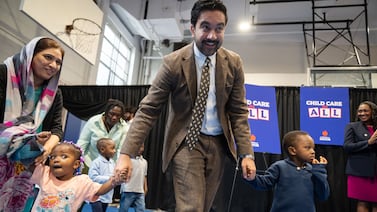
Benson, as she has done throughout the campaign, mentioned being the daughter of public school teachers in her acceptance speech. She said she wants a state “where child care is affordable for all, where homes are easily built so teachers and nurses and farmers can afford to live in the communities where they work,” and where public education prepares students for jobs.
She said she would work for teachers “who dedicate their lives to preparing our children for the future and who deserve pay and more respect.”
James, in his acceptance speech, said the night marks the beginning of Michigan’s comeback. In his acceptance speech he said that Michigan’s children are falling behind in education and that too many young people leave the state in search of opportunities.
He said Michiganders want schools that will teach their children to read and noted that his administration will prove that phonics work.
Lori Higgins is the bureau chief for Chalkbeat Detroit. You can reach her at lhiggins@chalkbeat.org.