Sign up for Chalkbeat Indiana’s free daily newsletter to keep up with Indianapolis Public Schools, Marion County’s township districts, and statewide education news.
A state-mandated task force is one step away from proposing major changes to who oversees public schools in Indianapolis. But even at this late stage, significant questions remain.
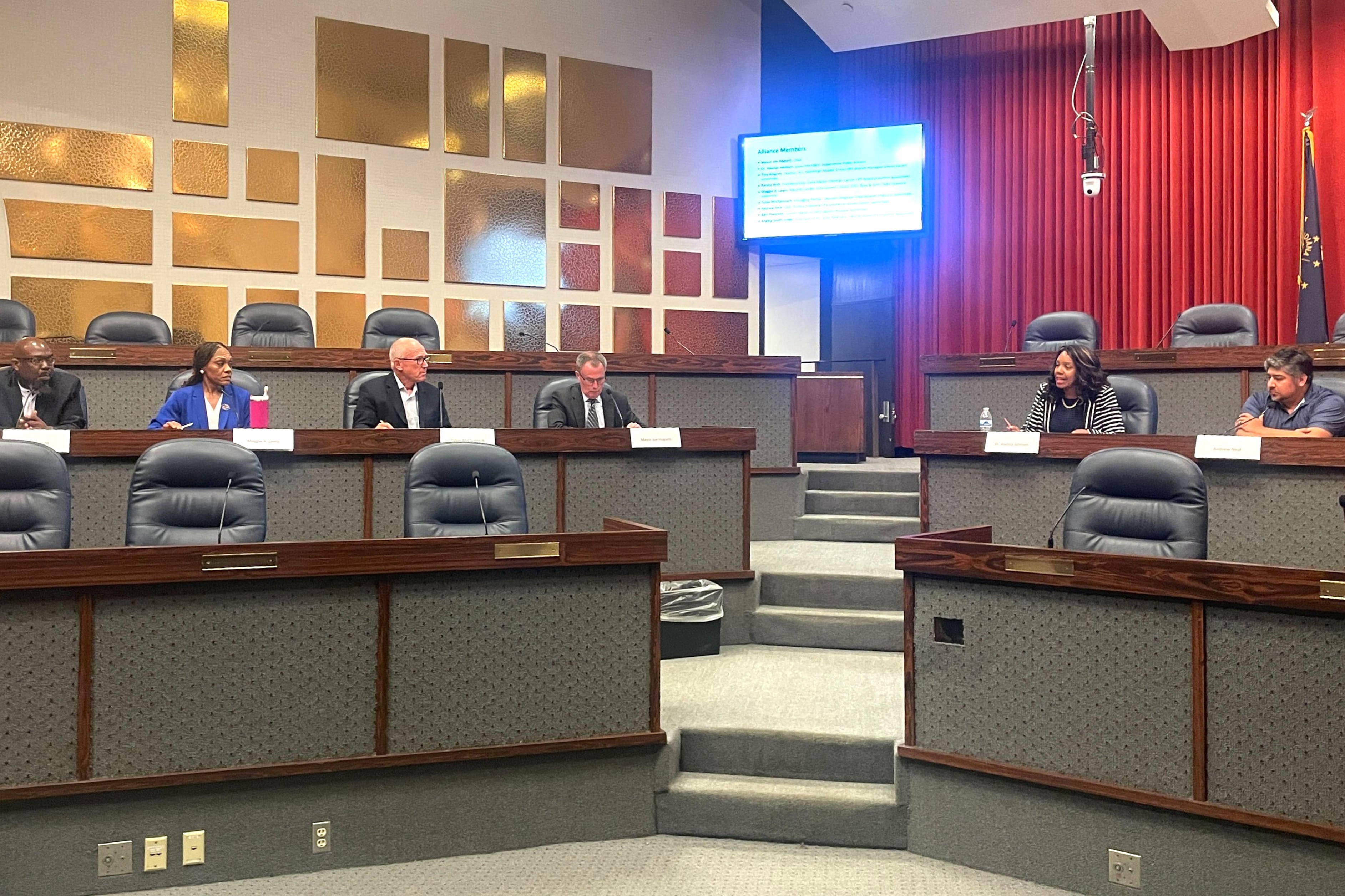
The Indianapolis Local Education Alliance is weighing two options that would leave the elected Indianapolis Public Schools board in place but significantly weaken its power. The task force is mulling two possibilities. One model would create a “collaborative compact advisory board” that would oversee both traditional public schools and charter schools. The other would establish a separate authority and create a new position for Indianapolis schools: a secretary of education.
Such a loss of power by the elected IPS board could have profound effects on the city’s schools and change their relationships with students, families, state officials, and others. But beyond that, it’s not clear how much detail for each option the ILEA will include in its final recommendations.
It’s also uncertain whether state lawmakers will adopt the ILEA’s recommendations, or whether they will flesh out the task force’s proposals through new laws or other means.
The ILEA is also weighing recommendations to change how transportation and buildings are managed. One model would create a collaborative advisory board in which schools would voluntarily work together and pay for services. The other would create an independent authority that would manage and possibly dictate services to schools.
The task force is considering both models for each of the two issues; it could recommend a collaborative board for transportation but an independent authority for buildings, for example.
The ILEA will vote to adopt final recommendations on Dec. 17.
Here are a few major unanswered questions that the alliance could address in its final recommendations — and what we know right now.
Who exactly would be in charge of schools?
The proposed collaborative compact advisory board would be made up of an unknown number of appointees from IPS, the mayor’s office, and charter schools. But how those appointees would be chosen is unclear.
Then there’s the other option, which would create the Indianapolis Education Authority. In an initial draft, that authority would have a nine-member board appointed by the mayor. The mayor would have to appoint four of the nine members from the elected IPS board.
But the draft advanced by the ILEA last week removed the requirement to have four IPS board members on the Indianapolis Education Authority, and didn’t specify who would appoint the authority’s members.
It’s also unclear how much either of those options would overlap with the ILEA’s separate recommendations for transportation and buildings.
How much power would these new authorities have?
In both governance models, the IPS board and charter school boards would still exist and report up to a new authority.
But how much power the new authority would have is unclear. It could have the power to impose and collect property taxes and authorize new charter schools. It could also set policies for all schools to ensure charter and IPS schools are held to the same standards — such as guidelines for students with disabilities or discipline.
In theory, the IPS school board and individual charter school boards could still be in charge of day-to-day school operations, including hiring and firing school leaders and superintendents or approving yearly budgets — the most important functions elected boards have.
Collaborative advisory boards for transportation and facilities could allow participating schools to agree on decisions such as transportation zones or opening or closing schools. In contrast, independent transportation or facility authorities that receive property tax dollars directly could dictate some of these decisions to the schools.
Would all students have school transportation?
It’s unclear whether all students would receive transportation to school under the ILEA’s recommendations.
There seems to be some consensus among ILEA members that to bus all students to any school they want to attend — regardless of distance — would be too costly.
But the larger unanswered question is whether all schools would be required to offer transportation to students living within a certain distance of the school.
About half of the 25 charter schools in the IPS Innovation Network use the district’s bus services. Less than half of the 29 independent charter schools provide bus service, according to a September report from the mayor’s Office of Education Innovation, which authorizes charters.
Superintendent Aleesia Johnson, who has objected to stripping the district of its authority over transportation, said at an ILEA meeting last month that schools should be required to participate in a transportation service. She said this would address the problem that the alliance is trying to solve, which is how to ensure every school offers transportation.
If schools decline to do so, she said, then they should not receive property tax dollars earmarked for transportation.
Four other ILEA members have told Chalkbeat they would support a requirement for schools to offer transportation: Tina Ahlgren, Barato Britt, Andrew Neal, and Angela Smith-Jones.
But former mayor Bart Peterson, who’s also an ILEA member, said there would need to be limits on how far students could live from their school and still receive transportation.
Will new charter schools be allowed to open?
It’s unclear whether the ILEA will address the issue of opening new schools.
In the proposals, there’s no mention of stopping new public schools from opening in Indianapolis. But in an ILEA meeting last month, Ahlgren and Smith-Jones voiced support for a moratorium on new schools.
“We have to have a pause, because you cannot continue to have just a rolling wheel of change,” Smith-Jones said last month. “To me that feels unstable.”
In practice, such a moratorium would likely disproportionately impact charters, which have grown in number in recent years as the number of IPS-run schools have shrunk, although roughly one-third of charters have closed since 2001.
In a related matter, IPS supporters are also calling for just one charter authorizer instead of the three currently overseeing schools in Indianapolis. Charter school leaders and advocates have opposed limiting the number of authorizers and any moratorium on new schools.
Would charter schools need to give up their buildings?
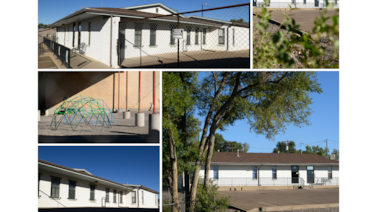
Few charter schools own vehicles that transport students. But over 20 charter schools own their buildings and a little over a dozen leased them in the 2023-24 school year, according to a report from the mayor’s Office of Education Innovation. Those arrangements include millions in remaining financial obligations.
It’s unclear whether the alliance will recommend that charter schools give up authority over those assets.
“How are property rights exercised by an independent authority over buildings that are owned in lots of different ways by lots of different entities?” Peterson said at the ILEA’s meeting in November.
It’s also unclear whether the ILEA will recommend the state repeal a law that allows charter schools to buy unused school buildings from IPS for $1 under certain conditions. The law has sparked conflict between IPS and charters for years.
Amelia Pak-Harvey covers Indianapolis and Lawrence Township schools for Chalkbeat Indiana. Contact Amelia at apak-harvey@chalkbeat.org.