Sign up for Chalkbeat Newark’s free newsletter to get the latest news about the city’s public school system delivered to your inbox.
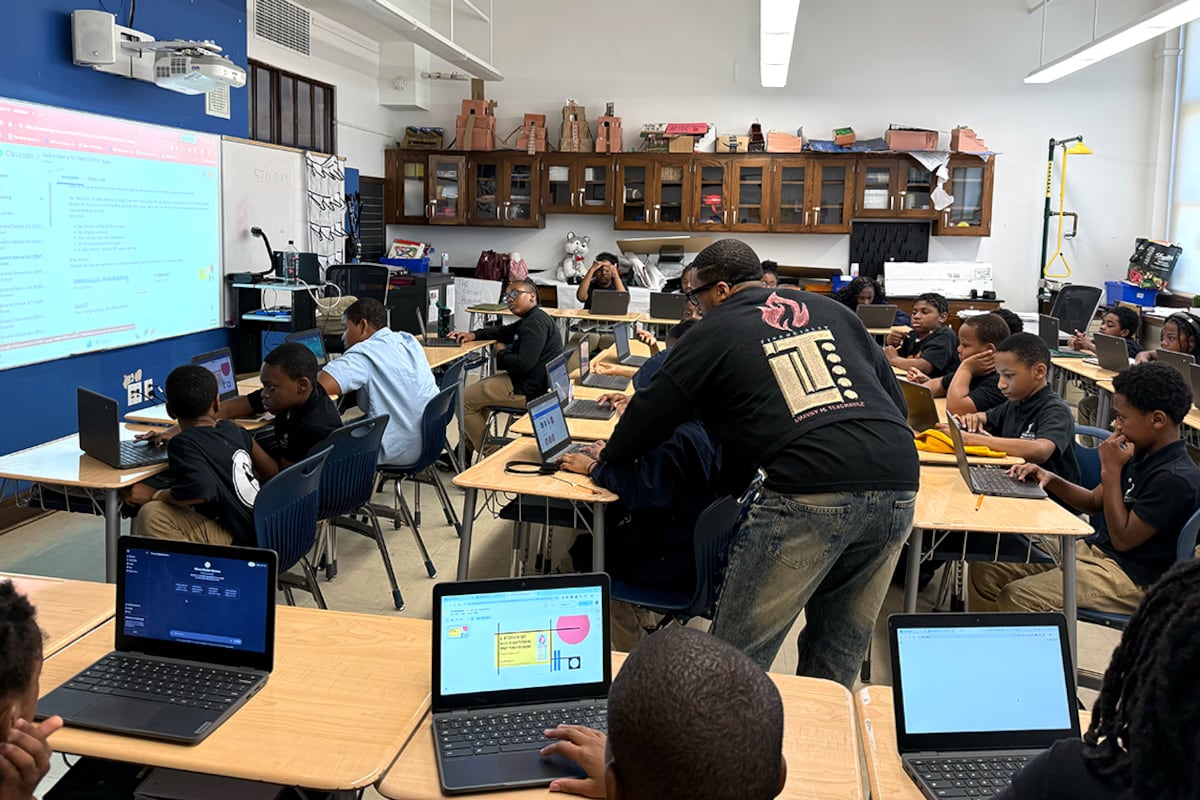
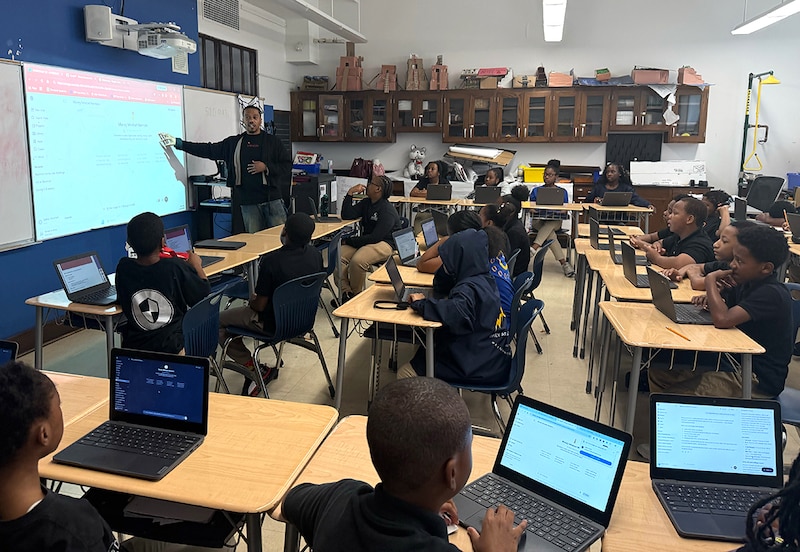
Stefon Bowman asked his fifth grade class at KIPP BOLD Academy in Newark, “Should you be intentional with your money?”
“Yes!” students shouted back.
“You a brokie!” the girls in the back shouted as a playful way to show what could happen if you weren’t.
But Nyla Baxter, a student in Bowman’s class, already knew the stakes. The fifth grader told Chalkbeat she was “growing her piggybank” to help her parents buy a house because being intentional “lets you use your money for things you actually want.”
That’s exactly the lesson Bowman, a math educator turned financial literacy teacher, wants students to walk away with. His co-developed Financially L.I.T (Luxury Is Teachable) curriculum, in its fourth year, teaches middle school students how money works, sparking conversations about handling money, investing, saving, and the difference between what you need and what you want.
Bowman’s lessons come on the heels of a push to expand financial literacy statewide. Since 2019, New Jersey has required students in sixth through eighth grade to learn about financial literacy. Across the country, 30 states require financial education as a graduation requirement, according to the National Endowment for Financial Education.
N.J. state Sens. Vin Gopal and Angela McKnight are sponsoring S-3462, a bill that would require high school students to complete a financial literacy course as a graduation requirement with a one-semester or one-trimester course. The Senate Education Committee approved the bill in March.
On Thursday, Bowman’s students were instructed to ask ChatGPT money management questions and have the AI respond as their favorite celebrity. Rahyon Little asked, “What is the difference between a need and a want when it comes to money?”
ChatGPT, speaking as Shaquille O’Neal, explained that a need is something essential while a want is something that brings enjoyment.
“Like, I know I have to save money,” Rahyon told Chalkbeat. “But sometimes I just want to buy stuff.”
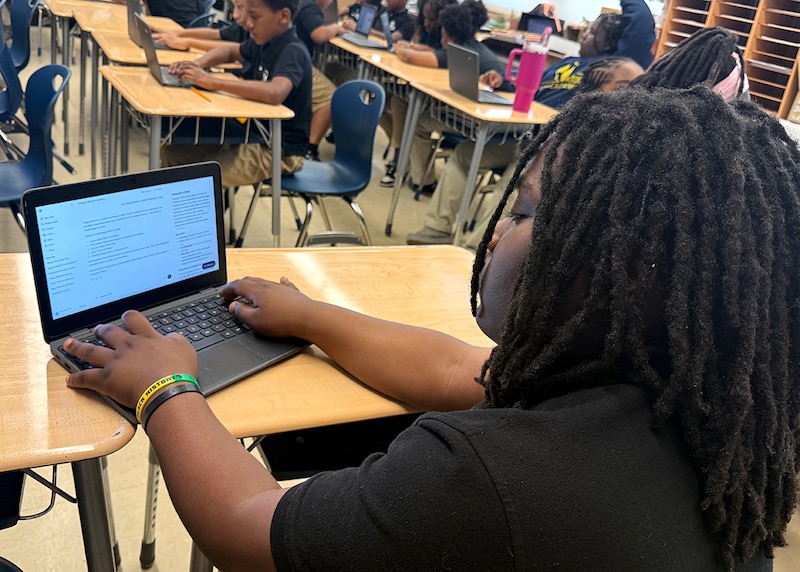
For many of Bowman’s students, including Damar Owens, financial literacy isn’t just a lesson, it’s also a conversation. Damar asked the adults visiting his class on Thursday, “What mistakes have you made as an entrepreneur?”
“That’s what it’s about,” Bowman said. “We’re trying to get students ready for the real world and they’re excited about making money and developing their businesses and brands.”
Supporters of school financial literacy courses argue that developing money management skills early gives young students the foundation for a stable and secure future, empowering them to navigate life’s challenges with confidence. But not everyone agrees that mandating it through schools is the answer.
Some experts argue that those lessons are largely ineffective, pointing to evidence that improved financial behavior does not necessarily follow from information about finances alone, and that personal habits and life experiences matter far more.
For Bowman, who is also an entrepreneur, that real-world application is important, and his curriculum is designed to go beyond the classroom.
KIPP middle schoolers put their money skills to the test during the school’s Monday Markets, where young entrepreneurs sell snacks and homemade treats at recess and lunch.
Those weekly markets served as a training ground ahead of KIPP’s annual Mother’s Day Market event, which brings together student entrepreneurs and local vendors to apply what they learned in the classroom to the real world, Bowman said. This year, the event drew more than 500 attendees as students confidently ran their businesses, engaged with customers, and applied their financial literacy and entrepreneurship skills they’ve been building all year.
“Our students really stepped up in a major way,” Bowman said.
Among those students were Janai Piper and her classmate and “employee” Madysin Thompson, who run Sweet Treats, selling rice krispies, chocolate-covered strawberries, and pretzels.
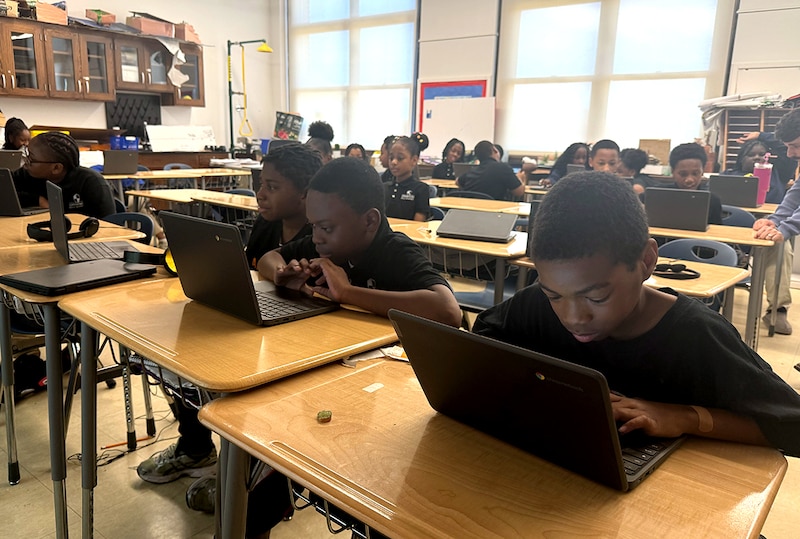
During Bowman’s Thursday lesson, the fifth grade students asked ChatGPT how they could reach their profit goals. Janai and Madysin mapped out how to make $600 by Aug. 12. Similarly, Katye Johnson, who wants to sell ice pops over the summer, set his own goal of $300 in six months.
“I want to sell ice pops,” Katye said. “I just need to get everything together because I’m already learning what I need to do.”
Jessie Gómez is a reporter for Chalkbeat Newark, covering public education in the city. Contact Jessie at jgomez@chalkbeat.org.