Sign up for Chalkbeat New York’s free daily newsletter to get essential news about NYC’s public schools delivered to your inbox.
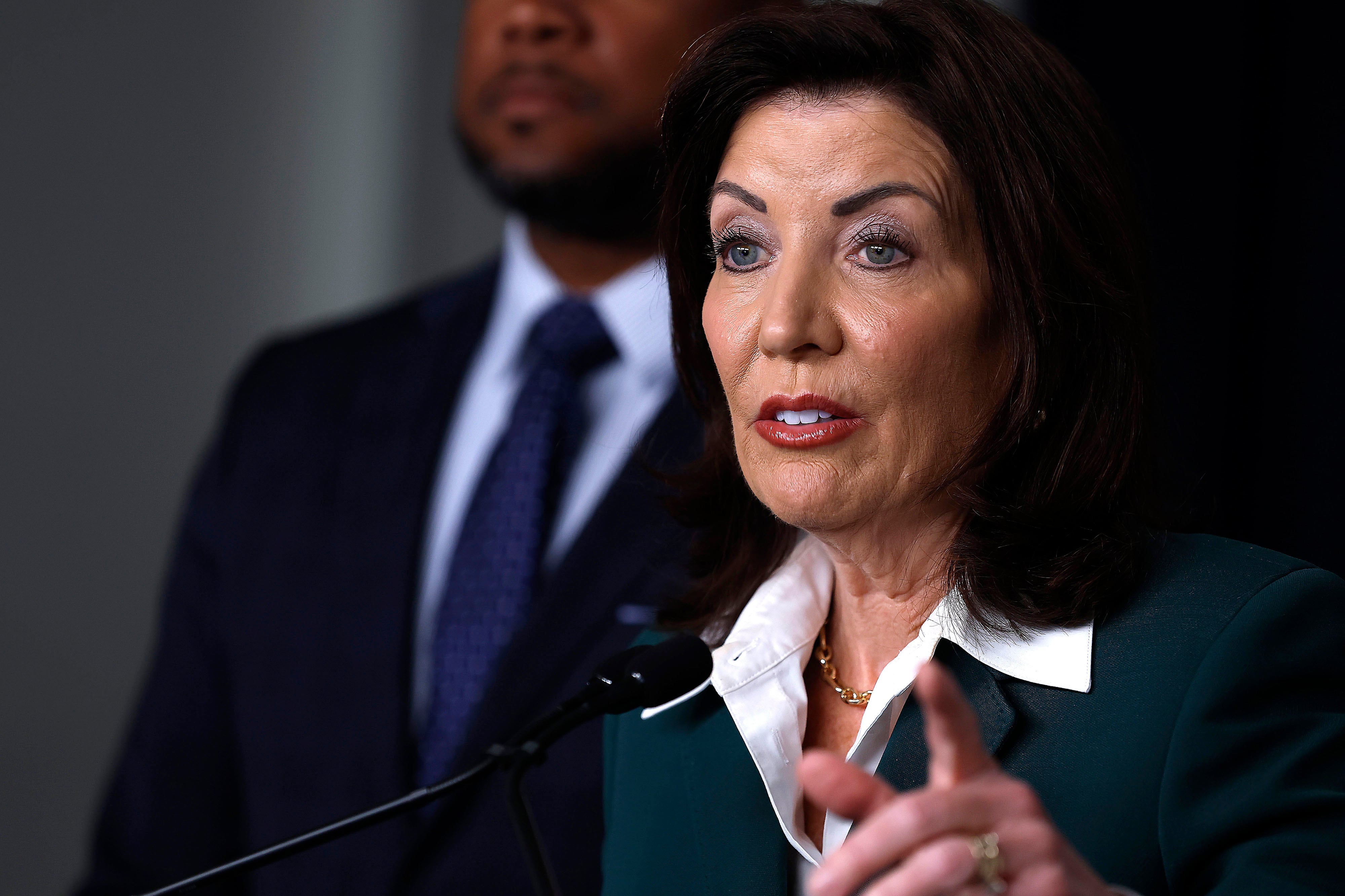
Under changes to a state funding formula pushed by Gov. Kathy Hochul, New York City’s public schools have been bracing to receive hundreds of millions less than they would have received otherwise.
Those tweaks passed the state Senate and Assembly on Thursday as part of the broader state budget, which is more than a month late.
The city’s public schools are expected to receive about $314 million less than they would have under the current formula, known as Foundation Aid, according to figures provided by the office of State. Sen John Liu, the chairman of the state senate’s New York City Education Committee.
The city will still see an overall increase in Foundation Aid next year of $539 million, bringing the total to $10.46 billion, according to state budget documents. A Hochul spokesperson emphasized that total state funding for public schools across New York is poised to hit $37.6 billion, a $1.7 billion increase.
Nearly all observers and policymakers agree that the state’s two-decade-old Foundation Aid formula, which accounts for the majority of state funding for public schools, needed an overhaul. A report from the Rockefeller Institute of Government commissioned by the state and released last year also called for significant changes. But Hochul’s tweaks have disappointed many advocates.
The governor’s proposal focused on updating a metric for student poverty, replacing a measure that relied on the 2000 Census.
Several advocacy groups wanted a bigger overhaul, including additional weighting for students who live in temporary housing, are in foster care, or have a disability. They were upset that Hochul’s changes didn’t incorporate a better accounting of regional differences in cost of living. The current federal poverty threshold for a family of four is roughly $32,150 a year, but that income means something different for a family in New York City than in other parts of the state.
“The federal guidelines make no adjustments for the local cost of living; they are the same in the five boroughs as in a rural community upstate, a Midwestern suburb, or a small town in the Sunbelt,” wrote Kim Sweet, the executive director of Advocates for Children, a group that works with low-income families. “While an overhaul of the outdated formula is sorely needed, the limited changes make matters worse.”
The only region that will see updated regional cost adjustment is Westchester County, budget documents show. A Hochul spokesperson did not answer questions about why the governor’s plan funnels less money to New York City, a district where three-quarters of children live in poverty.
State officials are also planning a small increase in funding for English Language Learners, which will result in about $30 million more for New York City, according to an estimate from Advocates for Children. Roughly 16% of city public school students, or 148,000 children, are learning English.
Liu said that while he was concerned that city schools will receive less money than under the current formula, the nation’s largest school system will still see an increase of more than half a billion dollars. He also noted the budget includes a $35 million bump for city career and technical education programs.
Asked whether he found the changes to Foundation Aid acceptable, Liu said the budget process “landed where it landed.”
He blamed city officials for factoring in the anticipated tweaks to Foundation Aid in their own budget plan before the state budget was finalized, which he said made it harder to negotiate.
“You don’t raise the white flag” before the state budget passes, he added. “That was a careless move at best.”
A spokesperson for New York City’s Education Department did not respond to a request for comment.
As the state funding picture came clearer into focus, school funding advocates remained concerned that the shortfall from Albany would be compounded by the Trump administration’s moves to cut education funding.
“It just seems very bizarre to me in a context where we’re facing cuts from the federal government,” said Marina Marcou-O’Malley, the co-executive director at the Alliance for Quality Education, an advocacy group that has pushed to increase school funding.
“That’s going to have an impact in the classroom — an impact with students,” she said.
Arlen Benjamin-Gomez, the executive director of EdTrust-New York, which focuses on equity issues, also blasted the changes to the formula, calling them “a troubling step backward.”
“A formula once considered among the most progressive in the nation is now being dismantled by choices that undermine equity and shortchange the students who need the most support,” she said.
Alex Zimmerman is a reporter for Chalkbeat New York, covering NYC public schools. Contact Alex at azimmerman@chalkbeat.org.