Sign up for Chalkbeat New York’s free daily newsletter to get essential news about NYC’s public schools delivered to your inbox.
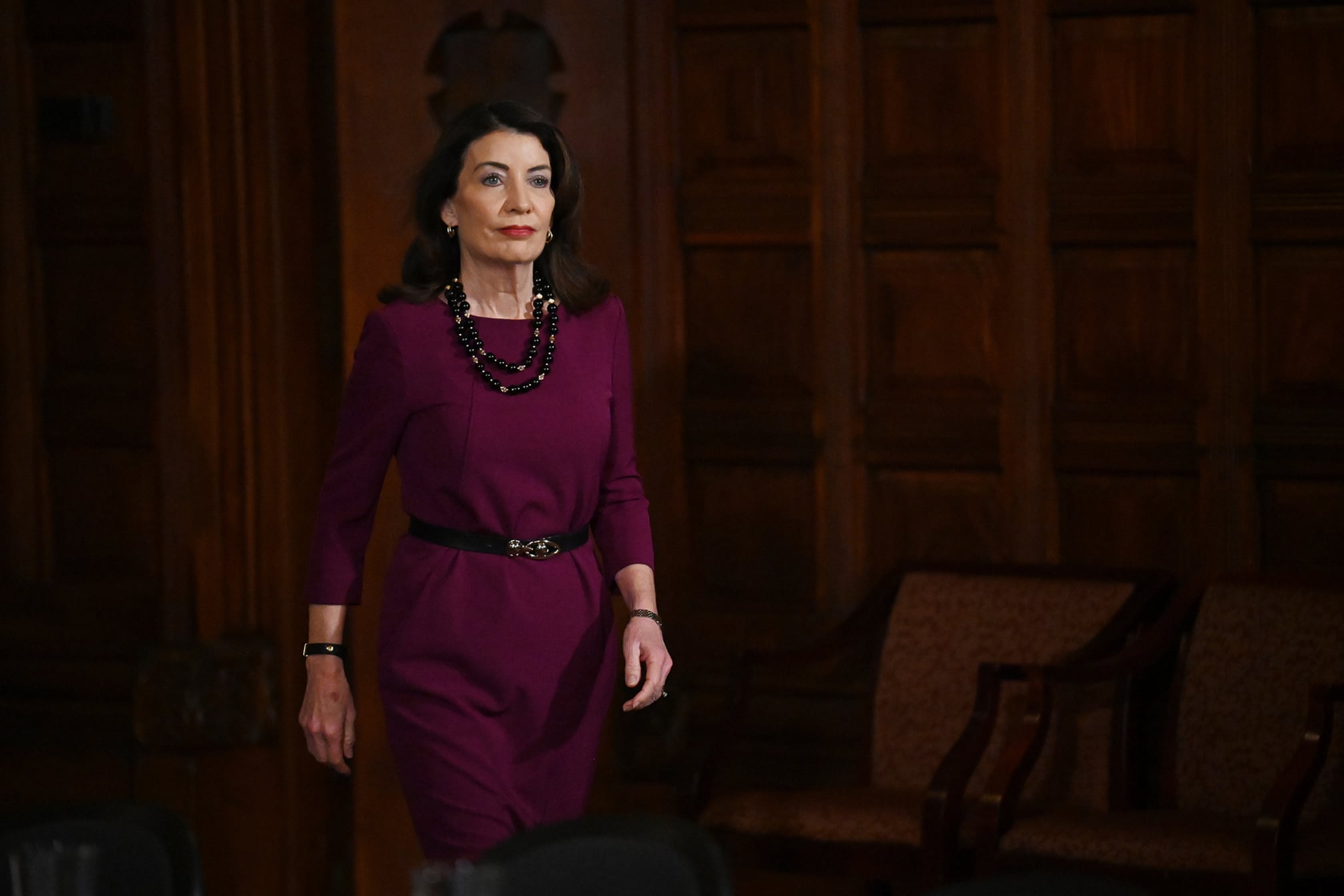
New York Gov. Kathy Hochul on Thursday put forward a proposal to protect undocumented students’ right to attend public school for free, as efforts pick up in other parts of the country to chip away at that longstanding legal precedent.
Hochul’s proposal, part of a larger package of policies meant to shore up protections for immigrant New Yorkers, would enshrine in state law the rights guaranteed in Plyler v. Doe, the seminal 1982 Supreme Court case, which established undocumented students’ right to attend K-12 public schools at no cost.
The conservative Heritage Foundation, the group behind the Project 2025 blueprint, has pushed for a legal showdown over Plyler in the conservative-majority Supreme Court. States, including Tennessee, have introduced legislation that would empower school districts to collect information on students’ immigration status and charge undocumented students tuition. And the U.S. House of Representatives’ Judiciary Committee held a hearing last month on the “adverse effects of Plyler v. Doe.”
Hochul’s proposal would put New York in a small group of states that have enshrined Plyler in state law.
The group of proposals Hochul announced Thursday would also prohibit public school employees from letting federal law enforcement officers into school buildings without a judicial warrant. New York schools would not be allowed to ask students about their immigration status under the proposals. (New York City’s Education Department has long enforced the policy that schools do not ask students for immigration status.)
They also bar local law enforcement from cooperating with Immigration and Customs Enforcement, or ICE, agents on civil immigration enforcement, though some advocates and lawmakers have pushed Hochul to go further by banning cooperation in criminal cases as well.
Some education advocates praised the proposals, saying they’ll provide reassurance to New York students and families.
“These measures preserve the rights of all students, regardless of immigration status, and protect those rights from shifts in federal law or Supreme Court precedent,” the group Ed-Trust New York said in a statement.
Hochul’s proposals, if adopted, would show up in the final state budget, which is currently under negotiation between Hochul and the state legislature.
The budget was due April 1, but lawmakers are still hashing out the details and agreed to extend the budget through April 20.
Correction: April 20, 2026: This story has been updated to reflect that the Heritage Foundation has pushed to overturn Plyler v. Doe, but did not include that goal in its Project 2025 blueprint.
Michael Elsen-Rooney is a reporter for Chalkbeat New York, covering NYC public schools. Contact Michael at melsen-rooney@chalkbeat.org