Did you know search engines like Google are changing the way you see news? Keep Chalkbeat’s valuable education coverage at the top of your feeds by clicking here and checking the box next to our name.
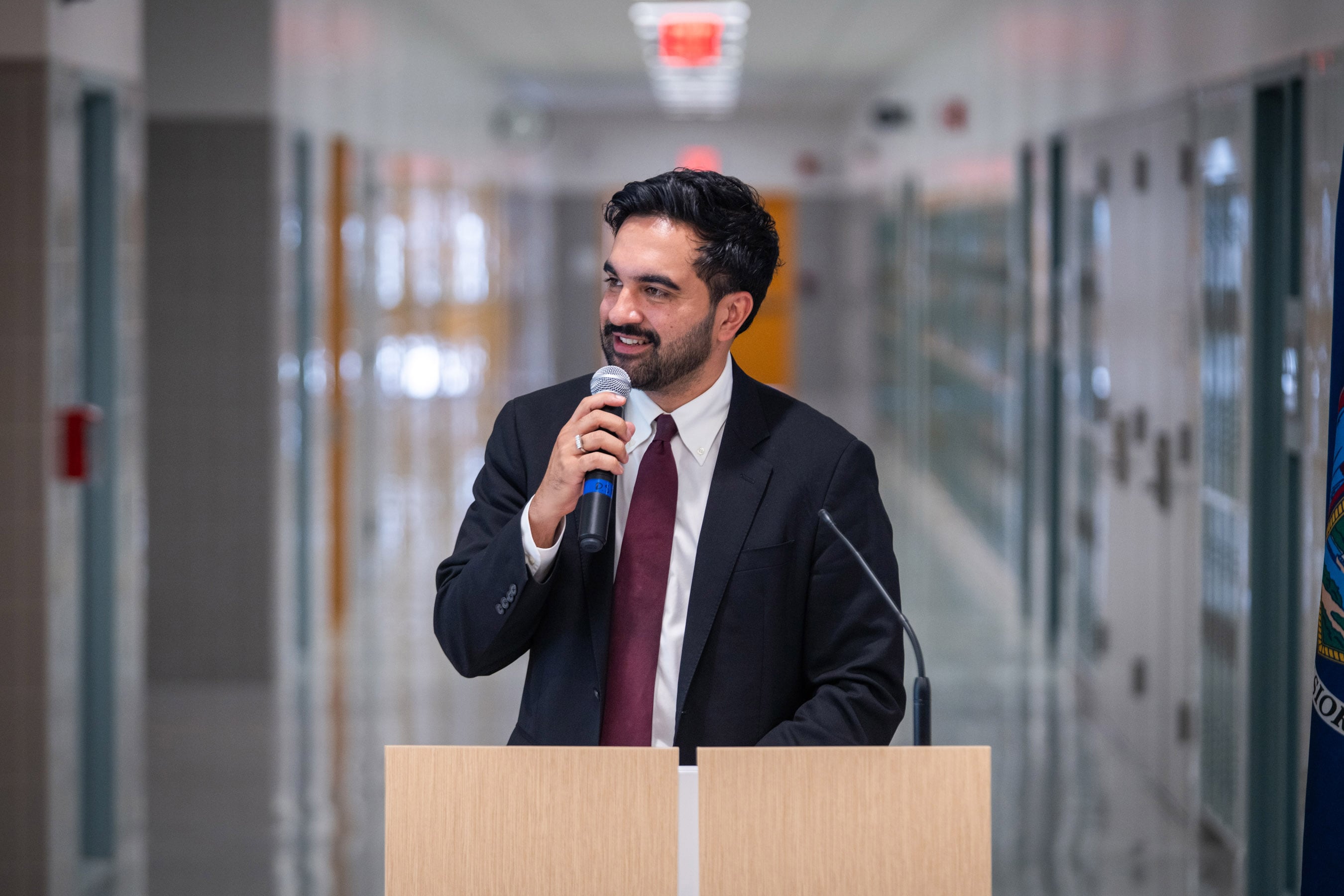
A day after New York Times journalist Nikole Hannah-Jones publicly challenged Mayor Zohran Mamdani to confront school segregation, the mayor offered his first response to her account of the harm her daughter experienced in segregated schools.
“It was a devastating piece,” Mamdani said Tuesday on WNYC’s Brian Lehrer Show in response to Hannah-Jones’ essay. “And it is an articulation, in many ways, of the systemic nature of the way that the public school system in our city failed her child.”
Mamdani said improving the public school system is “an urgent necessity — and it’s urgent because we know that Black and brown students are not being adequately served.”
Mamdani said his administration is developing plans to address segregation, but he did not name any concrete policies to promote racial or socioeconomic integration or explain how he would improve struggling schools. Nine months into his term, Mamadani has offered few plans for improving the nation’s largest school system.
The mayor acknowledged that other families have experienced similar problems as those described by Hannah-Jones and her daughter, Najya. Hannah-Jones recounted her daughter’s elementary school was chaotic, suffered from teacher absences, and often left student work ungraded. Najya said her middle school was disorganized and she had difficulty getting adequate instruction from her teachers, though Hannah-Jones viewed the school as caring and responsive. When Najya chose to enroll in a selective public high school, she felt unprepared.
Hannah-Jones challenged Mamdani on Monday to explain how he would reduce racial and socioeconomic isolation of students in New York City’s public schools, among the nation’s most segregated.
Mamdani indicated Tuesday that his administration will lean on local working groups — which are charged with tackling a wide range of issues from school segregation to underenrollment — to help come up with solutions. So far, five of the city’s 32 local superintendents have launched such groups. Each district is expected to have one within the next three years.
In an interview with Chalkbeat, Hannah-Jones said she is glad the mayor committed to releasing a plan to address segregation. She was also encouraged that his schools chancellor, Kamar Samuels, has pursued efforts to promote integration during his time as a local superintendent in Manhattan and Brooklyn.
Still, she worries that momentum on the issue has “gone completely dormant” in the wake of the pandemic. That could make it more politically difficult for the mayor to propose sweeping policy measures, which often invite intense backlash.
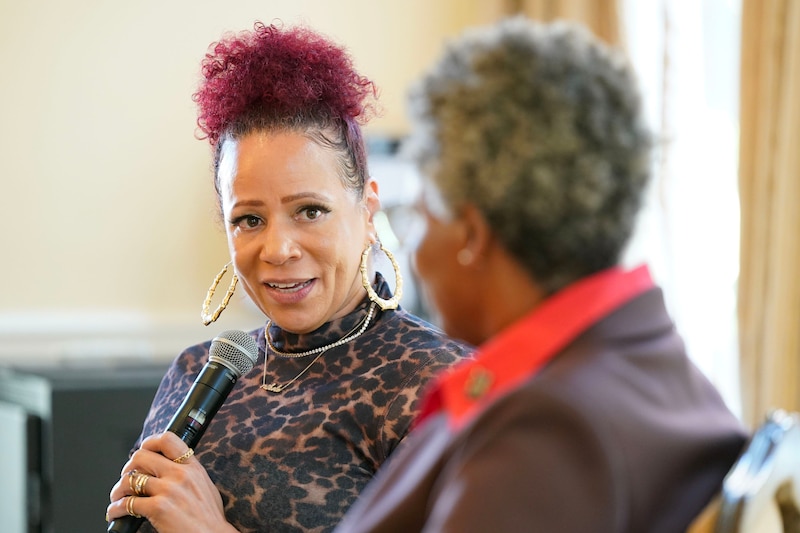
She noted that community buy-in is important, but worries that deferring to task forces can be a stalling tactic.
“I also know, having studied this issue for a very long time, that working groups can also be a way of studying an issue perpetually or in perpetuity,” she said. “There also is going to be required some leadership, and for the mayor to come out strongly and say that this is what his expectations are, and this is what he thinks the city should be doing.”
On the campaign trail, Mamdani embraced some policies to address segregation, including rethinking gifted programs and examining potential bias in the specialized high school admissions test.
More recently, he said the test for the specialized high schools — the sole basis for admission for eight schools — does not need to change. His administration has not committed to a timeline for reforming admissions into gifted programs, which like the specialized high schools are highly segregated by race.
As a candidate, Mamdani also indicated he would adopt some unimplemented recommendations from a school diversity task force convened under former Mayor Bill de Blasio, which included a call to eliminate middle schools’ ability to admit students based on their academic records, a process known as screening that is often blamed for exacerbating segregation.
Pressed by Lehrer on whether he would embrace that idea — or others such as rethinking school zones — Mamdani did not directly answer.
“We are exploring every single tool that we have at our disposal to ensure that this is going to be a very different school system moving forward than the one that we have inherited,” Mamdani said.
He promised a plan “to deliver a rigorous and high-quality education” to all students. “It should not be that a child or a family can only come to expect that if they are in the right school,” he said. “Every school should be the right school.”
The mayor’s responses echo some of his predecessors. The de Blasio administration argued that efforts to reduce segregation should come from local communities rather than top-down from city officials.
David Banks, the schools chief under Mayor Eric Adams, was also reluctant to tackle school segregation, arguing that the city should focus on improving schools in high-need neighborhoods rather than making integration a central strategy.
Despite the political and policy challenges, Hannah-Jones said she still believes integration should be an urgent priority.
“For all of our hand wringing, for all of our think pieces, there are kids in these classrooms right now who deserve an education that will help them reach their potential and transform their lives,” she said. “So I hope that we will get enough political will to start to act on this issue seriously.”
Alex Zimmerman is a senior reporter for Chalkbeat New York, covering NYC public schools. Contact Alex at azimmerman@chalkbeat.org.